WTI Crude--
Brent Crude--
Natural Gas--
ND Rig Count--
WTI Crude--
Brent Crude--
Natural Gas--
ND Rig Count--
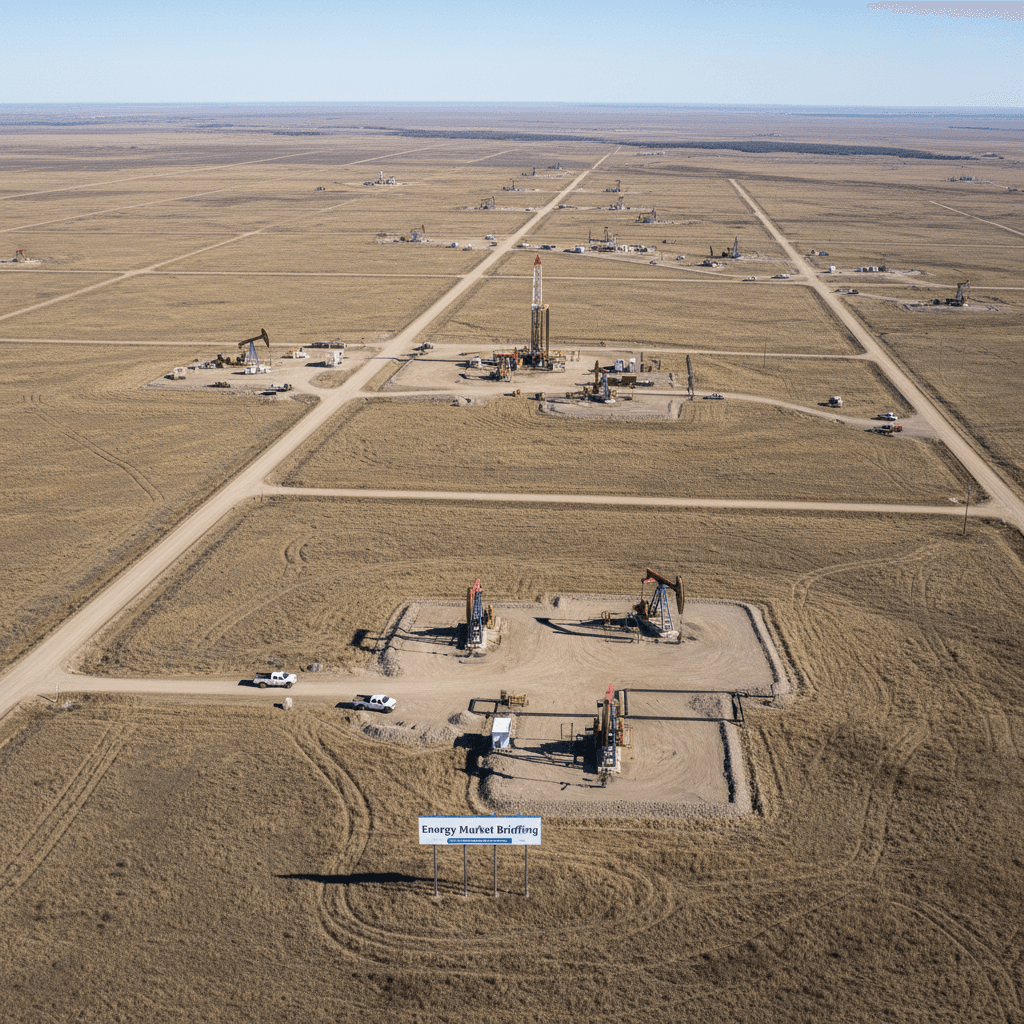
The Afternoon Take - Energy Market Briefing
Global Markets

Energy Market Briefing

Bakken Wire Staffยท๐ŸŒ…Afternoon Wireยท
Listen
0:00 / 4:06

Afternoon Energy Market Briefing Tuesday, September 29, 2026

1. Headlines

Oil prices are under significant pressure today. WTI crude fell nearly 4% to settle at $88.91, while Brent dropped to $95.65. The price decline coincides with two major government actions aimed at addressing high fuel costs. First, the U.S. Department of Energy announced it will offer another 40 million barrels of crude from the Strategic Petroleum Reserve (SPR) via an exchange, marking the final tranche of a coordinated International Energy Agency release. Second, the Trump administration finalized a significant weakening of federal automobile fuel economy standards, as reported by Rigzone.

Create a free account to continue reading

Sign up for free to get full access to Bakken Wire's daily energy market analysis, audio briefings, and more.

Create Free Account

Already have an account? Sign in

Share this article

Related Articles

The Afternoon Take - Energy Market Briefing
Global Markets

Energy Market Briefing

Bakken Wire โ€” Friday, November 13, 2026 1. Headlines Crude traded modestly higher. WTI settled at $89.06, up $0.32 or 0.36%, while Brent was $96.26, up $0.44 or 0.46%. Natural gas slipped to $3.24, down $0.10, and the Bakken differential was -$3.42 vs. WTI. Rigzone reported Brent settled near $96 as Middle East supply risks offset signs of an oil surplus. OilPrice.com reported Baker Hughes total U.S. rigs fell 3 to 601, oil rigs held at 463, gas rigs dropped 4, and miscellaneous rigs rose 1 to 11. The Permian added 2 rigs to 275. OilPrice.com also said EIA weekly crude output hit a new record of 14.013 million bpd for the week ending November 6, up 151,000 bpd year over year, while Primary Vision frac crews rose 4 to 195. Inventory and supply-risk news is mixed. Rigzone reported EIA commercial crude stocks, excluding the SPR, rose almost 5 million...

๐ŸŒ…Afternoon WireยทNov 13
The Midday Take - Energy Market Briefing
Global Markets

Energy Market Briefing

Midday Energy Market Briefing | Friday, November 13, 2026 1. Headlines Oil prices are modestly lower midday, with WTI trading at $88.36 (-0.43%) and Brent at $95.70 (-0.13%), according to the provided price data. This slight pullback follows a reported surge of more than 3% on Thursday, which Rigzone attributed to former President Trump's comments diminishing hopes for a diplomatic deal with Iran. Market reports today are centered on conflicting supply signals. Rigzone reports that the International Energy Agency (IEA) sees a tentative rebalancing, stating "global oil supplies surpassing demand for the first time since the outbreak of the war in Iran." However, OilPrice.com headlines highlight escalating Iran tensions as a bullish factor, with Brent reportedly climbing back above $96. On the inventory front, Rigzone cites EIA data showing U.S. commercial crude stocks rose to 414.417 million barrels for the week ending November 6. 2. What's Really Happening The market...

๐Ÿ”†Midday WireยทNov 13
Global Disruptions, Demand Shape Bakken's Long-Term Outlook - Bakken Wire
Global Markets

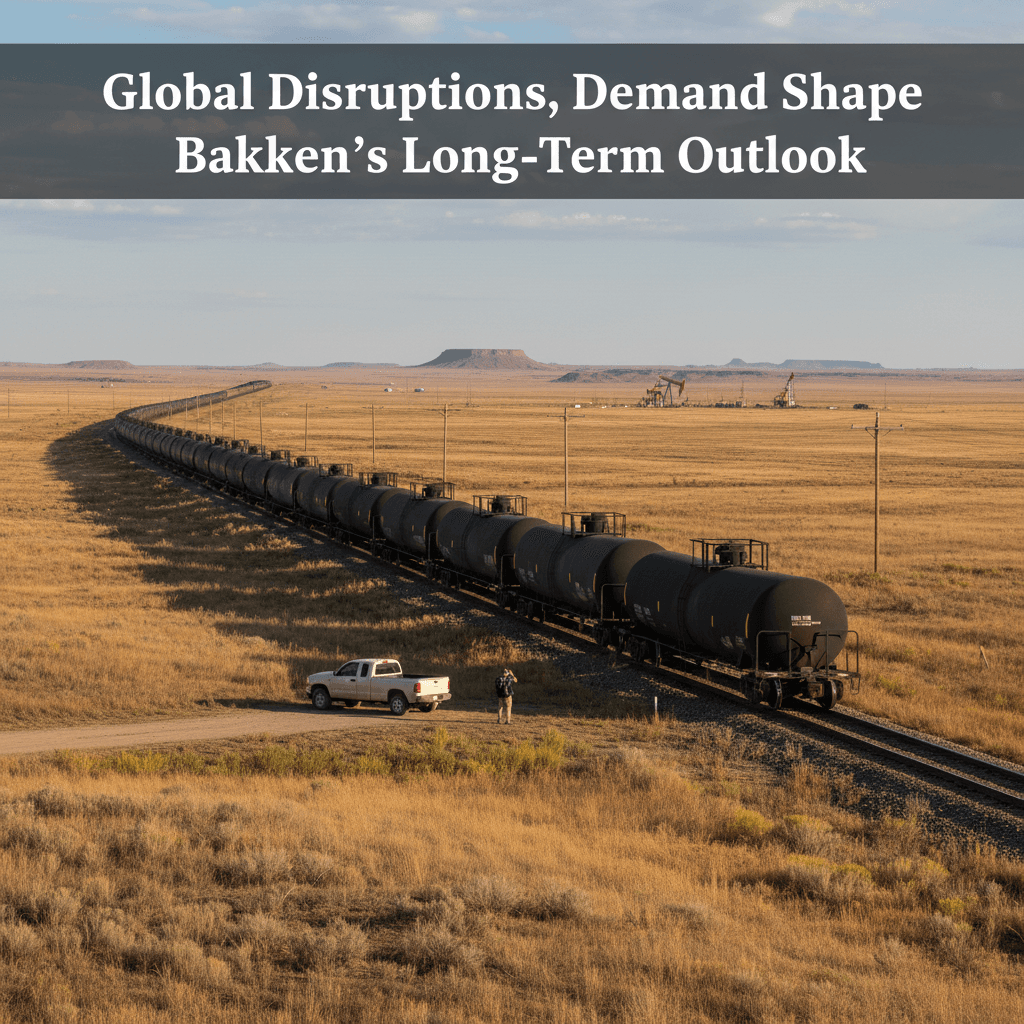
Global Disruptions, Demand Shape Bakken's Long-Term Outlook

Global energy markets have adapted to eight months of war-driven disruptions in the Persian Gulf, but at a substantial cost that underscores the Bakken's role in a volatile trade system. According to an analysis from OilPrice.com, the closure of the Strait of Hormuz triggered physical shortages, particularly in India for liquefied petroleum gas (LPG). The market response saw buyers, including India, secure replacement supplies from the United States, rerouting cargoes from the U.S. Gulf Coast on longer, more expensive voyages. This dynamic demonstrates the strength of global energy trade and the Bakken's potential indirect benefit. While North Dakota is not a major LPG exporter, the reshuffling of global flows to favor U.S. suppliers reinforces the structural demand for American hydrocarbons. The adaptation required drawing down inventories, releasing emergency stocks, and paying higher transportation costs, all factors that contribute to a firmer price floor for U.S.-sourced energy. Concurrently, a separate report...

๐Ÿ”†Midday WireยทNov 13