WTI Crude--
Brent Crude--
Natural Gas--
ND Rig Count--
WTI Crude--
Brent Crude--
Natural Gas--
ND Rig Count--
The Afternoon Take - Energy Market Briefing
Global Markets

Energy Market Briefing

Bakken Wire Staff·🌅Afternoon Wire·
Listen
0:00 / 4:17

Energy Market Briefing Wednesday, October 21, 2026

1. Headlines

Oil prices showed a mixed performance today. According to price data, Brent crude rose by $0.64 to settle at $109.43 per barrel. In contrast, WTI crude fell by $0.32 to $97.50. This divergence widened the Brent-WTI spread to nearly $12. The Bakken differential to WTI was reported at -$3.42. Natural gas prices fell sharply, down $0.19 to $2.77. A Rigzone wire report attributes oil price gains to a "deadly Saudi oil field attack and Gulf embassy concerns."

Create a free account to continue reading

Sign up for free to get full access to Bakken Wire's daily energy market analysis, audio briefings, and more.

Create Free Account

Already have an account? Sign in

Share this article

Related Articles

Global Markets

Hormuz, Arctic Shipping Disruptions Reshape Global Energy, Food Markets

The ongoing conflict and shipping disruptions in the Middle East are triggering a "multidirectional squeeze on world agriculture" that threatens global food security, according to a new report from S&P Global Institute cited by OilPrice.com. The crisis, stemming from the U.S. and Israel's war with Iran, has closed the Strait of Hormuz to key fertilizer feedstock exports, causing prices to double and risking hunger for millions. For North Dakota's Bakken region, a major agricultural and energy producer, this intertwines the fates of its oilfields and its farms. The Strait of Hormuz, a critical chokepoint, was closed to nearly all shipping on February 28, 2026. Before that, half of the world's fertilizer feedstock exports passed through it, according to the S&P Global report. The disruption of chemicals like urea, ammonia, and natural gas—critical for nitrogen-based fertilizers—directly threatens the production of staple crops like corn and wheat. The International Monetary Fund projects...

🌅Afternoon Wire·Oct 21
The Midday Take - Energy Market Briefing
Global Markets

Energy Market Briefing

DAILY ENERGY BRIEFING Wednesday, October 21, 2026 1. Headlines Oil prices are trading mixed today. As of midday, WTI crude is at $97.02, down $0.80 (-0.82%), while Brent crude is at $108.63, down a more modest $0.16 (-0.15%). Natural gas is also lower, trading at $2.83, down $0.14. The Bakken differential to WTI is -$3.42. The U.S. Energy Information Administration (EIA) reported a 3.1 million barrel draw in commercial crude inventories for the week ending October 16. This brings stockpiles to 412.5 million barrels, which is 3% below the five-year average for this time of year. The reported draw was smaller than the 4.93 million barrel decrease indicated by the prior day's API data. The EIA also reported a 3 million barrel draw in gasoline inventories and a 1.7 million barrel build in distillates. Geopolitical and supply chain tensions remain high. According to Rigzone, Iran has intensified strikes on ships...

🔆Midday Wire·Oct 21
India's IOC to Cut Middle East Term Oil Purchases, Seeks Alternatives - Bakken Wire
Global Markets

India's IOC to Cut Middle East Term Oil Purchases, Seeks Alternatives

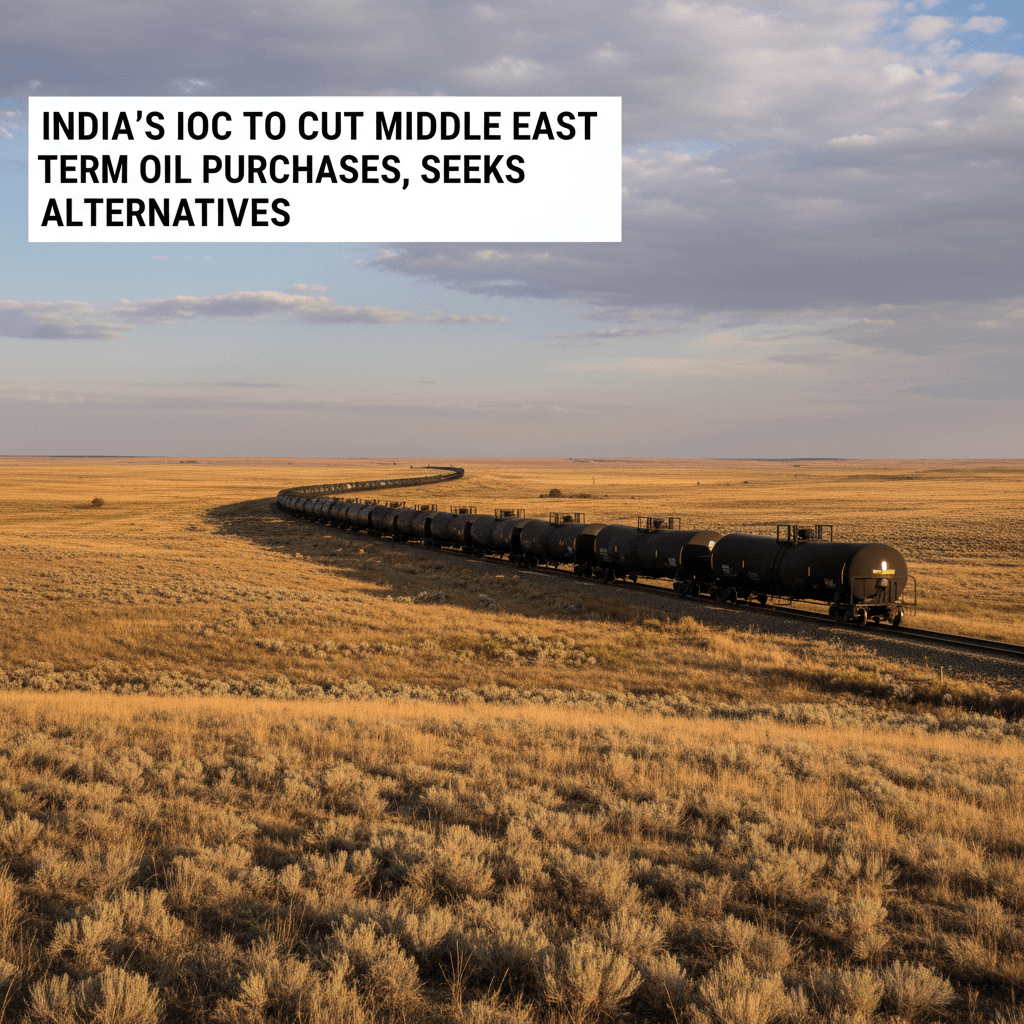
India's largest state-owned refiner, Indian Oil Corporation (IOC), will slightly reduce the volume of Middle East crude it buys under annual term contracts starting in March 2027, according to a Reuters report cited by OilPrice.com. This strategic pivot, driven by supply uncertainty and high regional freight costs, signals a potential reshuffling of global crude flows that could influence the competitive landscape for light sweet oil from the Bakken. The refiner's move is a direct response to the disrupted supply from the Middle East, attributed to the war in Iran and ongoing attacks on vessels in the Strait of Hormuz. These events have hiked war-risk premiums and freight costs. In response, Indian refiners have already suspended some term purchases and turned to the spot market, sourcing additional volumes from South America, including Brazil, Venezuela, and Ecuador, to offset lost Persian Gulf supply. While the report does not mention U.S. or Bakken...

🔆Midday Wire·Oct 21