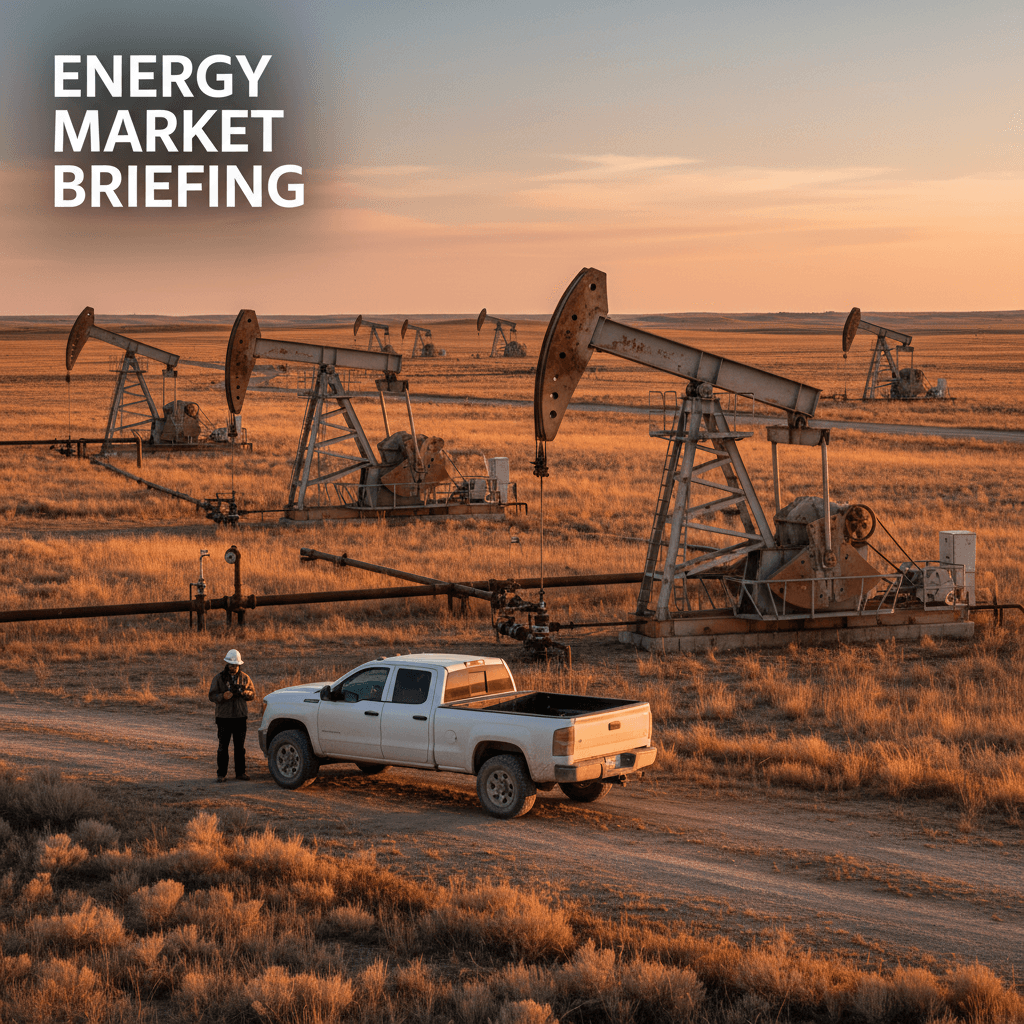
AI Demand Strains Power Grids; Eagle Ford's Buda Depleted; NASA Eyes Lunar Energy
Global roundup highlights surging electricity needs for AI data centers, depletion of a Texas formation, and new off-planet energy frontiers.
The explosive growth of artificial intelligence is creating a multi-trillion-dollar bottleneck centered on electricity, a dynamic with implications for energy-producing regions like the Bakken. According to a report from OilPrice.com, AI infrastructure could require $5+ trillion in investment this decade, with tech giants Amazon, Microsoft, Alphabet, and Meta projected to have a combined 2026 capital expenditure as high as $725 billion, largely for data centers. A critical challenge is securing power; more than 70% of data center interconnection requests are withdrawn, and half of announced projects may fail to be built due to power shortages. Global data center electricity demand is projected to approach 945 terawatt-hours by 2030, roughly equal to Japan's total consumption, creating an advantage for companies that control gigawatt-scale power supplies.
In traditional energy news, a century-old Texas oil play is nearing depletion. OilPrice.com reported that the Buda Limestone formation, which lies beneath the prolific Eagle Ford shale, has limited remaining technically recoverable resources estimated at just 12 million barrels of oil and 184 billion cubic feet of gas, according to a new U.S. Geological Survey (USGC) analysis. Since production began around 1930, the Buda has produced 204 million barrels of oil. USGS Director Ned Mamula stated the assessment "indicat[es] a need for new resources." Meanwhile, production in the overlying Eagle Ford shale rose 2.2% for the twelve-month period ending March 2026, with output remaining in a stable range between 2.36 and 2.46 million barrels of oil equivalent per day.
Looking beyond Earth, NASA is outlining ambitious energy plans for a lunar base. As reported by OilPrice.com, NASA announced a $20 billion program in March to develop a permanent base at the Moon's south pole by 2032, powered by nuclear and solar energy. The agency plans 25 launches to transport cargo by 2029, using partners including Blue Origin and Astrobotic. The goal is to establish "semi-permanent" housing by 2032, leveraging potential frozen water resources. The U.S. aims to land astronauts before 2029, competing with China's 2030 human lunar landing target, though some experts have criticized NASA's timeline as unrealistic.
Source
OilPrice.com (June 27, 2026)