WTI Crude--
Brent Crude--
Natural Gas--
ND Rig Count--
WTI Crude--
Brent Crude--
Natural Gas--
ND Rig Count--
Bakken crude discount remains despite firm WTI, Brent prices - Bakken Wire
Oil Prices

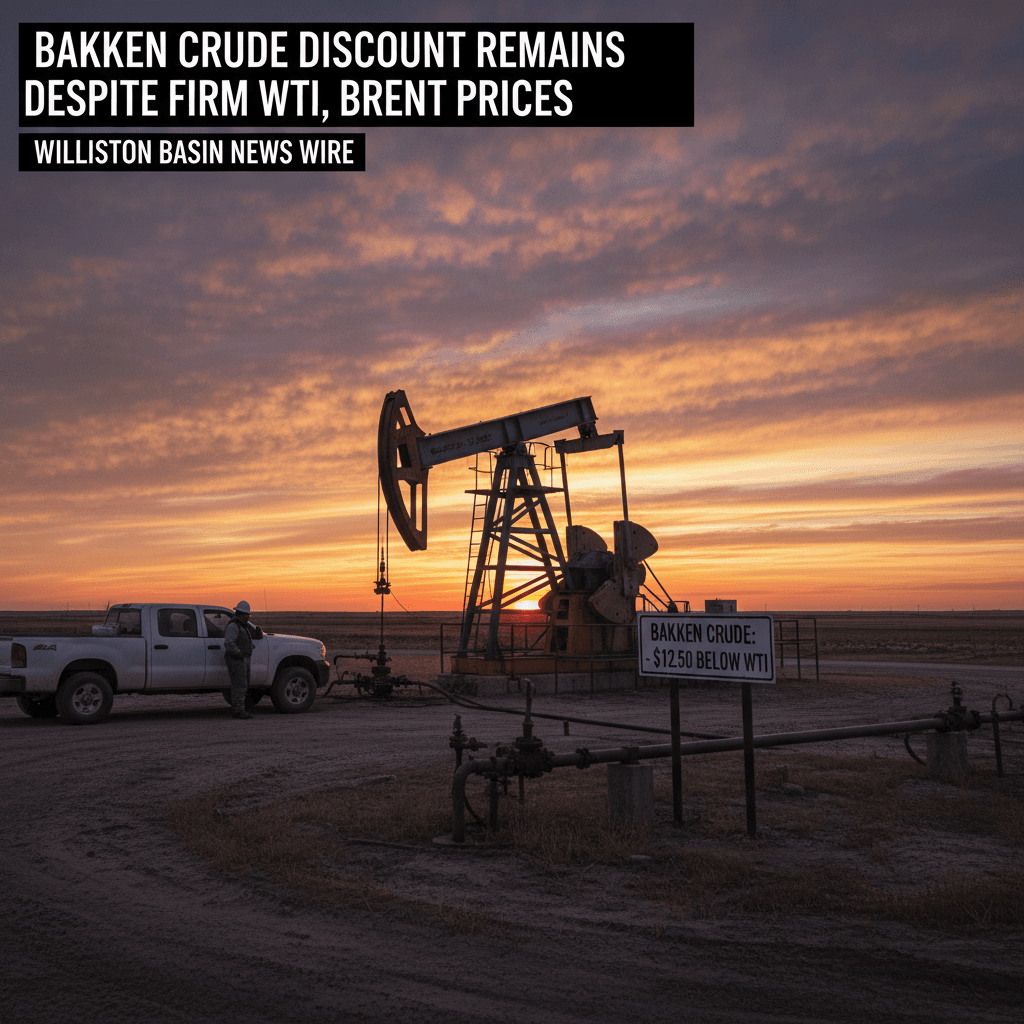
Bakken crude discount remains despite firm WTI, Brent prices

WTI rises to $104.12 and Brent to $113.43, while Bakken differential is -$3.42.

Bakken Wire Staff·🔆Midday Wire·

The Bakken Wire midday price update for Sunday, Nov. 1, 2026, shows crude benchmarks moving higher while natural gas eased slightly. According to the live data provided, WTI crude rose $2.12 to $104.12, a gain of 2.08%. Brent crude rose $2.63 to $113.43, up 2.37%. Natural gas was quoted at $2.90, down $0.05. The Bakken differential was -$3.42 versus WTI.

The implied Bakken benchmark, using the WTI price and the reported differential, is $100.70 per barrel. That level gives Bakken producers and royalty owners a better reference point than the prior WTI level, but it also shows the basin’s crude continues to trade below the national benchmark.

The move was led by Brent. Brent rose 2.37%, compared with WTI’s 2.08% gain. Brent’s premium to WTI widened to $9.31, from $8.80 implied before the day’s moves, according to the provided prices. The data did not include news catalysts such as OPEC statements, inventory reports, refinery outages or company announcements, so no specific fundamental driver can be attributed.

For Bakken operators, the key number is the differential. A -$3.42 discount versus WTI is the spread marketing teams must manage through gathering, pipeline access, rail capacity, export terminals and refinery demand. Higher WTI and Brent raise the ceiling for oil revenue, but the differential determines how much of that ceiling is captured at the wellhead or in midstream sales.

The differential’s link to WTI means operators and royalty owners watch the U.S. benchmark closely, even when Brent leads the day’s move. The basin discount is the direct number reflected in marketing calculations.

For royalty owners, the move matters because oil royalties are typically tied to market value or proceeds after deductions. A $100.70 implied Bakken benchmark is materially above a $97.88 implied benchmark if the previous WTI and same differential were used. That calculation assumes the differential held constant, but it illustrates the sensitivity of royalty checks to benchmark moves.

Natural gas remains a separate pressure point. The 5-cent decline to $2.90 is small relative to crude moves, but it affects associated gas sales in the Williston Basin. Bakken producers often monetize associated gas through gathering, processing and pipeline or NGL recovery. Lower gas prices can modestly reduce revenue and may influence development timing for operators evaluating new wells.

The midday data leaves the basin’s economics improved on the oil side and slightly weaker on the gas side. For North Dakota, the combination is important because crude remains the dominant revenue driver for producers, landowners and state severance tax collections. The next meaningful update will require new data on inventories, pipeline flows, OPEC policy, export demand or company production guidance.

Source

Live price data provided for Bakken Wire midday edition

wtibrentbakkenoil pricesnatural gasdifferentialnorth dakotawilliston basin

Share this article

Related Articles

Oil Prices Surge Past $104 as Inventories Tighten - Bakken Wire
Oil Prices

Oil Prices Surge Past $104 as Inventories Tighten

Front-month WTI crude oil futures surged 2.08 percent on Monday, trading at $104.12 per barrel, a gain of $2.12. The global benchmark Brent crude rose 2.37 percent to $113.43, according to live price data. The price move extends recent strength as the physical market shows signs of tightening. The rally follows a reported drawdown in U.S. commercial inventories. According to a Rigzone report citing the U.S. Energy Information Administration, commercial crude oil stocks, excluding the Strategic Petroleum Reserve, stood at 410.625 million barrels for the week ending October 23. This represents a week-on-week decline, contributing to market tightness. The higher price environment is translating into significant cash flow for producers. In a separate report, Rigzone noted that Big Oil reaped more than $50 billion in windfall profits from spiking fuel prices, a figure it specified as over $56 billion. This underscores the financial impact of the current price rally across...

☀️Morning Wire·Nov 1
Oil Prices Surge Over $2 as Bakken Discount Widens - Bakken Wire
Oil Prices

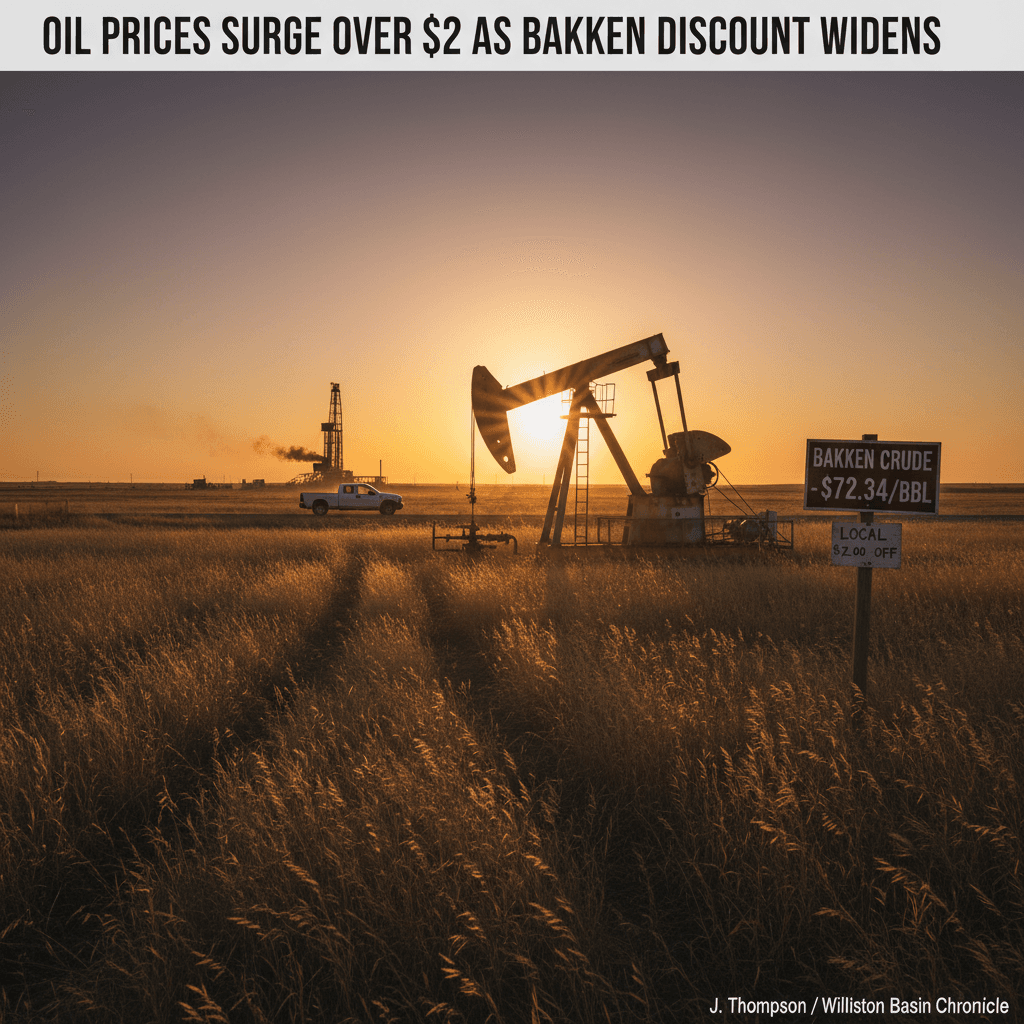
Oil Prices Surge Over $2 as Bakken Discount Widens

Benchmark crude oil prices surged more than $2 per barrel on Saturday, October 31, 2026, providing a significant boost to the underlying value of Bakken crude. West Texas Intermediate (WTI) crude settled at $104.12 per barrel, a gain of $2.12 or 2.08%. The global Brent benchmark rose even more sharply, climbing $2.63 to $113.43 per barrel, according to live price data. The sharp rally was driven by escalating geopolitical tensions and signals from OPEC+ regarding future production. An attack on a key oil facility in the Middle East over the weekend heightened supply concerns, while comments from OPEC+ delegates indicated the producer group is unlikely to recommend an increase in output when it meets next week, Bakken Wire reported. This combination of supply risks pushed prices higher. However, the price for Bakken crude at the wellhead did not capture the full gain of the benchmark. The Bakken differential—the discount at...

🌅Afternoon Wire·Oct 31
Oil Prices Surge Past $104, Bakken Spread Narrows - Bakken Wire
Oil Prices

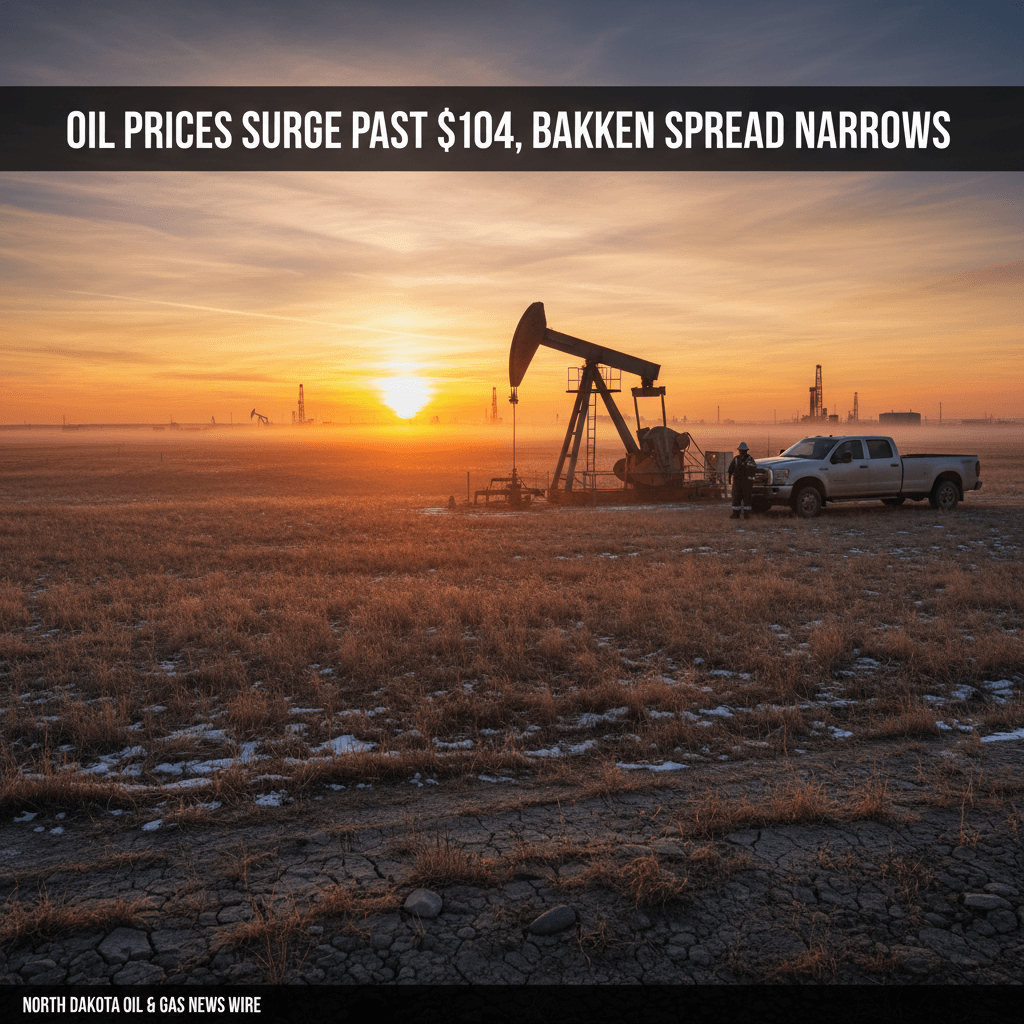
Oil Prices Surge Past $104, Bakken Spread Narrows

West Texas Intermediate crude oil surged past $104 per barrel on Saturday, October 31, 2026, providing a strong price signal for Bakken Shale producers. WTI settled at $104.12, a gain of $2.12 or 2.08% for the day, according to live price data. The global benchmark Brent crude rose even more sharply to $113.43, up $2.63 or 2.37%. The price rally coincides with a report that the oil industry is seeing massive financial gains from elevated fuel prices. According to Rigzone, Big Oil reaped more than $50 billion in windfall profits, with the specific figure cited as over $56 billion. The report, published October 31, 2026, attributed the profits to spiking fuel prices. For operators in the North Dakota Bakken formation, the price increase is amplified by a relatively narrow differential to the WTI benchmark. The Bakken differential was reported at -$3.42 versus WTI. This means Bakken crude is priced at...

🔆Midday Wire·Oct 31