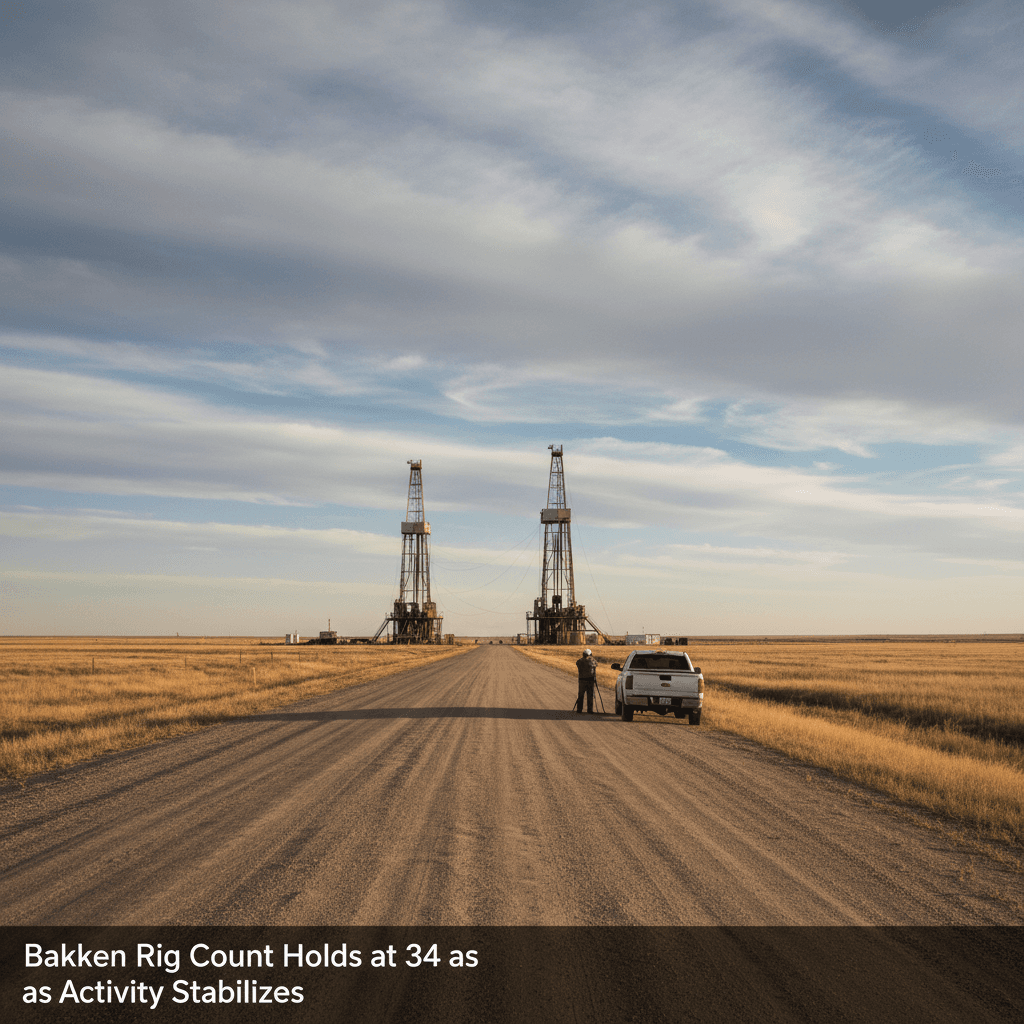
Bakken Rig Count Holds at 34 as Activity Stabilizes
The North Dakota drilling fleet shows no daily movement, maintaining a level slightly below last week but above the August average.
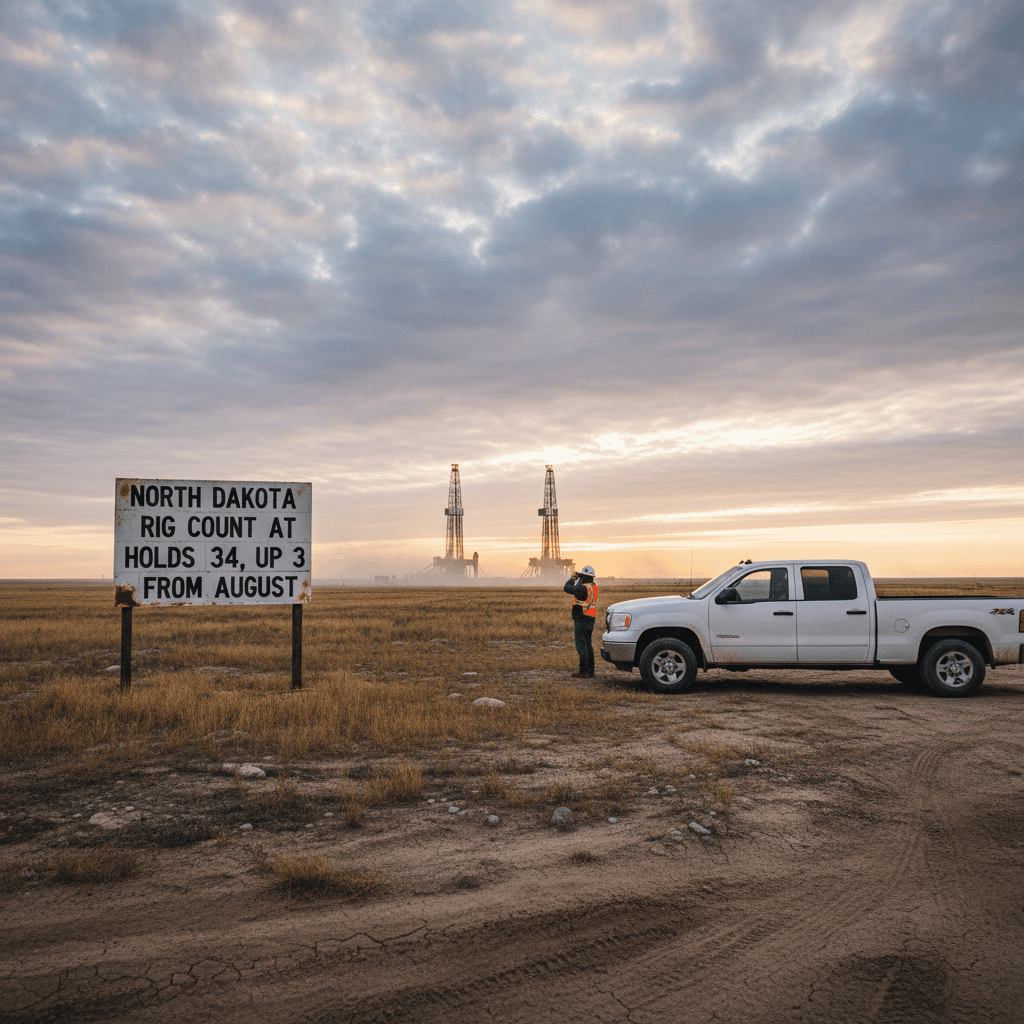
The number of rigs actively drilling for oil and gas in North Dakota held steady at 34 on Sunday, September 13, according to live data from Bakken Wire. The count showed no change from the previous day, with no new rigs added, none removed, and none reporting a change in location.
This stability follows a slight dip in activity over the past week. The current fleet is down by one rig from the count of 35 reported on September 6. However, the longer-term trend remains modestly positive, with the current level representing an increase of two rigs compared to the 32 active rigs recorded a month ago on August 14.
The rig count is a key leading indicator for future oil production in the Bakken formation, North Dakota's primary oil-producing region. A stable count in the mid-30s suggests operators are maintaining a consistent, though cautious, pace of development. This level of activity is typically sufficient to hold production relatively flat, offsetting the steep decline rates from existing wells.
The current environment reflects a balancing act for Bakken operators. They must navigate capital discipline mandates from investors, fluctuating crude oil prices, and the ongoing logistical challenges of operating in the Williston Basin. The rig count's position above the August low but below last week's peak may indicate a period of evaluation as companies assess third-quarter results and plan for year-end drilling programs.
For service companies and royalty owners, a steady rig count provides a degree of predictability for local economic activity and near-term royalty payments. However, the count remains significantly below the boom-era highs, which regularly exceeded 200 rigs a decade ago, underscoring the industry's shifted focus toward efficiency and generating free cash flow over aggressive volume growth.
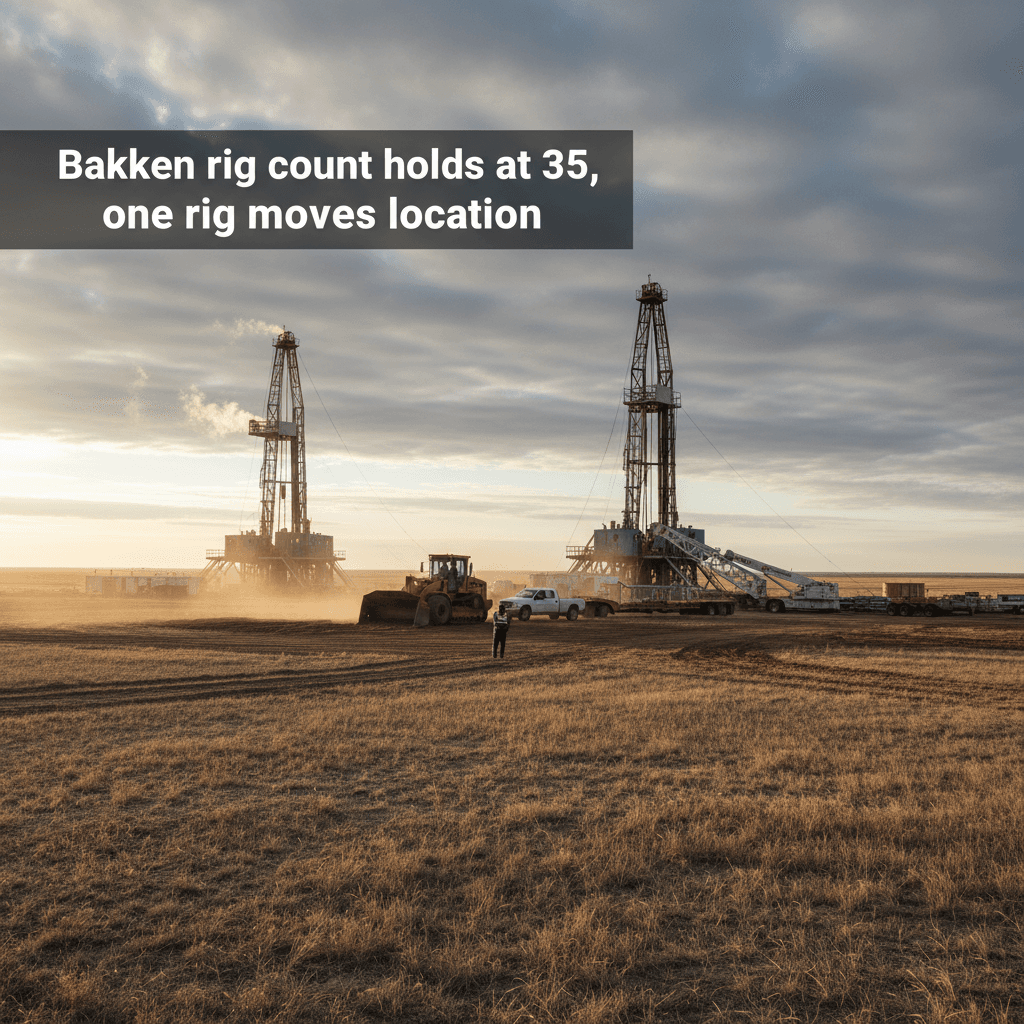
The lack of daily rig movements—with no additions, deletions, or relocations—highlights a pause in field operations, which is common during weekend reporting periods. Attention will now turn to whether this plateau holds into the coming week or if operators make adjustments to their drilling plans.
Source
Bakken Wire live rig data and historical context.