Bakken Rig Count Holds at 37, Up 3 From October Baseline
The North Dakota drilling fleet remains stable after recent gains, while global attention turns to a major North Sea project approval push.
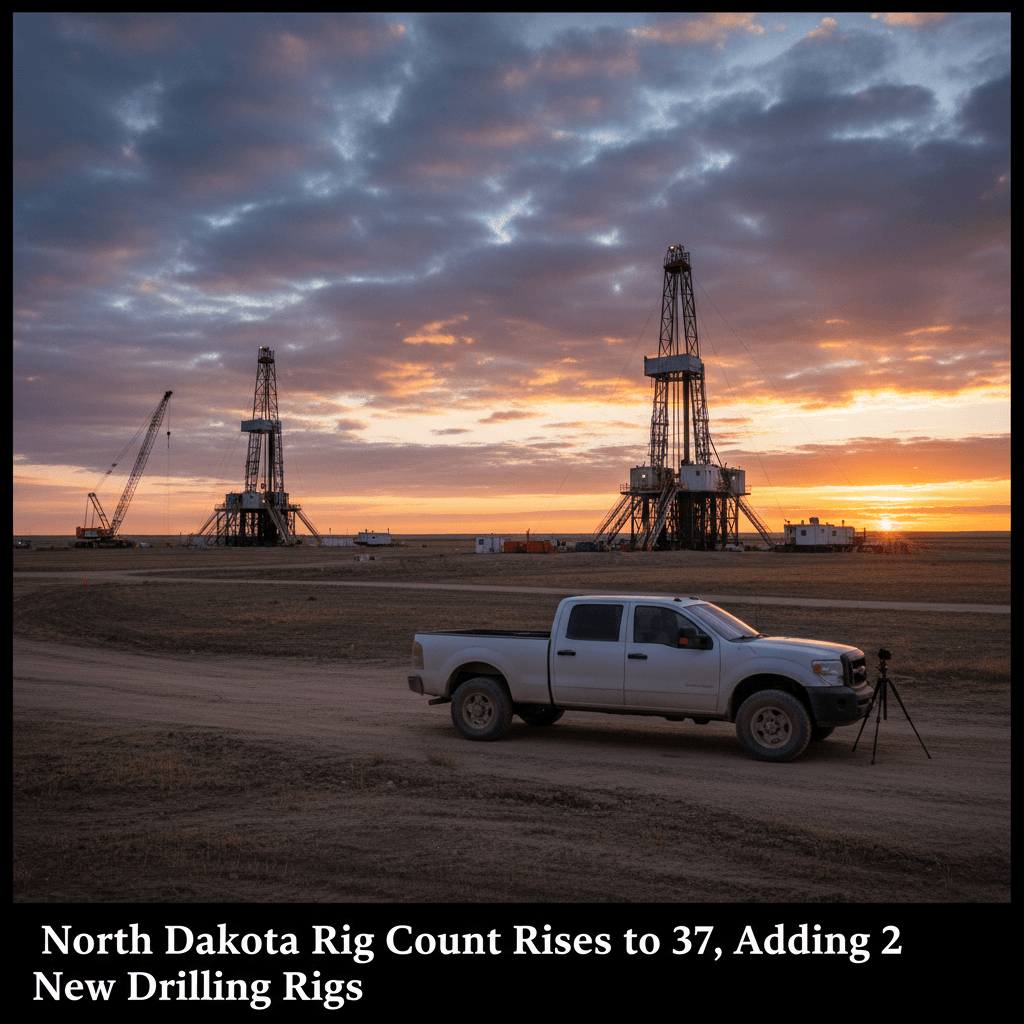
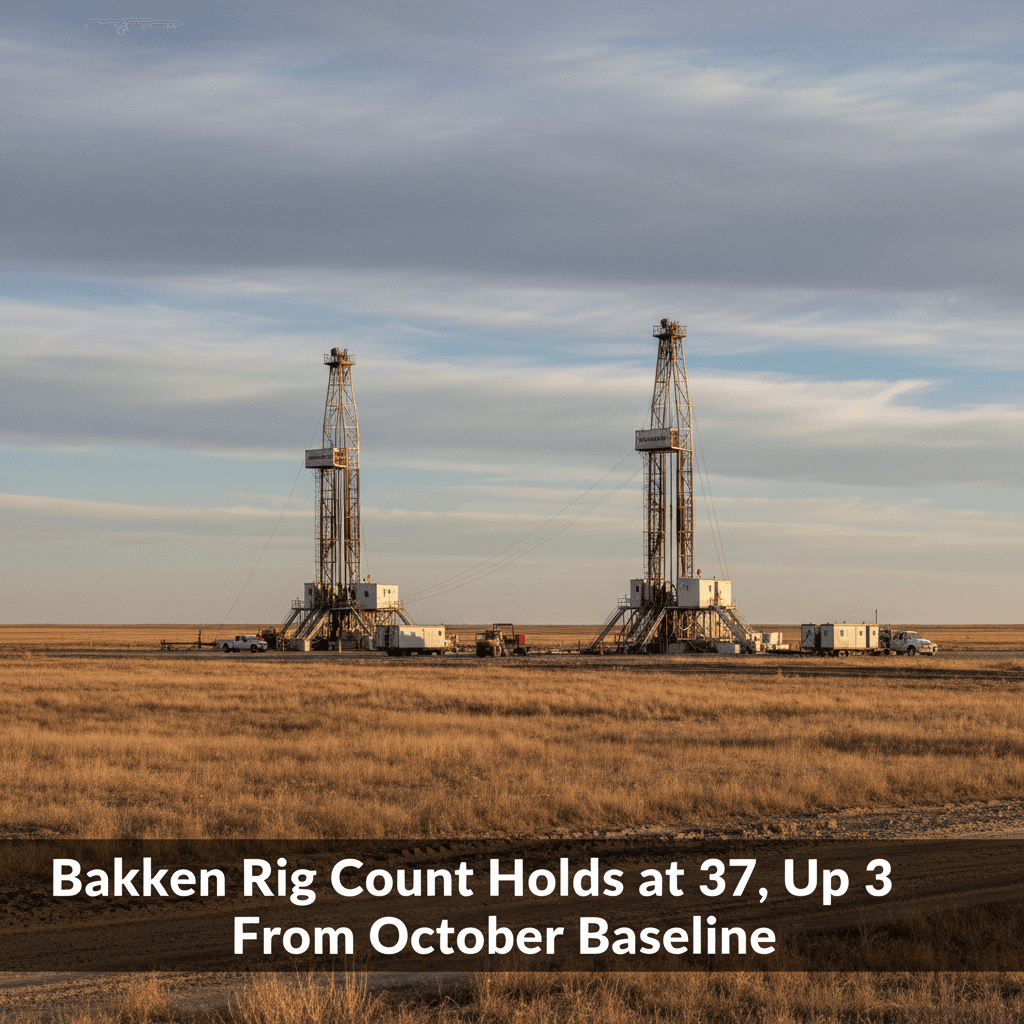
North Dakota's active drilling rig count remained unchanged at 37 for Sunday, November 8, according to live data from Bakken Wire. The count showed no daily movement, with zero new rigs added, zero removed, and none relocating.
The current fleet represents a gain of one rig compared to one week ago, when 36 rigs were active on November 1. The stability follows a period of growth, as the state's rig count is up by three from the level of 34 seen one month ago on October 9.
The steady activity in the Williston Basin contrasts with high-stakes political deliberations over a major offshore project in another mature basin. According to a November 6 report from Rigzone, UK cabinet ministers are lobbying Prime Minister Andy Burnham and Energy Secretary Miatta Fahnbulleh to approve drilling at the Rosebank oil and gas field in the North Sea.
While the Bakken is a prolific onshore shale play and the North Sea is an offshore conventional basin, both regions represent significant hydrocarbon resources where drilling approvals are closely watched by global markets and local economies. The push for Rosebank underscores ongoing global demand for secure hydrocarbon supplies, even as operators in regions like the Bakken maintain disciplined capital spending.
The Bakken formation, spanning western North Dakota and parts of Montana, is the primary driver of the state's oil production. Rig activity is a leading indicator of future production and a key metric for service company demand, royalty owner income, and state tax revenue.
A rig count in the upper 30s reflects a focus by operators on core acreage and capital efficiency, targeting the most productive zones within the Bakken and Three Forks formations. The current level is significantly below the historic peaks seen in the early 2010s but has found a plateau in recent years consistent with maintained output.
The lack of daily rig movements suggests a period of operational consistency for drilling contractors and well service providers active in the region. With winter conditions approaching, operators typically finalize drilling programs before the most challenging weather impacts logistics and operations.
The incremental monthly gain of three rigs indicates a cautious but positive shift in operator sentiment or planning over the autumn period, contributing to the stable foundation for near-term production.
Source
Bakken Wire live rig data, Rigzone