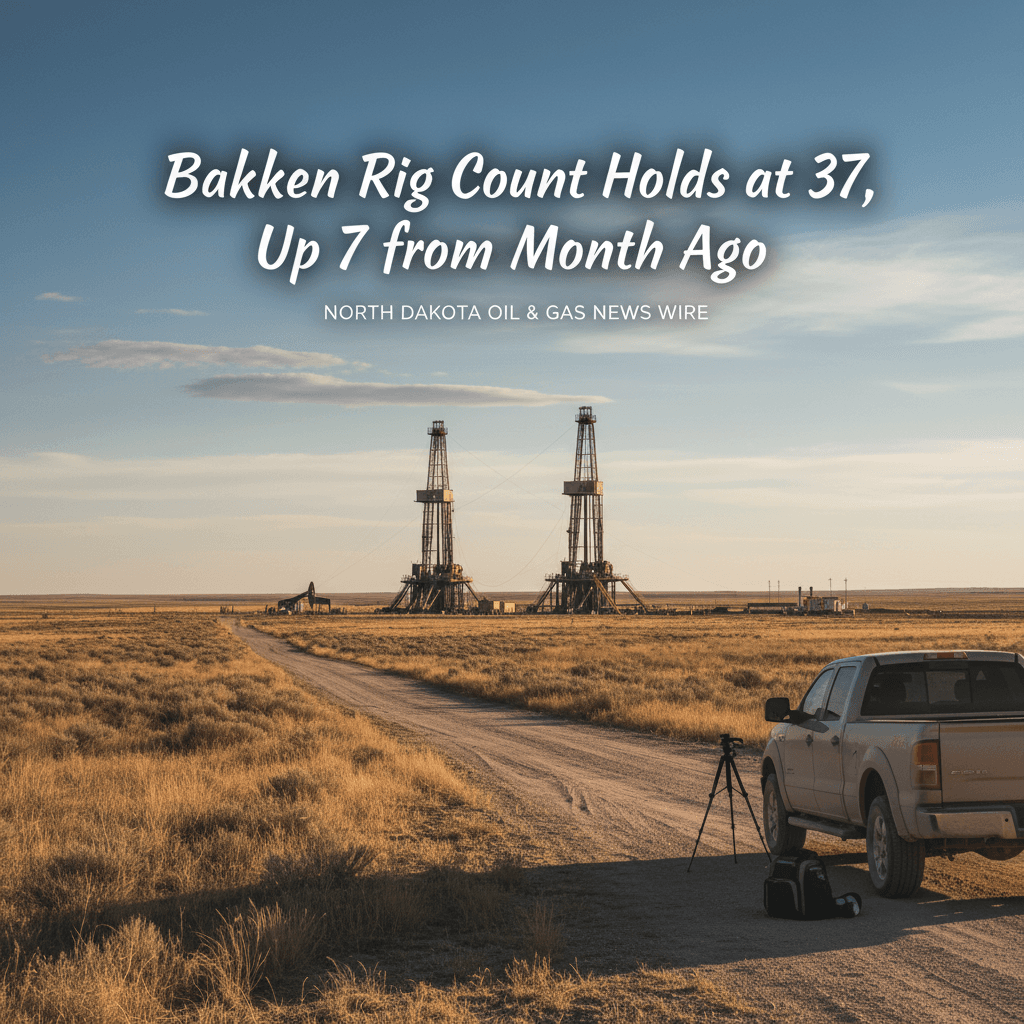
Bakken Rig Count Holds at 37, Up 7 from Month Ago
North Dakota's active drilling fleet remains stable after significant monthly gain, as royalties continue to support regional economy.
North Dakota's active drilling rig count held steady at 37 on Saturday, October 24, 2026, according to live data from Bakken Wire. The tally showed no change from the previous day, with no new rigs added, no rigs removed, and no rigs moving locations.
The current activity level represents a gain of one rig compared to one week ago, when 36 rigs were active. More significantly, the drilling fleet has expanded by seven rigs over the past month, rising from a count of 30 active rigs on September 24.
This sustained level of drilling activity underpins ongoing development in the Bakken formation, North Dakota's primary oil-producing region. The steady rig count suggests operators are maintaining a consistent pace of new well drilling to offset natural production declines from existing wells.
The financial impact of this activity extends beyond oil companies to mineral rights owners across the state. According to a report from Bing News, the Bakken boom has brought significant financial shifts for farmers and landowners who receive royalty payments. The source highlighted John Bartelson, a wheat farmer in North Dakota, who began receiving royalties from two oil wells on his land, illustrating how mineral rights have proven pivotal for some in the region.
While the rig count is a key leading indicator for future oil production, it reflects only one facet of the industry's footprint. Efficiency gains mean that fewer rigs can now generate the same or greater production than larger fleets did in previous years. The current count of 37 rigs is focused on delineating new zones and drilling high-productivity wells in core areas of the Williston Basin.
The month-over-month increase of seven rigs indicates a measured response by operators to market conditions and commodity price signals. A stable rig count week-to-week, following a period of growth, often points to a period of consolidation as crews complete wells and rigs finish current assignments.
For royalty owners like those described in the related news, each active rig represents not only potential future wells on their minerals but also sustained economic activity in the form of land work, pipeline construction, and well servicing. The royalties generated from production provide a critical revenue stream that can reshape local finances, as reported by Bing News.
Market observers will monitor whether the rig count maintains this plateau or if operators adjust their drilling plans in the coming weeks based on oil price trends and operational efficiency.
Source
Bakken Wire live rig data, historical context from Bakken Wire, Bing News