WTI Crude--
Brent Crude--
Natural Gas--
ND Rig Count--
WTI Crude--
Brent Crude--
Natural Gas--
ND Rig Count--
Brent Surges Past $112 on OPEC+ Cut Reports; WTI Tops $99 - Bakken Wire
Oil Prices

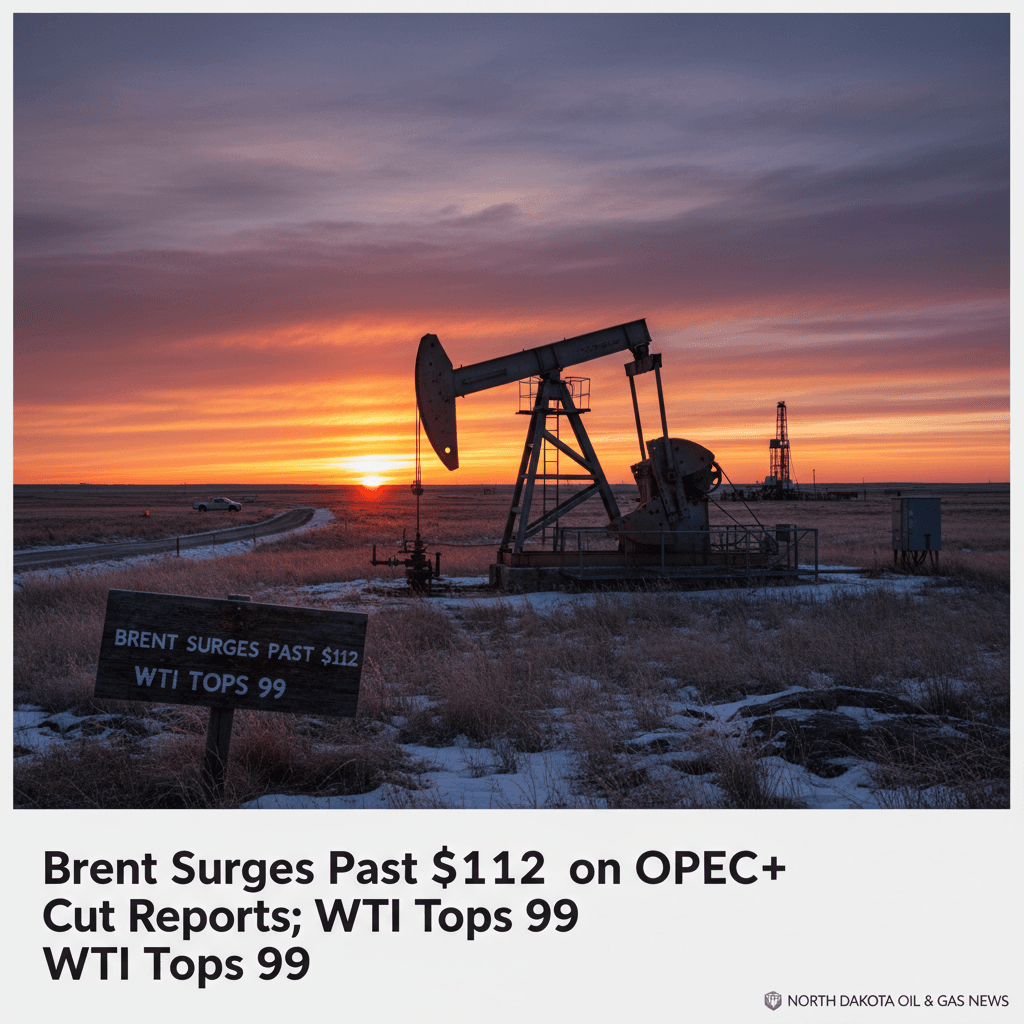
Brent Surges Past $112 on OPEC+ Cut Reports; WTI Tops $99

Strong international benchmarks lift Bakken-linked crude prices, though local differential widens slightly in Thursday trading.

Bakken Wire Staff·🌅Afternoon Wire·

Global oil benchmarks rallied sharply on Thursday, October 22, 2026, with Brent crude surging over 3.7% on reports of a potential OPEC+ production cut. The price action provides a significant lift to Bakken producers, though the local price differential saw modest pressure.

The front-month Brent crude contract settled at $112.92 per barrel, a substantial gain of $4.10 for the session. The rally was reportedly fueled by growing market anticipation that the OPEC+ coalition, which includes major producers like Saudi Arabia and Russia, is considering reducing output at its upcoming meeting to support prices. West Texas Intermediate (WTI), the primary benchmark for U.S. crude, also posted strong gains, rising $1.97 to close at $99.12 per barrel, a 2.03% increase.

For operators in the North Dakota Bakken, the price of their crude is typically set at a discount to WTI. On Thursday, the Bakken differential was reported at -$3.42 per barrel versus WTI. This implies a wellhead price for Bakken crude of approximately $95.70 per barrel, based on the day's WTI settlement. While the absolute price received by producers rose with the rally in benchmarks, the differential widened slightly compared to recent levels, indicating localized pricing pressure or logistical factors.

The stark outperformance of Brent over WTI, which expanded the spread between the two benchmarks, is often seen as a sign of tightening global supply conditions relative to the U.S. market. The specific catalyst appears to be the OPEC+ speculation, which directly impacts the international crude flows priced against Brent. Such a dynamic can increase the competitiveness of U.S. exports, including Bakken crude shipped to international markets.

Natural gas prices, a secondary revenue stream for many Bakken wells, were largely unchanged. The benchmark contract settled at $2.78 per MMBtu, down just one cent on the day.

The day's price action underscores the continued sensitivity of oil markets to OPEC+ policy signals. For Bakken operators, sustained prices near or above $95 per barrel at the wellhead provide solid cash flow to support drilling and completion activities, though wider differentials can trim margins. The market will now closely watch for official confirmation and details of any OPEC+ production agreement, which will set the tone for prices into year-end.

Source

Bakken Wire Live Price Data
oil priceswtibrentbakken differentialopecnatural gasmarket update

Share this article

Related Articles

Oil Prices Climb as U.S. Crude Inventories Decline - Bakken Wire
Oil Prices

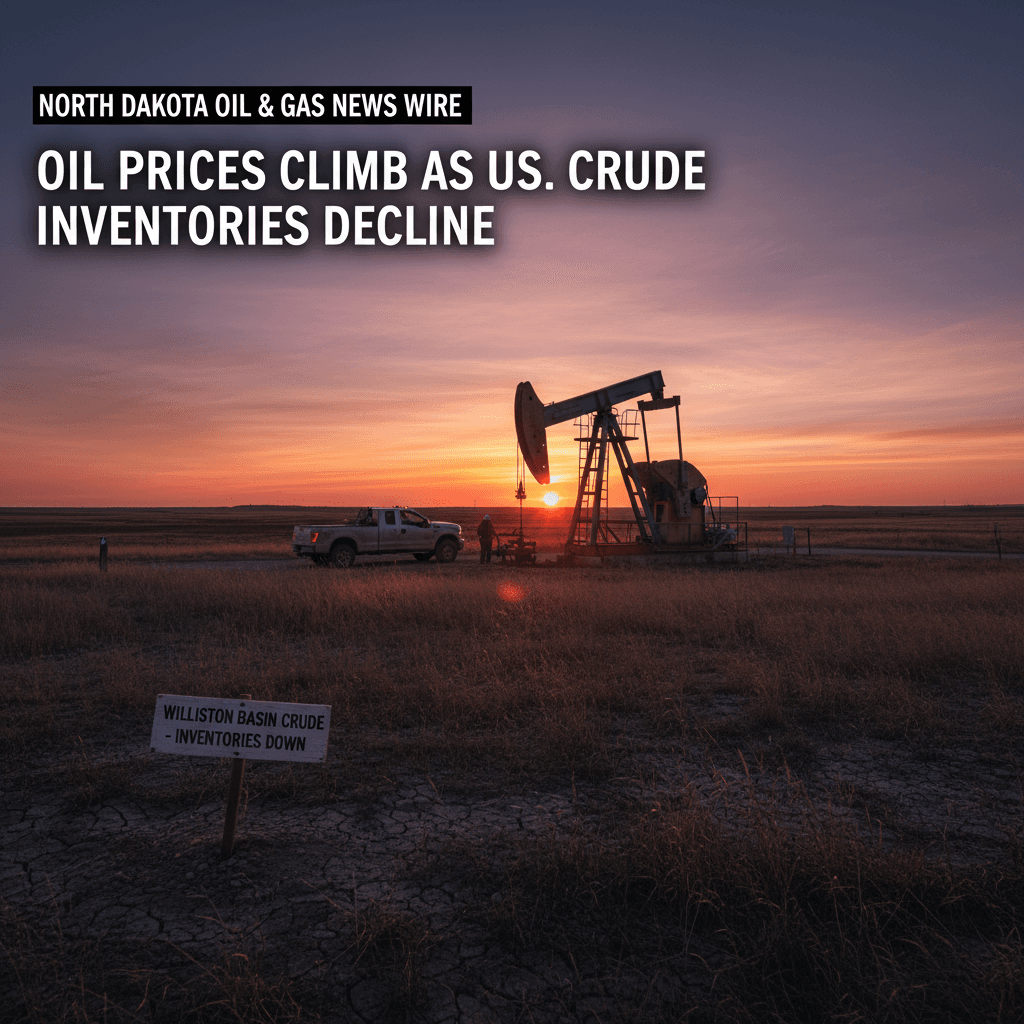
Oil Prices Climb as U.S. Crude Inventories Decline

Oil prices rose sharply in midday trading Thursday, with U.S. benchmark West Texas Intermediate (WTI) crude gaining over 1.5% to trade near $99 per barrel. The move was supported by a reported weekly decline in U.S. commercial crude inventories. As of midday October 22, WTI Crude was trading at $98.69, a gain of $1.54 or 1.59%. The international benchmark Brent Crude saw a larger increase, rising $2.80 to $111.62 per barrel, a jump of 2.57%. Natural gas prices also edged higher, adding $0.03 to reach $2.82 per MMBtu. The price support followed data showing a drawdown in U.S. stockpiles. According to a report from Rigzone, commercial crude oil stocks, excluding the Strategic Petroleum Reserve, fell by 3 million barrels for the week ending October 16. The U.S. Energy Information Administration's weekly status report showed inventories at 412.517 million barrels. For Bakken producers, the price of their crude is typically priced...

🔆Midday Wire·Oct 22
Oil Surges Past $111 on Mideast Tensions; Bakken Discount Widens - Bakken Wire
Oil Prices

Oil Surges Past $111 on Mideast Tensions; Bakken Discount Widens

Global oil prices surged more than 2% on Thursday, with Brent crude topping $111 per barrel, following attacks on Saudi Arabian energy infrastructure and escalating tensions in the Persian Gulf. According to live price data, West Texas Intermediate (WTI) crude traded at $99.52, a gain of $2.37. Brent crude reached $111.97, up $3.15. North Dakota Bakken crude traded at a $3.42 discount to WTI. The price spike was triggered by renewed geopolitical risks. According to a report from OilPrice.com, the Iran-aligned Houthis in Yemen struck near Saudi Arabia's Shaybah oilfield on Wednesday, killing two people. While operations at the major field were unaffected, the attack rattled markets. Furthermore, Iran’s Islamic Revolutionary Guard Corps Navy claimed on Thursday that seven vessels, including oil tankers, were hit in the Persian Gulf over the past day, according to a separate OilPrice.com report. These events have heightened concerns over potential supply disruptions from a...

☀️Morning Wire·Oct 22
WTI Slips, Brent Rises Amid Mixed Signals; Bakken Discount Widens - Bakken Wire
Oil Prices

WTI Slips, Brent Rises Amid Mixed Signals; Bakken Discount Widens

West Texas Intermediate crude oil prices fell slightly on Wednesday, October 21, while global benchmark Brent crude posted a gain, creating a mixed trading session for Bakken producers. WTI for December delivery settled at $97.50 per barrel, a decline of $0.32 or 0.33%. In contrast, Brent crude rose $0.64 to $109.43 per barrel, a gain of 0.59%. The Bakken differential—the discount at which Bakken crude trades relative to WTI at the Clearbrook, Minnesota hub—widened to -$3.42 per barrel. The price divergence highlights competing market forces. According to general industry analysis, Brent's strength is primarily being driven by ongoing geopolitical tensions in the Middle East, which threaten supply routes and production from a key global oil region. This geopolitical risk premium continues to bolster the international benchmark. Concurrently, WTI is facing pressure from domestic factors, including another reported build in U.S. crude oil inventories, which suggests robust supply or weakening near-term...

🌅Afternoon Wire·Oct 21