WTI Crude--
Brent Crude--
Natural Gas--
ND Rig Count--
WTI Crude--
Brent Crude--
Natural Gas--
ND Rig Count--
Pipeline & Infrastructure

Canada Moves to Fast-Track Oil Pipeline for Asian Market Access

Prime Minister Carney invokes new powers to expedite a high-capacity pipeline, a development with potential long-term implications for Bakken crude competition.

Bakken Wire Staff·🌅Afternoon Wire·

Canadian Prime Minister Mark Carney is expediting regulatory approval for a new, high-capacity oil pipeline intended to expand Canada's access to Asian markets, according to a report from Rigzone. The report, published October 2, stated Carney has invoked new powers to fast-track the project.

The development highlights ongoing efforts by North American producers to reach lucrative overseas markets beyond domestic and traditional refining hubs. Increased Canadian export capacity to Asia could influence global crude pricing benchmarks and shipping routes.

For operators in North Dakota's Bakken formation, new Canadian pipeline capacity represents a shifting competitive landscape. Bakken crude, which primarily moves to market via pipelines, rail, and truck, often competes with Canadian heavy and light crude grades in the U.S. Midwest and Gulf Coast refining markets.

Enhanced Canadian access to Asian buyers could, over time, alter flow patterns and competition for pipeline space within the continent. However, the specific impact on Bakken differentials—the price difference between Bakken crude and the U.S. benchmark—will depend on the project's ultimate capacity, timeline, and the volumes of light crude it may carry.

The Rigzone report did not specify the pipeline's route, destination, or capacity. The general move to fast-track energy infrastructure in Canada mirrors regulatory debates that have historically surrounded U.S. pipeline projects, including those affecting Bakken takeaway capacity.

The focus on Asian markets underscores the global demand for secure hydrocarbon supplies. Bakken producers have long sought more direct access to international buyers, though current exports primarily move via the Gulf Coast. Any major increase in Canadian crude exports to Asia could indirectly affect global supply balances that influence the price Bakken crude can fetch.

Source

Rigzone
pipelinecanadaexportsasiaregulationmarket accesscompetition

Share this article

Related Articles

Pipeline & Infrastructure

Saudi Arabia Commences Exports on Major Oil Pipeline

Saudi Arabia has begun exporting crude oil via a major new pipeline, according to a report from Rigzone. The development adds significant export capacity to the global market. The pipeline has a total capacity of about seven million barrels per day, with about five million typically earmarked for exports, Rigzone reported on September 28. The start of operations on this key infrastructure project increases the volume of crude available for international trade. For operators in North Dakota's Bakken formation, increased global supply can influence the price differentials for Bakken crude. The Bakken competes in a global marketplace, and new sources of export barrels can affect the competitiveness of shipments from the U.S. Gulf Coast and other export hubs. The development underscores the interconnected nature of the global oil market. Bakken production, which is primarily transported to market via pipelines and rail, is priced against global benchmarks. Any significant change in...

🔆Midday Wire·Sep 28
Commentary Marks 10-Year Anniversary of Dakota Access Pipeline Protests - Bakken Wire
Pipeline & Infrastructure

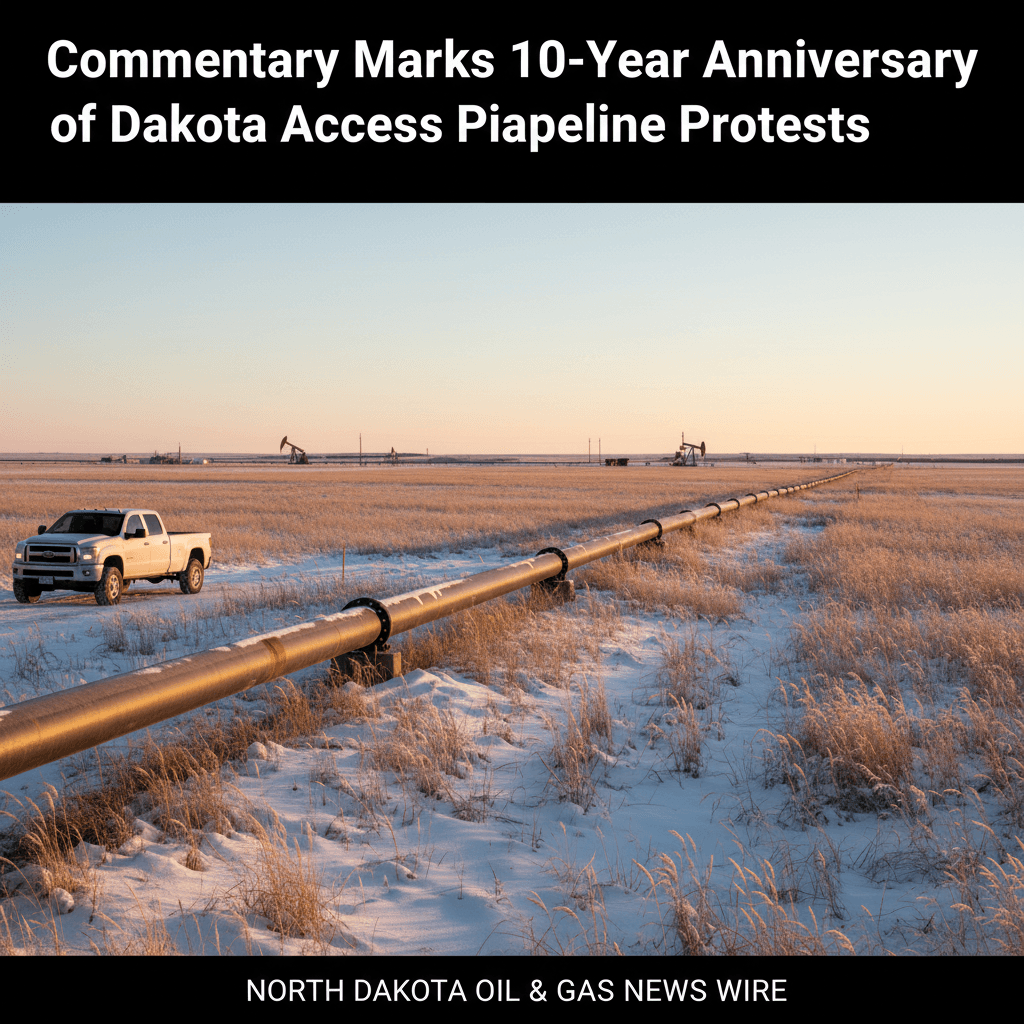
Commentary Marks 10-Year Anniversary of Dakota Access Pipeline Protests

A commentary marking the 10-year anniversary of the Dakota Access Pipeline (DAPL) protests asserts that the Standing Rock resistance "transformed us" and highlighted "how far North Dakota was willing to go for oil," according to a piece published on Bing News. The opinion column, authored by LaDuke, frames the 2016-2017 protests as a pivotal event with enduring consequences for the state's political and environmental discourse. The commentary states that Water Protectors witnessed "the brutality of Tiger Swan" and "$38 million in repression and violence against unarmed people" during the pipeline standoff. It further claims that North Dakota's judicial institutions have since "relentlessly pursued Water Protectors, with the vigor of the cavalry of a century before." The piece casts North Dakota as a "meth lab" for democracy, alleging its policies have been adopted by the Trump administration, with former Governor Doug Burgum now "systematically dismantling federal land and wildlife protections" as...

🔆Midday Wire·Sep 25
Pipeline & Infrastructure

Decade After Standing Rock Protests, DAPL Legacy Shapes North Dakota Energy Landscape

A decade after the Standing Rock resistance to the Dakota Access Pipeline, the event continues to shape perspectives on energy development and indigenous rights in North Dakota, according to a recent commentary. The piece, published by Winona LaDuke on September 23, 2026, reflects on the 2016-2017 protests which she described as "epic" and transformative for participants. The commentary states that the protests highlighted the "brutality" of security contractor Tiger Swan and an estimated "$38 million in repression and violence against unarmed people." It frames the event as a lesson in "fossil fuel addiction — and how far North Dakota was willing to go for oil." For Bakken operators and the state's energy sector, the pipeline protests marked a pivotal moment of national scrutiny on infrastructure projects crossing tribal lands and critical water sources. The legacy of the protests includes ongoing legal and political repercussions. LaDuke's commentary asserts that North Dakota’s...

🌅Afternoon Wire·Sep 24