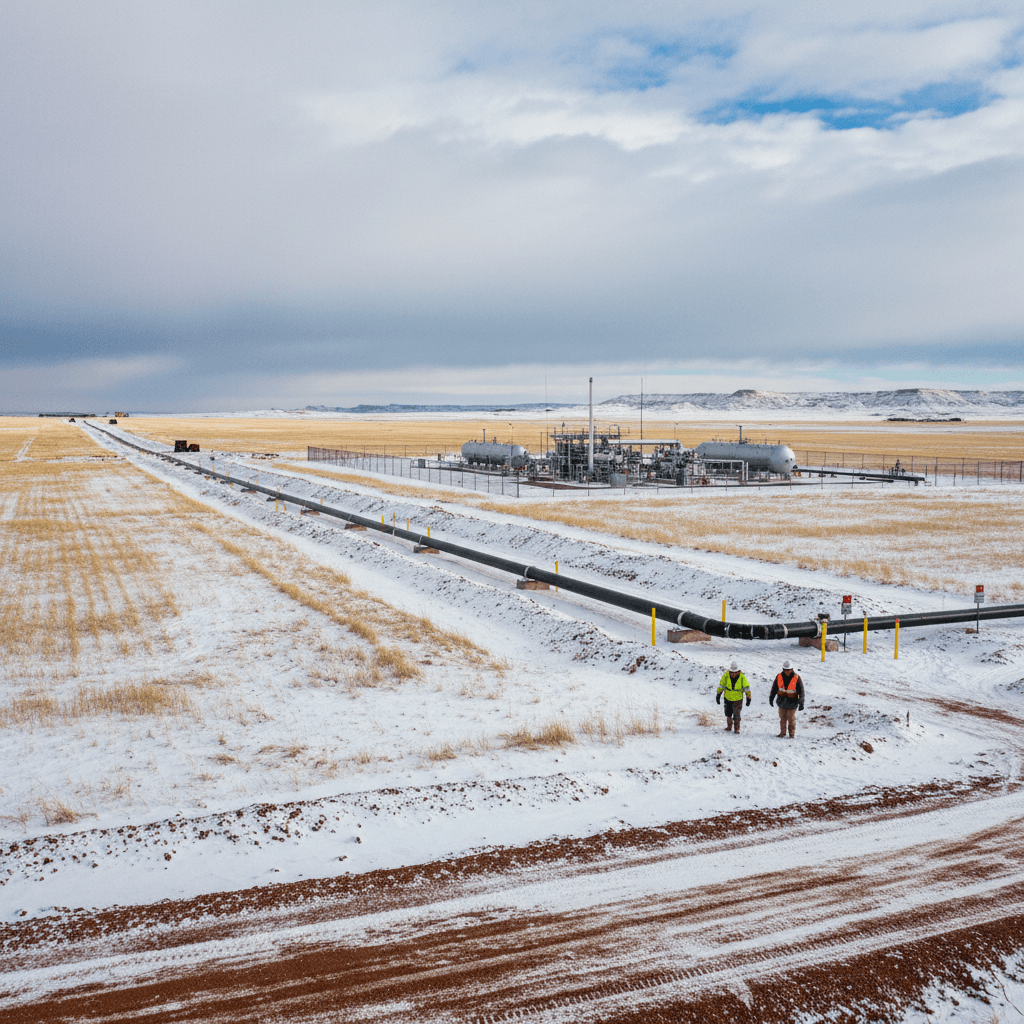
Dakota Access Pipeline Allowed to Continue Operating Under Stricter Rules
U.S. Army Corps of Engineers decision ensures key Bakken oil outlet remains open, but with enhanced environmental mandates.
The U.S. Army Corps of Engineers has decided to allow the Dakota Access oil pipeline (DAPL) to continue operating, but under stricter environmental and safety mandates. The decision was announced on Thursday, May 21, 2026, according to a report from Reuters via Bing News.
This ruling is a critical development for oil producers in North Dakota's Bakken formation. The Dakota Access Pipeline is a major conduit for Bakken crude, transporting oil from the state's production fields to a market hub in Illinois. Its continued operation provides stability for shippers who rely on it as a primary alternative to more expensive rail transport.
The decision represents a setback for the Native American tribes and environmental groups who have long sought to shut the pipeline down over concerns about its potential impact on water resources and sacred sites. While the pipeline remains open, the new, tighter operating conditions mandated by the federal government will likely impose additional compliance requirements on the line's operator.
For Bakken operators and royalty owners, the continuation of service on DAPL avoids a major market disruption. A closure would have forced a significant portion of the region's daily oil production to find alternative, often costlier, routes to refineries, potentially weighing on local crude prices. The certainty of continued access to this pipeline supports production planning and investment in the basin.
The specific details of the new environmental and safety mandates were not detailed in the summary, but such conditions typically involve more frequent inspections, enhanced leak detection systems, and revised emergency response plans. Operators throughout the supply chain will be monitoring how these implemented changes affect the pipeline's long-term reliability and operational costs.
Source
Reuters report via Bing News, published May 22, 2026.