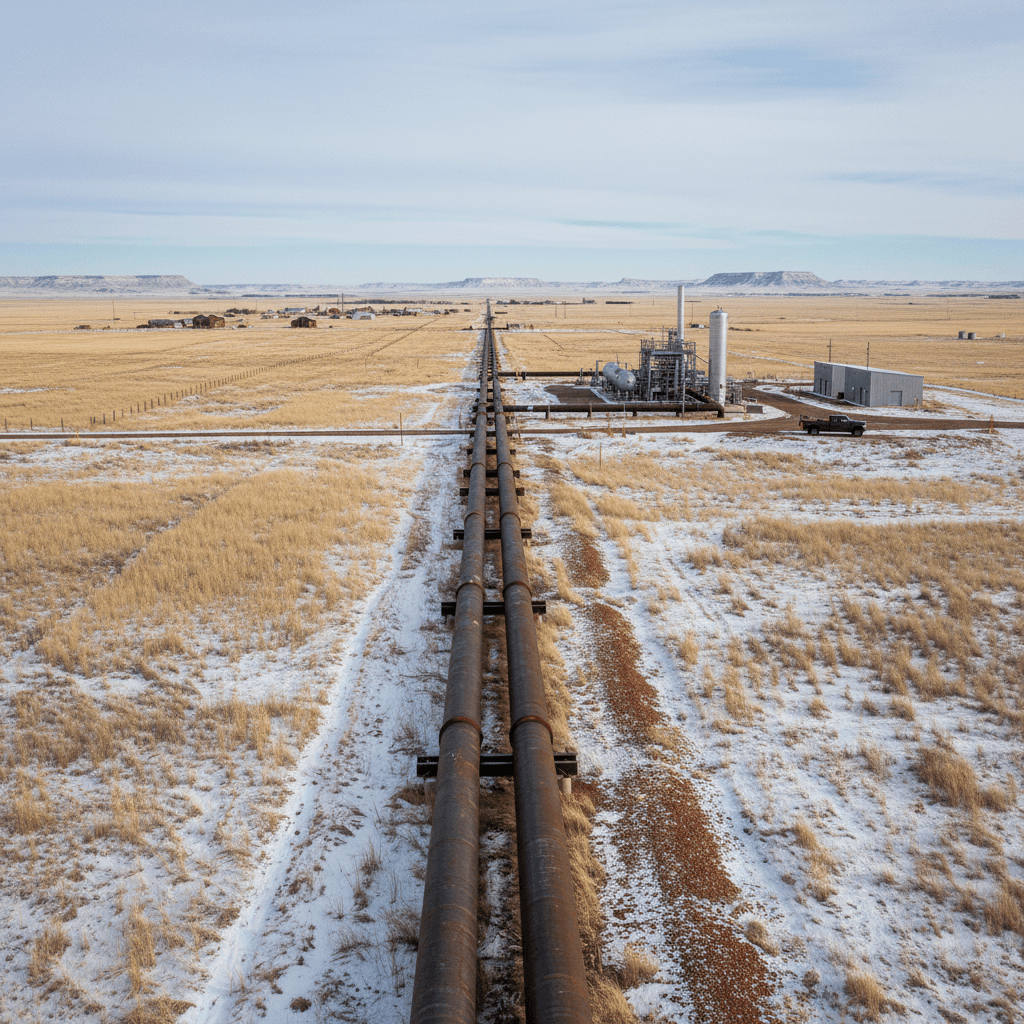
Dakota Access Pipeline to Continue Operating Under Stricter Mandates
The U.S. Army Corps of Engineers will allow the key Bakken crude conduit to remain open, but with enhanced environmental and safety requirements.
The Dakota Access Pipeline (DAPL) will continue to transport crude oil from the Bakken formation, but under stricter operating conditions. According to Reuters, the U.S. Army Corps of Engineers announced the decision on Thursday, May 21, 2026, allowing the pipeline to operate with tighter environmental and safety mandates.
The ruling represents a significant outcome for Bakken shale operators and North Dakota's oil industry. The pipeline is a critical piece of infrastructure, providing a direct and cost-effective route for moving Bakken crude to market hubs in Illinois. Its continued operation ensures market access and supports production stability in the region.
However, the imposition of stricter mandates by the federal agency introduces a new regulatory layer for pipeline operator Energy Transfer. The specific details of the enhanced environmental and safety requirements were not disclosed in the report, but they will likely involve more rigorous monitoring, inspection protocols, or operational adjustments.
The decision is noted as a setback for the Native American tribes and environmental groups who have long opposed the pipeline's route, particularly its crossing near the Standing Rock Sioux Reservation. Their legal and regulatory challenges sought the pipeline's shutdown over concerns about potential spills and impacts on water resources.
For Bakken producers, the continuation of DAPL service avoids a major supply chain disruption that would have forced more crude onto railroads and trucks, increasing transportation costs and logistical complexity. The focus now shifts to how the new operational mandates will be implemented and whether they will impact the pipeline's capacity or reliability in the long term.
Source
Reuters