DAPL Protest Cost Settlement Nears as Pipeline Expansion Plans Surface
A federal judge signals he will vacate a $28M judgment against the U.S., while reports outline ambitions to extend the pipeline north.
A federal judge has indicated he will vacate a nearly $28 million judgment against the U.S. government related to Dakota Access Pipeline protest costs, clearing the way for a final settlement. According to a report from the North Dakota Monitor cited by Bing News, U.S. District Judge Daniel Traynor signaled his intent during a hearing on Friday, May 8, 2026.
The settlement would resolve a 2019 lawsuit where North Dakota argued the federal government allowed protesters to camp on federal land during the 2016-2017 demonstrations near the Standing Rock Sioux Reservation. The state said this led to millions in law enforcement and cleanup costs. Judge Traynor had ruled in the state's favor in April 2025, ordering the federal government to pay $28 million.
Attorneys for both parties stated North Dakota is still expected to receive a payment, though the final settlement amount has not been disclosed. According to court testimony, the Department of Justice wants Traynor's rulings vacated as part of the settlement to prevent the legal findings from influencing future cases.
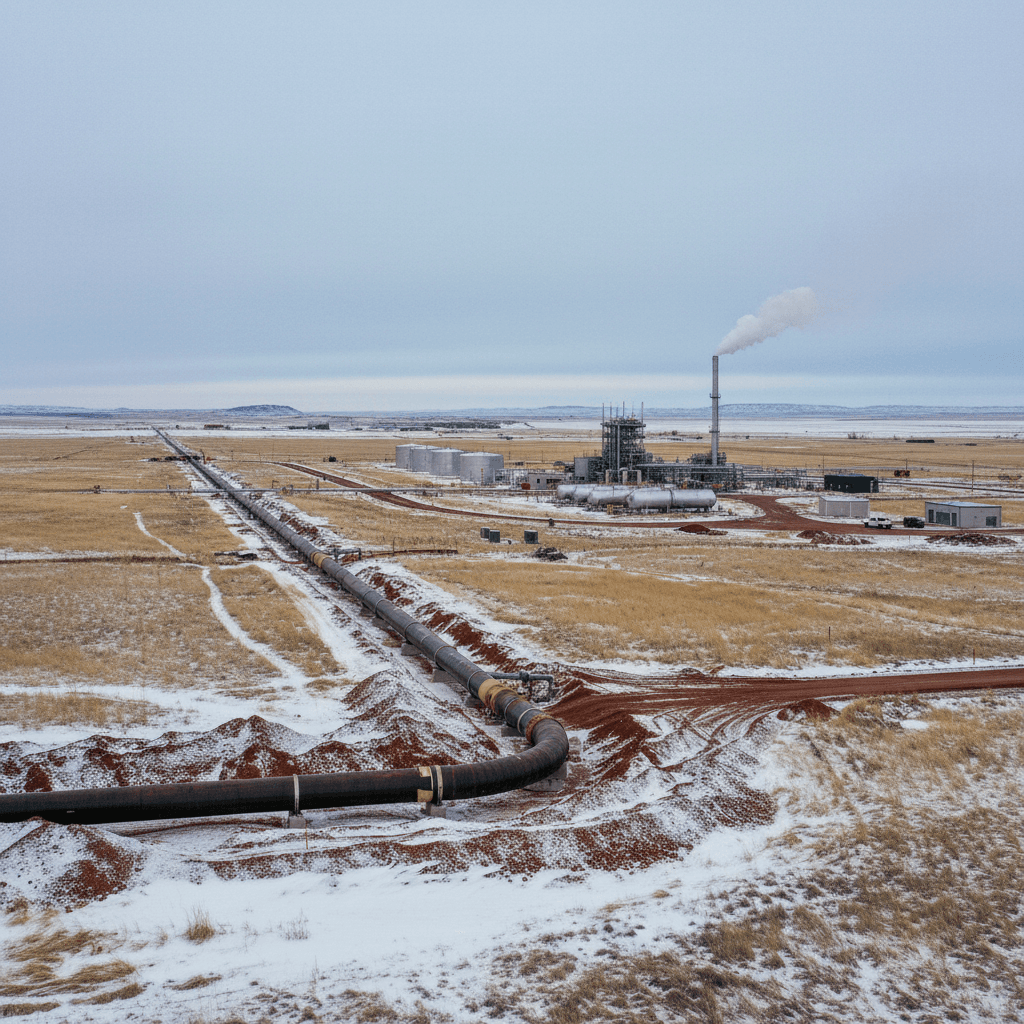
Separately, a new report outlines potential expansion ambitions for the Dakota Access Pipeline (DAPL) system. According to a Yahoo Finance summary published May 13, a strategy involving a "patchwork of smaller, connected projects using existing pipe" aims to extend the Dakota Access Pipeline north to Canada. The report frames this as part of a broader effort to also resurrect the Keystone XL project.
For North Dakota and Bakken operators, the nearing settlement represents the closing of a long-standing financial dispute over the pipeline's contentious construction period. The state is poised to recover a portion of the significant costs it incurred. The potential for a northern extension of DAPL, as reported, suggests future infrastructure developments that could affect takeaway capacity and market access for Bakken crude, though the report did not provide specific project details or timelines.
The core Dakota Access Pipeline, which began service in 2017, moves approximately 570,000 barrels per day of Bakken crude from North Dakota to a hub in Patoka, Illinois. It remains a critical piece of infrastructure for the region's oil industry.
Source
Bing News (North Dakota Monitor court reporting, published May 11, 2026); Bing News (Yahoo Finance summary, published May 13, 2026)