Global Conflicts Reshape Oil Landscape, Influencing Bakken Outlook
Iran conflict and constrained Russian output create a volatile global supply picture with implications for North Dakota producers.
The ongoing conflict in Iran has fundamentally altered the global energy landscape, according to an industry expert cited by Rigzone. J.P. Hanson, Managing Director and Global Head of the Oil & Gas Group at Houlihan Lokey, made the statement in a report published Wednesday.
Simultaneously, Russia expects its oil production to remain flat in 2026, Rigzone separately reported. The country anticipates only modest growth in the coming two years as its energy infrastructure faces intense drone attacks from Ukraine.
These dual geopolitical developments are tightening global oil supply fundamentals. Persistent conflict in the Middle East, a key oil-producing region, introduces a sustained risk premium and volatility to crude markets. The constraint on Russian output, a major source of global supply prior to the Ukraine war, further removes potential barrels from the market.
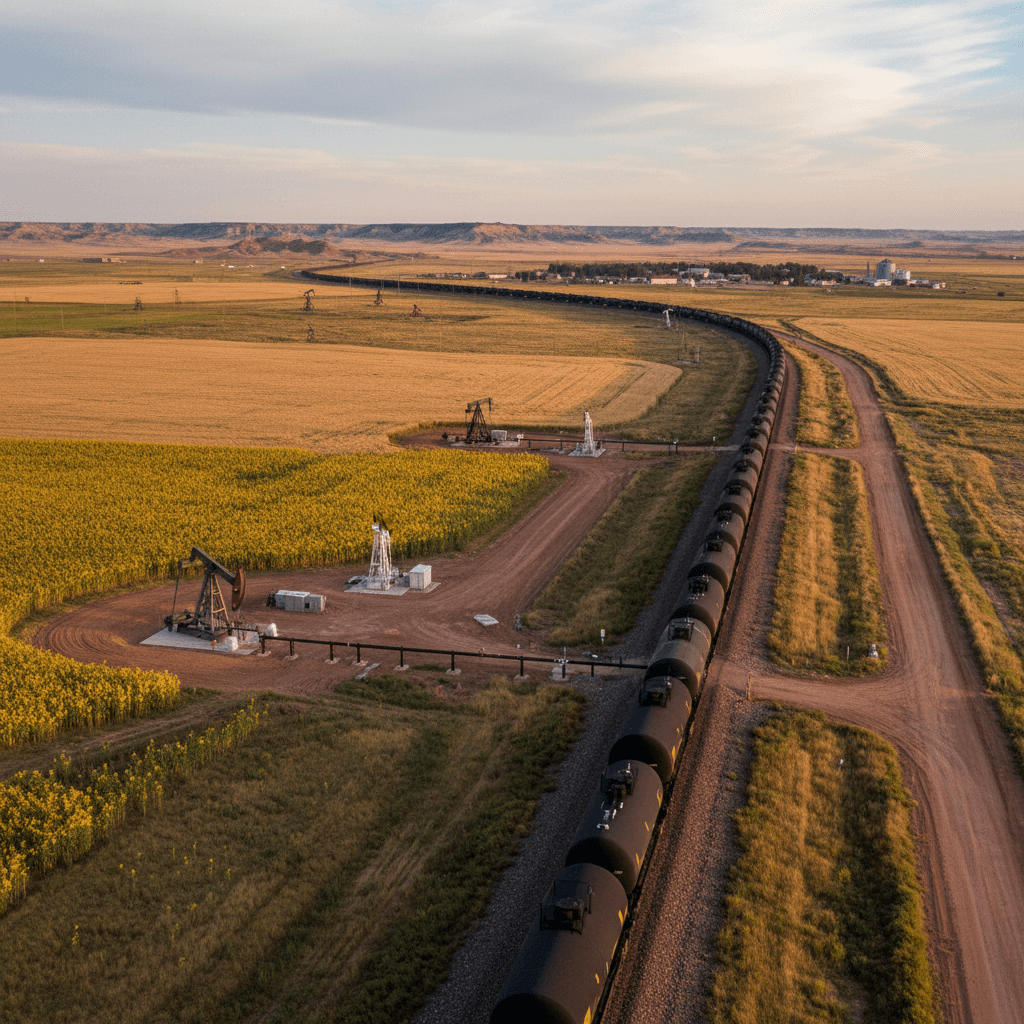
For Bakken operators in North Dakota, this external environment supports a firmer price floor for West Texas Intermediate (WTI) crude, the benchmark for Bakken crude. While Bakken production is primarily driven by local economics and takeaway capacity, sustained higher global prices improve margins and can support drilling activity.
The "fundamentally altered" landscape suggests a prolonged period of market sensitivity to geopolitical disruptions. Bakken producers, who have focused on capital discipline and shareholder returns, may view this as a reinforcing factor for maintaining stable production levels rather than aggressive growth. However, the volatility also necessitates careful hedging strategies to lock in favorable prices.
The Bakken formation remains a critical domestic source of oil supply. A constrained and unpredictable global market underscores the strategic importance of stable U.S. production from basins like the Bakken, which can help buffer against international supply shocks.
Source
According to Rigzone reports published May 13, 2026.

