WTI Crude--
Brent Crude--
Natural Gas--
ND Rig Count--
WTI Crude--
Brent Crude--
Natural Gas--
ND Rig Count--
Global Energy Developments Impact Oil Markets, Battery Storage Advances - Bakken Wire
Operator News

Global Energy Developments Impact Oil Markets, Battery Storage Advances

Iran considers Hormuz action, Eni expands utility footprint, and Uniper builds German battery storage, affecting the broader energy landscape relevant to Bakken operators.

Bakken Wire Staff·☀️Morning Wire·

Iran is weighing a pause on shipping through the strategic Strait of Hormuz, according to a report from Rigzone. The strait is a critical global oil transit chokepoint, and any disruption there can influence international crude oil prices and market sentiment. For Bakken producers, such geopolitical developments underscore the interconnected nature of global oil markets, where supply concerns in one region can affect the price benchmarks tied to North Dakota crude.

In corporate news, Italian energy giant Eni has completed its acquisitions of power and gas utility assets from Acea, Rigzone reported. The deals add approximately 1.2 million customers to Eni's Plenitude division. This move continues a trend of major integrated oil companies expanding their downstream and retail energy portfolios, a strategy that diversifies revenue streams beyond upstream production. While not a direct Bakken play, Eni's activity reflects the evolving strategies of global firms that also operate in shale basins.

Separately, Uniper and NGEN have broken ground on a 50-megawatt battery energy storage project in Wilhelmshaven, Germany, as reported by Rigzone. The project is located on the site of a former Uniper coal power plant. Advances in large-scale energy storage technology in key markets like Europe have long-term implications for global energy demand and the transition landscape. For the Bakken, the growth of battery storage supports the broader integration of renewable energy, which could influence future demand profiles for hydrocarbons used in power generation and backup supply.

These developments highlight the external factors Bakken operators monitor. Geopolitical tensions can drive short-term price volatility, while corporate shifts toward utilities and energy storage signal longer-term industry trends. North Dakota's oil production remains sensitive to both global crude price fluctuations and the strategic directions of international energy companies.

Source

According to Rigzone reports from April 14, 2026.
geopoliticsiranstrait of hormuzenibattery storageenergy transitionglobal markets

Share this article

Related Articles

Operator News

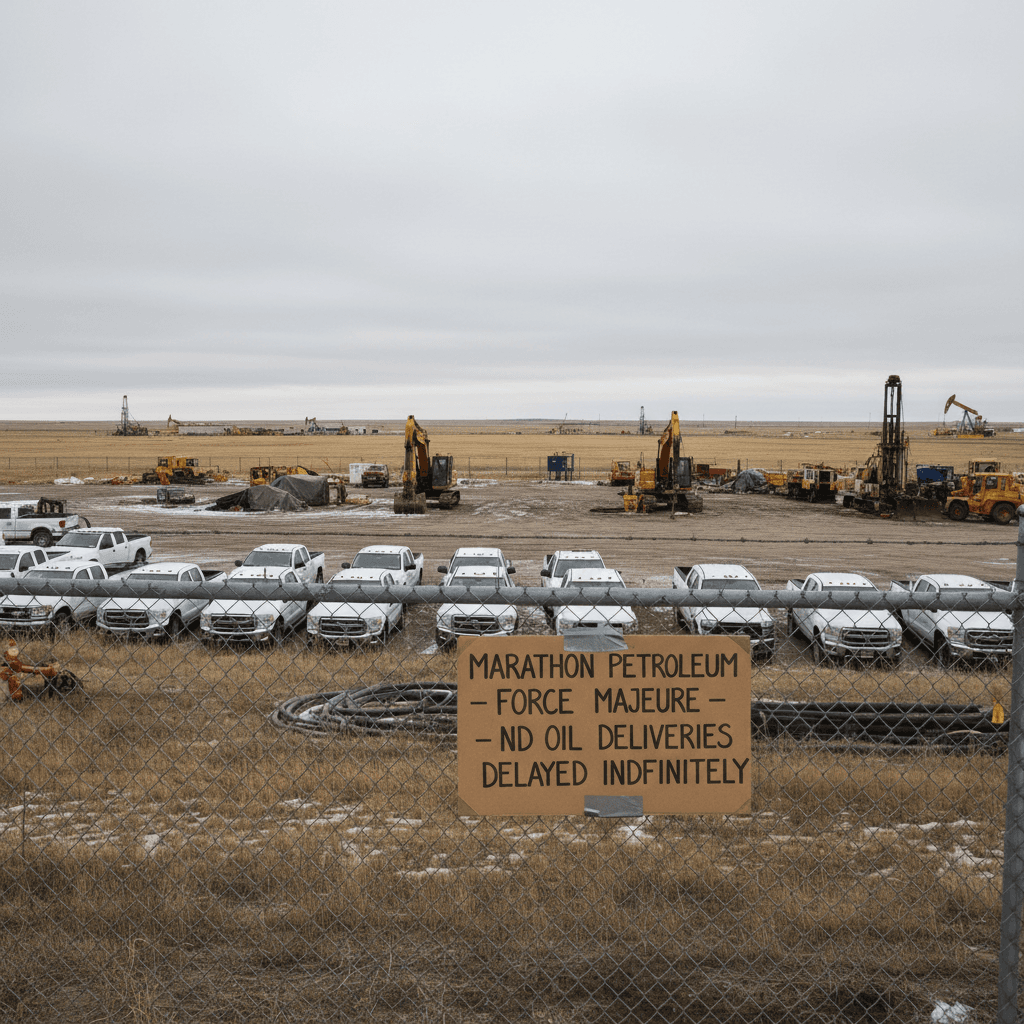
Marathon Petroleum Declares Force Majeure on ND Oil Deliveries

Marathon Petroleum has declared force majeure on oil pipeline deliveries from North Dakota, according to a report from Bing News. The announcement was made on November 19, 2026. The declaration follows what the source described as a flurry of crude contamination issues. Force majeure is a legal clause that frees parties from liability or obligation when an extraordinary event or circumstance occurs. For Bakken operators, this declaration creates immediate logistical and financial challenges. It can lead to involuntary well shut-ins if there is no alternative route to market for the affected crude. Even if production continues, operators may face significant price discounts for oil that must be rerouted to more expensive transportation methods, such as trucking or rail. The Bakken formation is a major oil-producing region where pipeline infrastructure is critical for moving crude to refineries and broader markets. Contamination issues can necessitate extensive cleaning of pipeline segments and storage...

☀️Morning Wire·Nov 21
Marathon Petroleum Declares Force Majeure on ND Oil Deliveries - Bakken Wire
Operator News

Marathon Petroleum Declares Force Majeure on ND Oil Deliveries

Marathon Petroleum Corp. has declared force majeure on North Dakota oil pipeline deliveries, according to a Bloomberg report. The announcement, made late Wednesday, November 18, comes after a series of crude contamination issues. The pipeline transporting Bakken crude has been operating intermittently since last week. The force majeure declaration is a legal provision invoked due to unforeseen circumstances that prevent a company from fulfilling its contracts. The immediate impact is a disruption to the flow of Bakken crude to market. For North Dakota producers and royalty owners, this creates logistical challenges and can lead to localized price volatility as barrels seek alternative routes, such as more expensive truck or rail transport. Pipeline operator Enbridge is involved in the situation, though specific details on the cause or remediation timeline were not provided in the report. Contamination events typically require flushing of the pipeline system and can lead to extended downtime. The...

🔆Midday Wire·Nov 20
Operator News

ExxonMobil Commits $12.5B to Offshore Guyana Gas Project

ExxonMobil has made a final investment decision to proceed with a major new $12.5-billion project offshore Guyana, according to Rigzone. The development, named Longtail, is the eighth project sanctioned in the Stabroek block and is described as the first primarily focused on gas and condensate. The announcement, reported on November 13, follows necessary government approvals. The Longtail project represents another multi-billion dollar capital commitment by the supermajor to its prolific offshore Guyana assets, which have become a cornerstone of its global production growth strategy. For operators in the Bakken, ExxonMobil's continued large-scale investments outside the lower 48 states underscore the competitive landscape for capital allocation. While ExxonMobil, through its subsidiary XTO Energy, remains a significant operator in the Williston Basin, major international projects often command larger portions of corporate capex budgets. The Bakken formation remains a vital source of U.S. oil supply, but it operates within a global portfolio for...

☀️Morning Wire·Nov 15