Global Energy Roundup: Argentina's Shale Growth, Angola Discovery, China's Offshore Wind
Developments in Argentina and Angola highlight global competition, while a Chinese oil major advances deepwater wind technology.
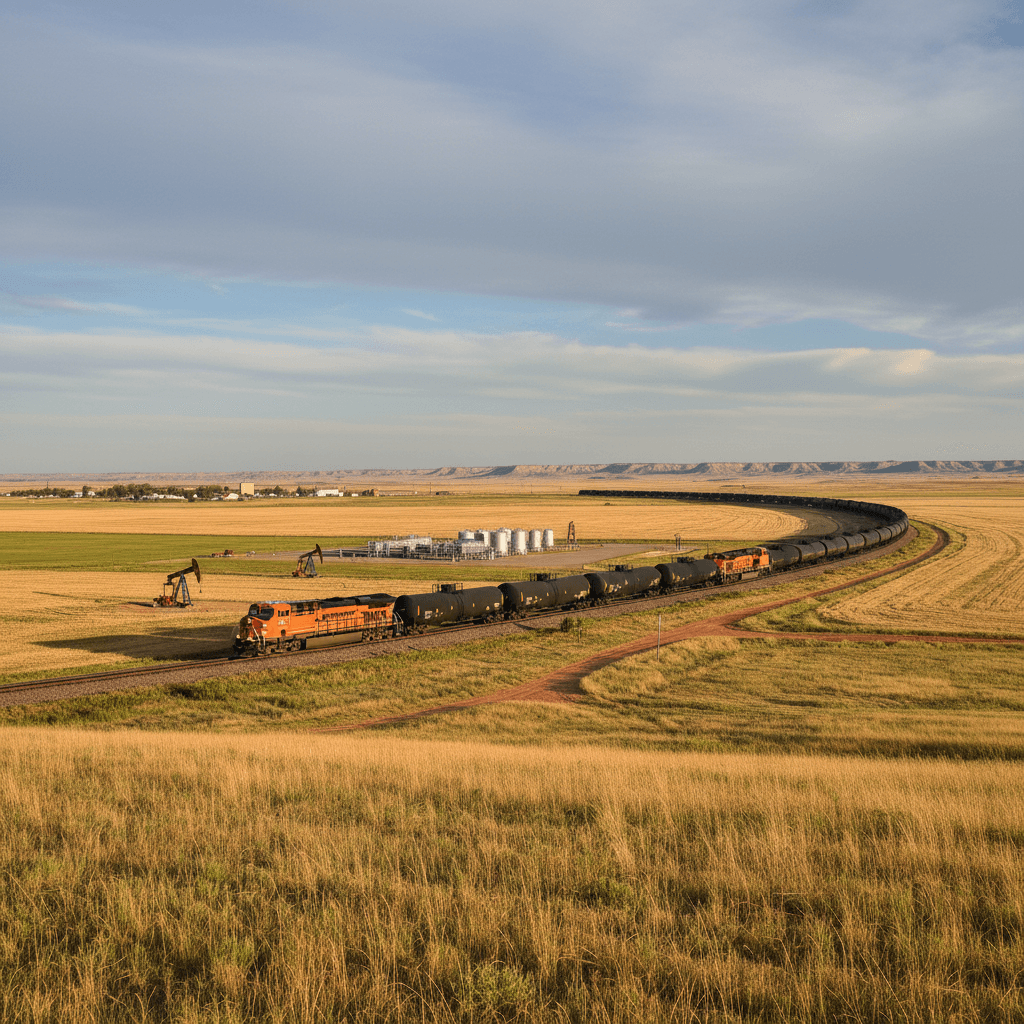
Argentina's Vaca Muerta shale play continues to show rapid production growth, reshaping energy security in the Americas, according to an OilPrice.com report. For June 2026, Argentina's total oil production was 868,763 barrels per day, a 12.6% increase from June 2025. Shale oil from the Vaca Muerta formation accounted for 71% of that total, or 616,490 barrels per day. This represents a 28% year-over-year increase in Vaca Muerta petroleum output.
The data shows unconventional production now dominates Argentina's energy mix. Shale oil output hit a record 626,077 barrels per day in May 2026. Meanwhile, conventional oil production is in steep decline, falling 13% year-over-year to 252,273 barrels per day in June 2026. A similar trend is seen in natural gas, where shale gas made up 70% of the country's 5.4 billion cubic feet per day output in June. The growth underscores the Vaca Muerta's potential as a major global shale play still in early development.
In Angola, state-owned Sonangol and partner ANPG confirmed new offshore reserves with the Katambi-2 appraisal well, OilPrice.com reported. Drilled in Block 24 of the Benguela Basin, the well showed a stabilized production rate of 1,160 barrels per day of condensate and 41 million standard cubic feet of gas. Initial tests indicated potential for over 100 MMscfd. The discovery is part of Angola's effort to reverse years of falling oil production and develop its gas resources.
Angola's crude output has recently stabilized at about 1.1 million barrels per day. The successful well, which found no water or hydrogen sulfide, reinforces the economic viability of the discovery and could help optimize national production. The find highlights ongoing global investment in offshore exploration, particularly in regions that do not rely on key strategic chokepoints like the Strait of Hormuz for exports.
Separately, China National Offshore Oil Corporation (CNOOC) launched the world's first 16-megawatt tension-leg platform floating wind turbine, OilPrice.com reported. The platform, installed 136 kilometers offshore in the South China Sea, began supplying power to the Lufeng Oilfield via a subsea cable. CNOOC says the turbine is designed to withstand super typhoon conditions.
The project is part of an "oil and gas plus new energy" approach. The floating wind platform is expected to generate 54 million kilowatt-hours annually, saving 15,000 cubic meters of fuel oil and reducing CO2 emissions by 35,000 tons per year at the offshore field. The technology represents a significant step in deepwater wind equipment, offering a pathway to lower emissions from offshore oil and gas operations.
Source
OilPrice.com reports from August 6, 2026.

