WTI Crude--
Brent Crude--
Natural Gas--
ND Rig Count--
WTI Crude--
Brent Crude--
Natural Gas--
ND Rig Count--
Global Energy Volatility Influences Bakken Outlook - Bakken Wire
Operator News

Global Energy Volatility Influences Bakken Outlook

Attacks on refineries, Iran talks, and LNG outages create uncertain price environment for North Dakota producers.

Bakken Wire Staff·🌅Afternoon Wire·

Global energy markets faced multiple sources of volatility this week, with implications for Bakken crude oil and natural gas pricing, according to reports from Rigzone.

Ukrainian forces again targeted Russian oil infrastructure, using long-range drones against the Yaroslavl refinery on the night of Thursday, May 21, according to a Telegram statement from President Volodymyr Zelenskyy cited by Rigzone. Such attacks on refining and export facilities introduce supply risks that can bolster global crude benchmarks, which directly influence the price Bakken operators receive for their oil.

Concurrently, oil prices experienced swings driven by diplomatic developments, Rigzone reported. Hopes for progress in negotiations with Iran contributed to market volatility. For Bakken producers, this geopolitical uncertainty adds another layer of complexity to hedging and production planning, as shifts in the global supply picture can quickly alter the wellhead economics in the Williston Basin.

In natural gas markets, a significant supply disruption was highlighted by Enverus Intelligence Research (EIR). The firm reported that an outage at Qatari LNG facilities is expected to shift the global gas market into a structural deficit. While the Bakken is primarily an oil play, it also produces substantial associated natural gas. A tightening global gas market can provide support for U.S. natural gas prices, potentially improving the economics for Bakken operators who capture and sell their gas, rather than flare it.

For North Dakota's energy sector, these international events underscore the interconnected nature of commodity markets. Bakken crude prices are benchmarked against West Texas Intermediate (WTI), which is sensitive to global supply disruptions and diplomatic shifts. Similarly, local natural gas prices are influenced by global LNG demand. This week's developments highlight a continued environment where geopolitics and unexpected supply outages remain key drivers of the price signals that guide Bakken drilling budgets and operational decisions.

Source

Rigzone (Source 1, Source 2, Source 3)
geopoliticsoil pricenatural gaslngmarket volatilityrussiairanqatar

Share this article

Related Articles

Operator News

Major Oil Companies Issue Updates as Hurricane Isaias Threatens Gulf

Major integrated oil companies Shell, Chevron, and Occidental Petroleum have issued operational updates in response to Hurricane Isaias, according to a report from Rigzone. The storm's progression in the Gulf of Mexico is being closely monitored by the energy sector. While the Bakken formation in North Dakota is geographically distant from the Gulf Coast, its crude oil market is directly connected. A significant portion of Bakken crude is transported to Gulf Coast refineries via pipeline and rail. Operational disruptions in the Gulf, including production shut-ins or port closures, can impact the destination and pricing of Bakken barrels. For Bakken operators, these updates from companies with major Gulf of Mexico assets serve as an early indicator of potential market volatility. Shut-in production in the Gulf can tighten overall U.S. supply, potentially providing support for inland crude prices, including the Bakken benchmark. Conversely, prolonged refinery outages or export terminal closures could temporarily...

☀️Morning Wire·Oct 8
Operator News

Gulf Hurricane Threat Evacuates Workers, Could Tighten Oil Markets

Major oil companies are evacuating workers from the Gulf of Mexico ahead of a strengthening tropical storm, a move that could introduce new volatility to crude markets with potential implications for Bakken producers. Chevron is evacuating workers from all its Gulf platforms, while Shell is pulling non-essential personnel from six offshore platforms and BP is also conducting evacuations, according to reports from Reuters and CNN. While production at the facilities currently remains normal, the storm is forecast to reach the Gulf Coast by Friday, potentially as a Category 2 hurricane. Analysts warn the storm is an "unwelcome complication for crude, raising the prospect of production and refining disruptions at a time when the market already has enough supply-side headaches," KCM Trade chief analyst Tim Waterer told Reuters. The potential impact on Gulf Coast refineries is a primary concern for the broader oil market, including Bakken crude which often flows to...

☀️Morning Wire·Oct 7
Supreme Court Hears Climate Suit, Industry Warns of 'Judicially Ordered Carbon Tax' - Bakken Wire
Operator News

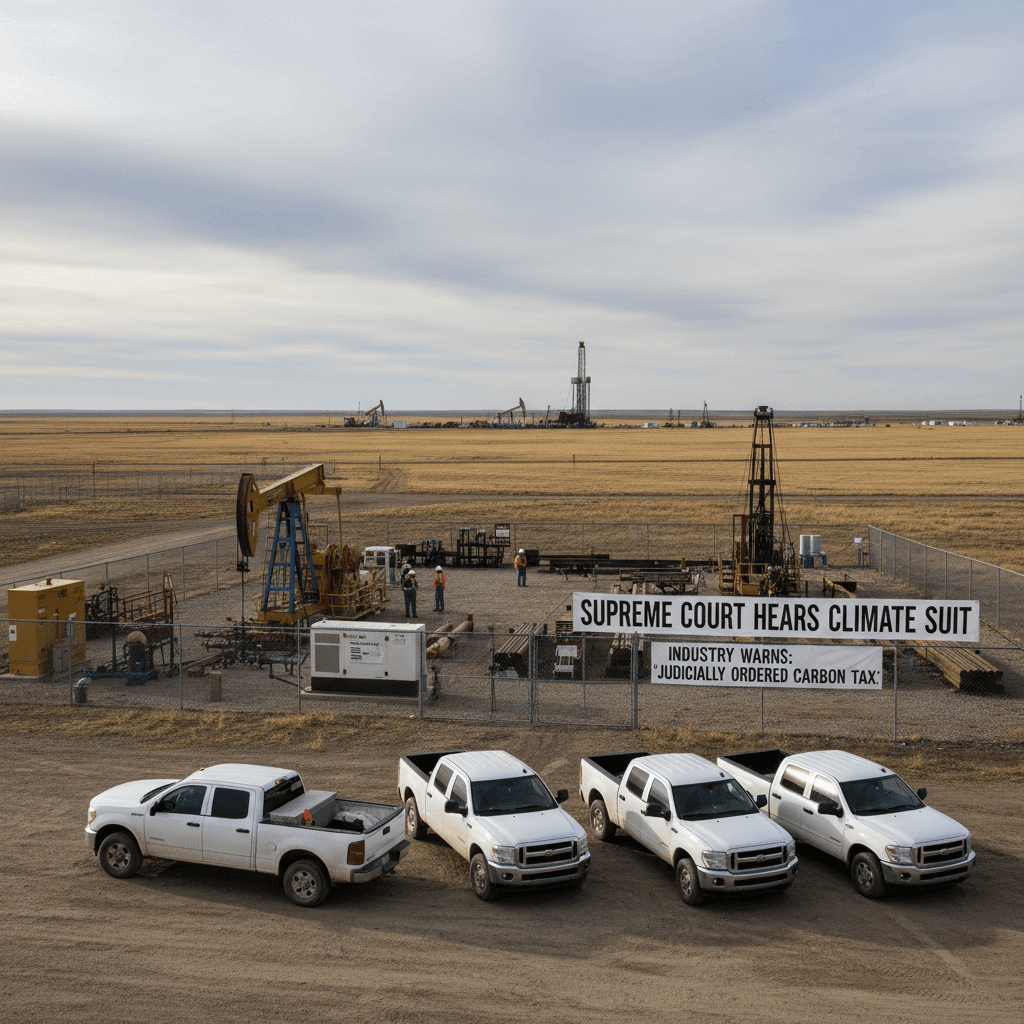
Supreme Court Hears Climate Suit, Industry Warns of 'Judicially Ordered Carbon Tax'

The U.S. Supreme Court heard arguments Monday in a pivotal climate liability case that could open the door to state-level lawsuits against oil and gas companies, a prospect the industry warns could act as a "judicially ordered carbon tax," according to a report from OilPrice.com. The case involves a lawsuit filed by Boulder County, Colorado, against ExxonMobil and Suncor Energy Inc., seeking damages for local climate-change-related impacts. The Canadian-based Suncor and Texas-based ExxonMobil argue that climate policy and alleged damages are exclusively federal matters, and the state suit should be dismissed. Boulder County contends it is only seeking compensation for local damage from decades of emissions, not aiming to change federal policy, OilPrice.com reported. For Bakken operators, the case represents a significant liability threat. The industry argues that a victory for Boulder County would allow a flood of similar lawsuits to proceed, potentially targeting producers based on their historical emissions....

🔆Midday Wire·Oct 5