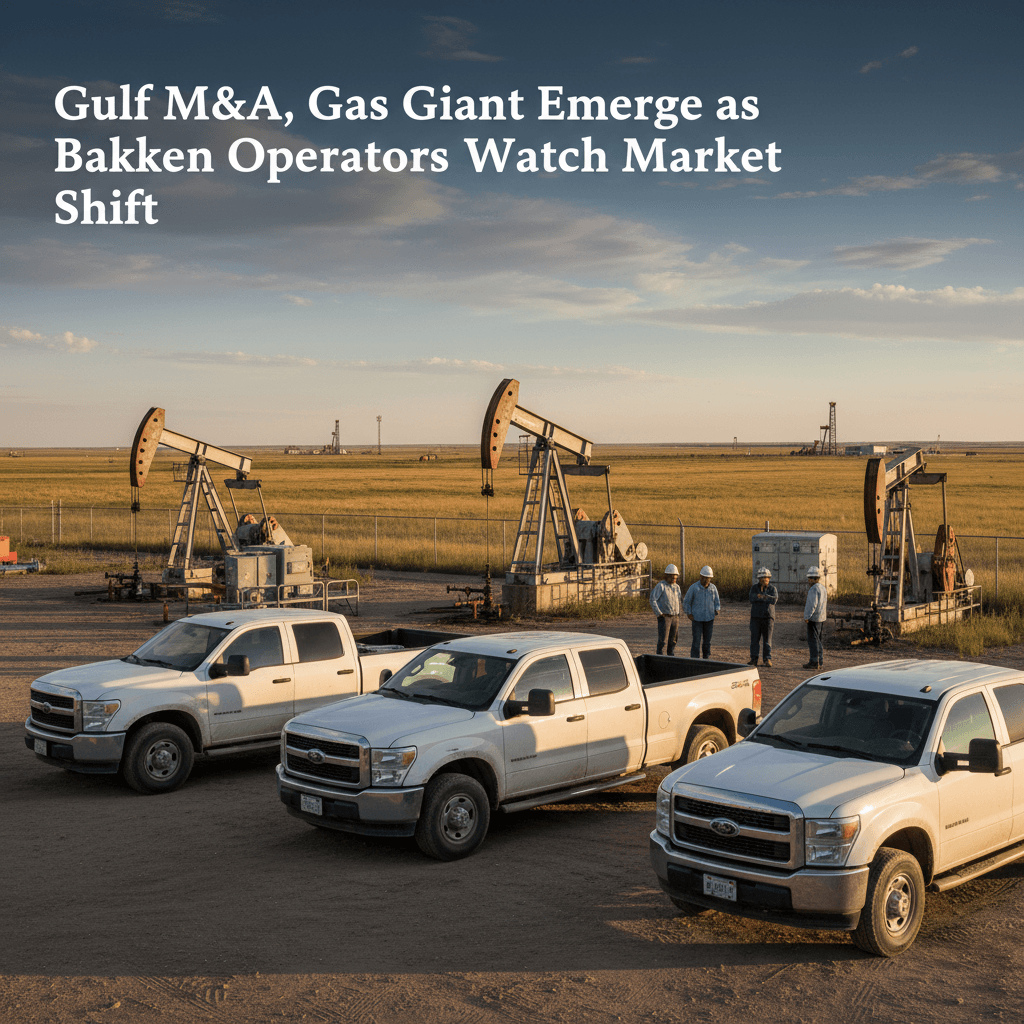
Global EV, Gulf Security Risks Draw Bakken Attention
OilPrice.com reports show EV demand shifts and Middle East security concerns touching global oil markets.
Two global energy stories published Thursday touch issues relevant to North Dakota's Bakken operators and royalty owners: oil demand outlook and Middle East security, according to OilPrice.com reports.
Chinese electric vehicle maker BYD reported weaker-than-expected third-quarter earnings on Thursday, with net profit rising 28% year-over-year to 10.02 billion yuan ($1.5 billion), missing analysts' expectations of about 11.1 billion yuan. Revenue increased 13.6% to 221.5 billion yuan ($33.3 billion), also falling short of forecasts, OilPrice.com reported.
For the first nine months of 2026, BYD's net income declined 4.2% to 22.34 billion yuan, while revenue remained virtually unchanged at 566.3 billion yuan. The article said the company is increasingly relying on higher-margin international sales to support profitability amid fierce domestic competition and slowing demand in China.
The BYD results reflect broader changes in transportation demand. OilPrice.com reported that record gasoline and diesel prices accelerated Europe's transition toward electric vehicles, with battery-electric vehicle registrations surging 60% year-over-year in September. BYD was among the biggest beneficiaries, with European sales more than doubling.
Domestic rival Geely also reported third-quarter results on Thursday, with net profit climbing 28% to 4.84 billion yuan ($726 million), below expectations of 5.19 billion yuan. Geely sold about 812,500 vehicles during the quarter, with exports more than doubling to 323,442 units.
OilPrice.com said the contrasting results underscore a transformation of China's automotive industry, where manufacturers are looking overseas to escape intense domestic price competition. It said China's domestic auto market is struggling amid weaker consumer confidence and a reduction in government subsidies for electric vehicles.
The second story with relevance to Bakken producers is security-related. ExxonMobil CEO Darren Woods and Chevron upstream president Clay Neff canceled plans to attend next week's ADIPEC conference in Abu Dhabi over security concerns, according to sources cited by Reuters and reported by OilPrice.com. Both executives were expected at the Nov. 2-5 event, one of the oil industry's largest annual gatherings.
Neither company would comment on the cancellations, which come as Washington considers another round of military action against Iran, OilPrice.com reported. President Donald Trump has said the United States would not attack Iran before the Nov. 3 midterm elections, although he later raised the possibility of another military operation. ADIPEC runs through Nov. 5, placing much of the conference immediately after the election.
The report said the United Arab Emirates has avoided Iranian attacks since May. Neighboring Saudi Arabia has faced Houthi strikes this month targeting Riyadh's international airport and Saudi Aramco headquarters, while the U.S. State Department last week ordered some American diplomats to leave the kingdom. Saudi Arabia postponed its annual Future Investment Initiative until 2027 after attacks disrupted air travel.
ADIPEC organizers are still expecting record participation. Nearly 240,000 people attended last year's event, hosted by UAE state oil company ADNOC, and this year's exhibition is expected to attract participants from more than 170 countries. Organizers say more than 120 U.S. companies will exhibit, giving the United States the second-largest national representation behind China.
BP CEO Meg O'Neill and Equinor CEO Anders Opedal remained on the conference's online schedule as of Thursday, while Caturus chairman Ben Dell withdrew from a scheduled panel, according to the Financial Times as cited by OilPrice.com.
For Bakken operators, the developments touch issues that can influence global oil market attention: electric vehicle growth tied to fuel prices and trade policy, and geopolitical risk involving major oil-producing regions.
Source
OilPrice.com (two source articles)