Global Oil Inventories Cushion Shock, But Stress Mounts for Bakken
J.P. Morgan analysis shows 280 million barrels drawn from storage since conflict began, while Chevron CEO warns of extreme stress on energy system.
Global oil inventories are serving as the primary shock absorber for a market strained by supply losses, according to a new J.P. Morgan analysis. For Bakken producers, this drawdown on stored barrels is the key mechanism preventing even sharper price spikes and providing a temporary buffer for global supplies.
J.P. Morgan analysts, including head of global commodities strategy Natasha Kaneva, stated in a report that inventories have become the market's main balancing mechanism in the current conflict. "Unlike a typical disruption where spare production capacity can be mobilized quickly, the location of the shock and the scale of current supply losses mean the immediate adjustment has to come from barrels already in storage," the analysts said, according to the report published by Rigzone.
The world entered 2026 with an estimated 8.4 billion barrels in storage, a result of rebuilding stocks in 2024 and 2025 after a period of draws. However, the analysts warned that only a fraction is readily accessible. Of the total, roughly 6.6 billion barrels are held onshore and 1.8 billion are afloat. As of April 23, approximately 280 million barrels have already been consumed to cushion the impact of the conflict. J.P. Morgan estimates that only about 0.8 billion barrels total are realistically available without pushing the system into operational stress.
This intensifying pressure on global buffers is raising alarm among industry leaders. Chevron Corp. CEO Mike Wirth warned on Friday that the global energy system is under "extreme stress." In a CNBC interview, Wirth expressed concern that global oil supplies are running dry as the conflict enters its third month. "If we don’t get supply reestablished, demand will have to come down across different sectors of the economy," Wirth said, according to Rigzone.
Wirth highlighted the critical chokepoint of the Strait of Hormuz, through which about 20% of the world's oil and liquefied natural gas flows, noting "there’s no get-around" with its effective closure. His comments echo concerns from other majors, with ConocoPhillips warning on Thursday of "critical shortages" for some import-dependent nations.
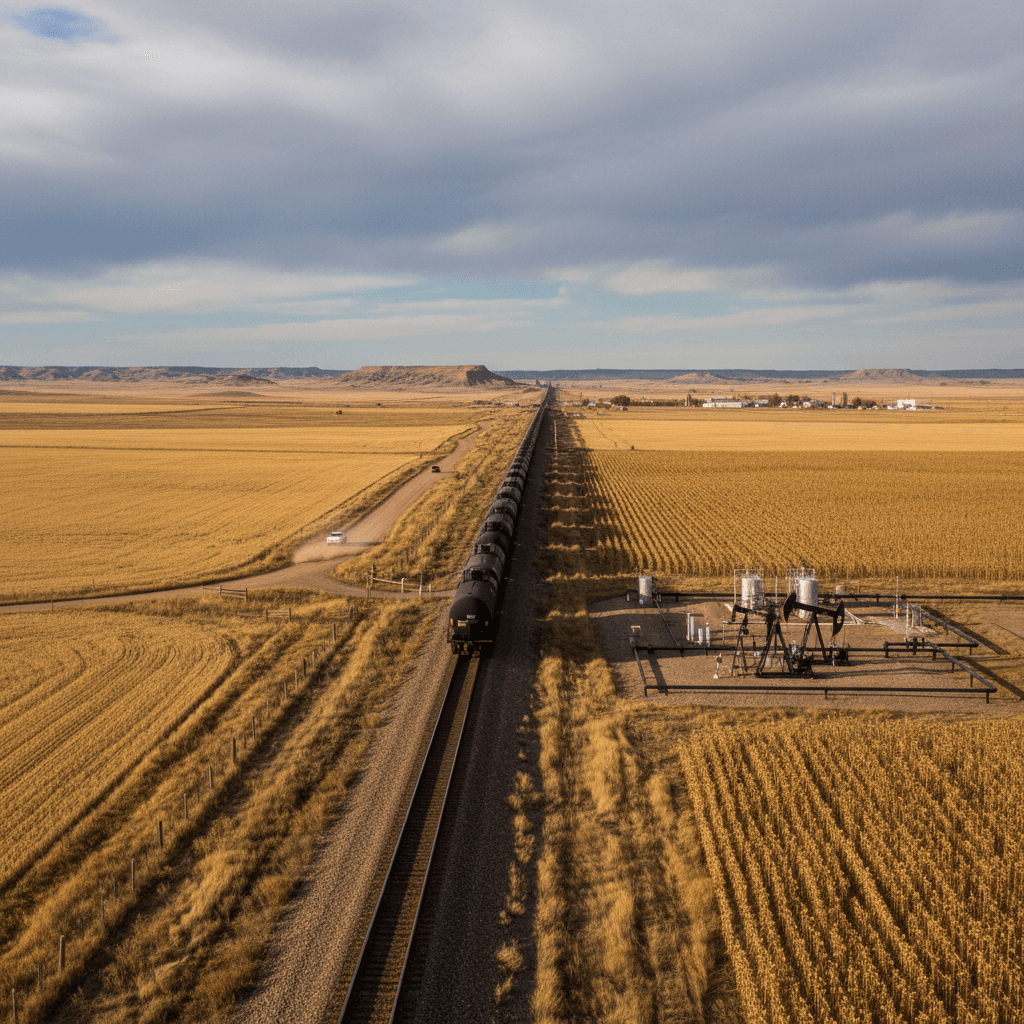
For the Bakken, these developments frame a high-stakes market environment. The drawdown of commercial and strategic inventories provides a temporary cushion, but executive warnings underscore the fragility of the situation. The health of global inventories directly impacts price volatility and the economic calculus for North Dakota drillers. As visible OECD stocks, which play an outsized role in price formation, continue to be tapped, Bakken operators face a market increasingly dependent on the dwindling supply of easily accessible stored barrels.
Source
Analysis from J.P. Morgan reported by Rigzone on May 1, 2026; Comments from Chevron CEO Mike Wirth reported by Rigzone on May 2, 2026.

