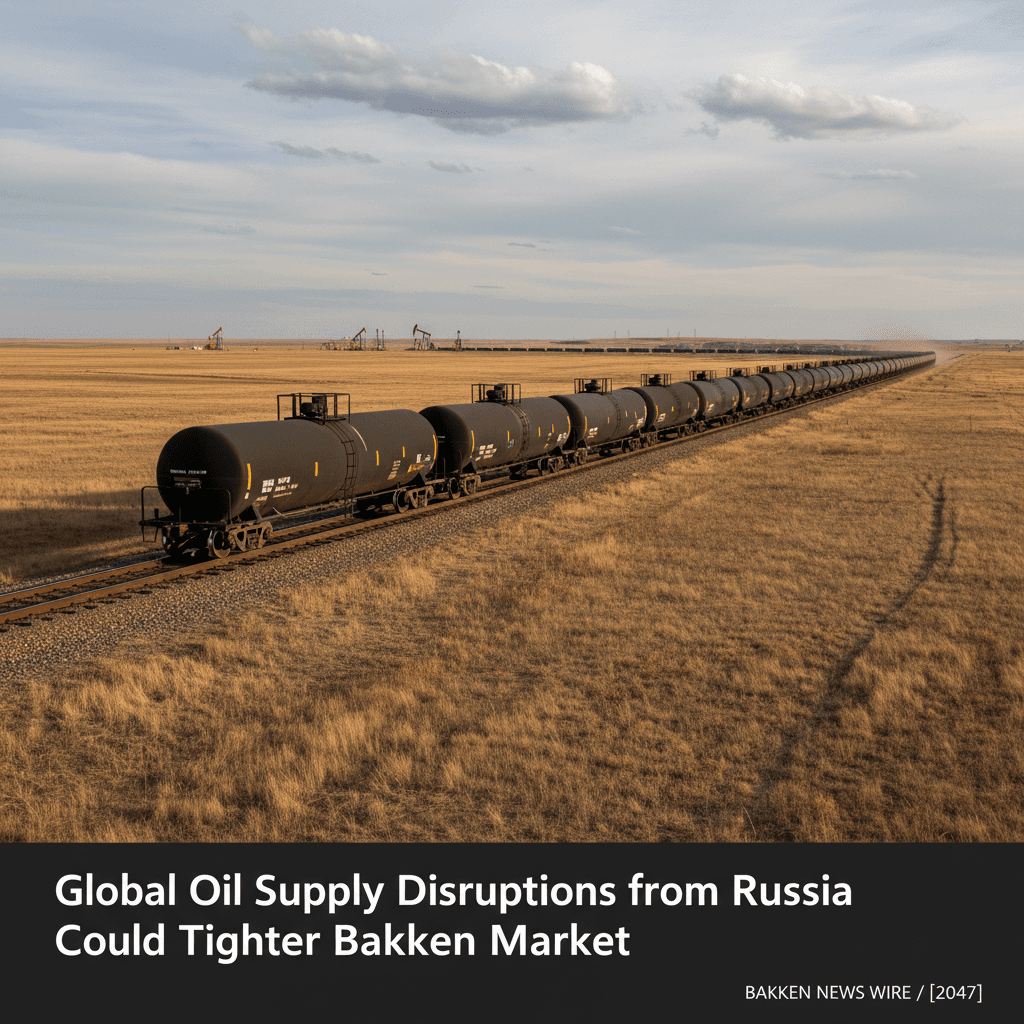
Global Oil Supply Disruptions from Russia Could Tighten Bakken Market
Storms and drone attacks delay Russian exports, potentially supporting global prices that Bakken crude tracks.
Loading delays and disruptions at Russia's key oil export terminals in the Baltic and Black Seas could tighten global crude supply, a factor watched closely by Bakken producers whose prices are benchmarked against international markets. According to a report from OilPrice.com, frequent storms and bad weather this month have already caused delays for more than 10 oil tankers at Russia's Baltic Sea ports.
The disruptions are compounded by Ukrainian drone attacks on Russian energy infrastructure. A drone attack hit the key export hub Ust-Luga on the Baltic Sea just two weeks ago, and the Novorossiysk terminal on the Black Sea faces constrained operations due to frequent drone alerts, trade sources told Reuters via OilPrice.com.
While bad weather is abating as of Monday, November 23, the delays this month could have a direct impact on global shipping and pricing. Traders cited in the report said the disruptions could push up shipping rates for Russia's flagship Urals crude to Asia. Furthermore, fewer cargoes are leaving Russian ports, and winter operations in the Baltic will require more expensive ice-breaker-class tankers.
For Bakken operators, prolonged export disruptions from a major producer like Russia typically reduce global supply, which can provide upward pressure on the international Brent and WTI crude benchmarks. North Dakota's Bakken crude is often priced at a differential to these benchmarks, meaning broader market strength can improve netbacks for local producers and royalty owners.
The report notes that Ukraine has intensified its campaign targeting Russian refineries and oil export infrastructure this year, aiming to cripple Moscow's export revenues. This ongoing conflict risk adds a persistent element of supply uncertainty to the global market, which can increase volatility.
The immediate logistical bottlenecks—storms delaying over 10 tankers and drone alerts halting operations—are happening as the Northern Hemisphere enters winter, a season of traditionally higher energy demand. Any sustained reduction in Russian crude flows could offset concerns about soft global demand, supporting the price environment for U.S. shale producers.
Market analysts monitoring these events will be watching for any sustained spike in the Urals crude differentials or freight rates, as these can signal a tighter physical market that would benefit competing light sweet crudes like those produced in the Williston Basin. The easing storms may allow operations to resume in the coming days, but the underlying geopolitical risk to Russian exports remains.
Source
According to a report from OilPrice.com citing Reuters trade sources.