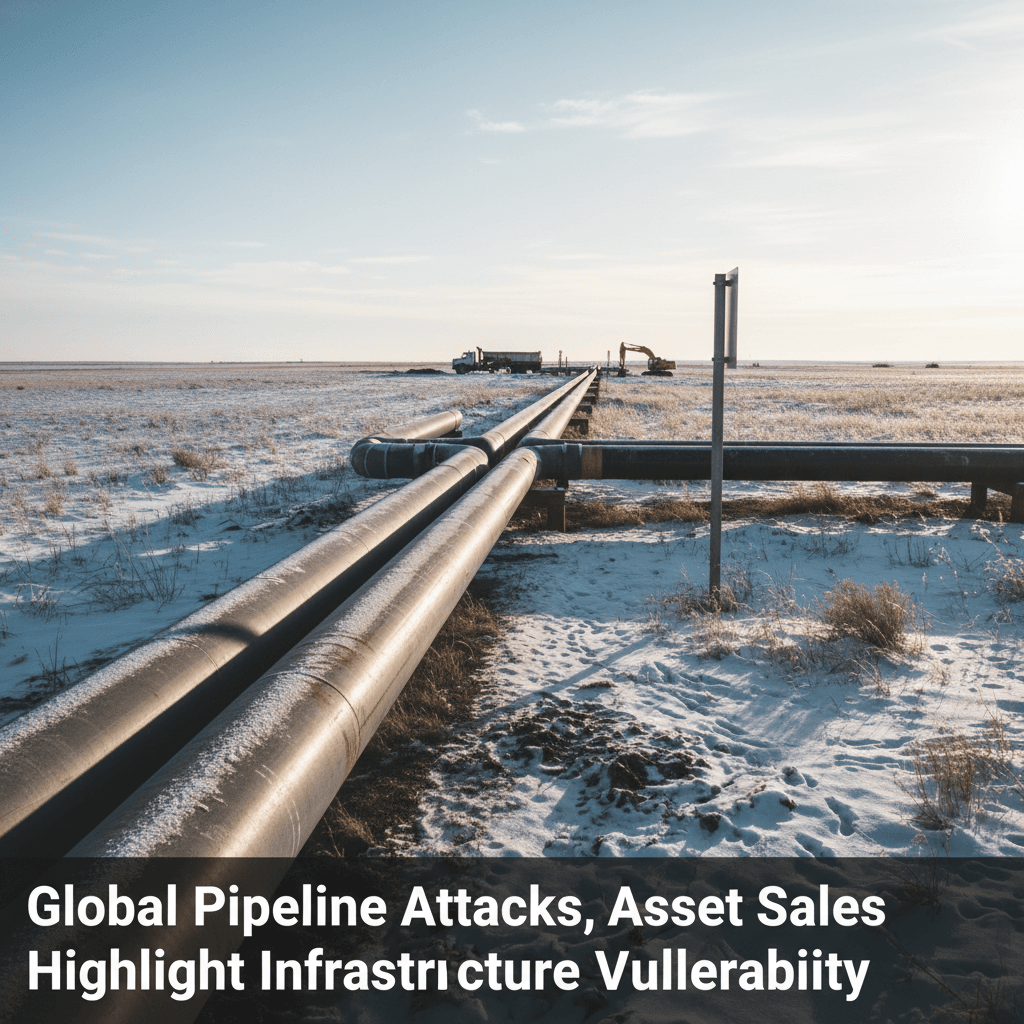
Global Pipeline Attacks, Asset Sales Highlight Infrastructure Vulnerability
Attacks on a key Saudi export line and a major European pipeline divestment underscore strategic risks and shifting energy flows that impact Bakken competitiveness.
A drone and missile attack has forced the shutdown of Saudi Arabia's critical East-West Pipeline, a major alternative export route for Persian Gulf oil, according to a report from OilPrice.com. The attack damaged at least two pumping stations on the 1,200-kilometer pipeline, which had been moving an estimated 5 million barrels per day to the Red Sea port of Yanbu to bypass the Iran-blockaded Strait of Hormuz. The source notes that repairing the above-ground infrastructure is complex and the line remains vulnerable to repeat attacks, undermining the concept of pipelines as a secure solution to maritime chokepoints.
Separately, German energy giant Uniper announced on Monday, September 14, an agreement to sell its 20% stake in the OPAL gas pipeline to meet European Union state aid conditions, OilPrice.com reported. Uniper is selling the stake, held via Lubmin-Brandov Assets GmbH & Co. KG, to hydrogen investor Hy24. The 470-kilometer OPAL pipeline, part of Germany's planned hydrogen core network, is a key transmission corridor from Germany to the Czech Republic.
For Bakken producers, these developments highlight the persistent fragility of global energy infrastructure and its impact on market dynamics. The shutdown of a major export route for Saudi crude could introduce new volatility and potentially support global oil prices in the short term, which benefits North Dakota's oil economics. However, the demonstrated vulnerability of long-distance pipelines also reinforces the value of more secure, domestic production and midstream systems. The Bakken's reliance on a well-established network of pipelines and rail for export is insulated from such direct geopolitical attacks, but remains sensitive to the price fluctuations they cause.
The Uniper divestment in Europe points to the ongoing structural shift in energy markets, with legacy fossil fuel assets being repurposed for hydrogen and other energy transitions. While this specific transaction involves European gas infrastructure, it reflects a broader global trend of capital reallocation that can influence investment sentiment in all energy sectors, including U.S. shale. The German government's plan to reduce its 99% stake in Uniper by 2028, with reported interest from firms like Equinor and Brookfield, indicates continued consolidation and strategic portfolio shifts among international energy players that Bakken operators must navigate.
Ultimately, the attack on the Saudi pipeline underscores that no export route is immune to disruption in a conflict, keeping a premium on stable, non-OPEC supply from regions like the Williston Basin. The concurrent asset sale in Europe is a reminder that the financial and regulatory landscape for energy infrastructure is evolving rapidly, with implications for global competition and capital availability.
Source
According to reports from OilPrice.com published September 14, 2026.