Global Roundup: Brazil Solar Freeze, Iran Hits Kuwait, Japan's $19.4B Aid
Investment halt in Brazil, Middle East escalation, and Japanese energy subsidy package highlight global volatility impacting energy markets.
BlackRock-backed Atlas Renewable Energy has frozen $1 billion in planned solar investment in Brazil, citing crippling grid constraints. The company's CEO, Carlos Barrera, announced the halt of 1.5 gigawatts of projects on Wednesday, according to OilPrice.com. The decision stems from high curtailment rates, where solar power is rejected by the grid due to lagging transmission infrastructure. Curtailment rates for Atlas's operational projects reached 15%-25% this quarter, and Rystad Energy estimates Brazil's solar curtailment hit 27% in 2025.
In the Middle East, Iranian drones and missiles struck Kuwait International Airport overnight, killing at least one person and causing significant damage, OilPrice.com reported. Kuwait suspended air traffic and activated emergency procedures. Iran's Revolutionary Guard stated the attack was retaliation for U.S. military actions. U.S. Central Command intercepted additional missiles targeting Kuwait and Bahrain and launched retaliatory strikes on an Iranian facility on Qeshm Island near the Strait of Hormuz. The UAE called for a unified Gulf stance following the escalation.
Japan has committed an additional $19.4 billion to fight inflation caused by energy flow disruptions from the Middle East, OilPrice.com reported. The package, approved by Prime Minister Sanae Takaichi this week, includes a $16-billion reserve fund to control energy prices through subsidies, initially targeting gasoline prices. The funds will come from deficit-financing bonds. Japan's crude oil imports slumped by 66% in April from a year earlier, with supply from Saudi Arabia crashing by nearly 58% and from the UAE plunging by 69.4%.
These developments underscore global energy market fragility. The freeze on major renewable investment in Brazil highlights infrastructure bottlenecks that can stall capital deployment, even for well-backed projects. The direct Iranian strike on Kuwait, a key U.S. logistics hub, marks a significant escalation in regional conflict, directly threatening stability in a critical oil-producing and transit region. Japan's massive subsidy package demonstrates the profound economic impact of supply disruption on importing nations, reinforcing the value of secure, domestic production.
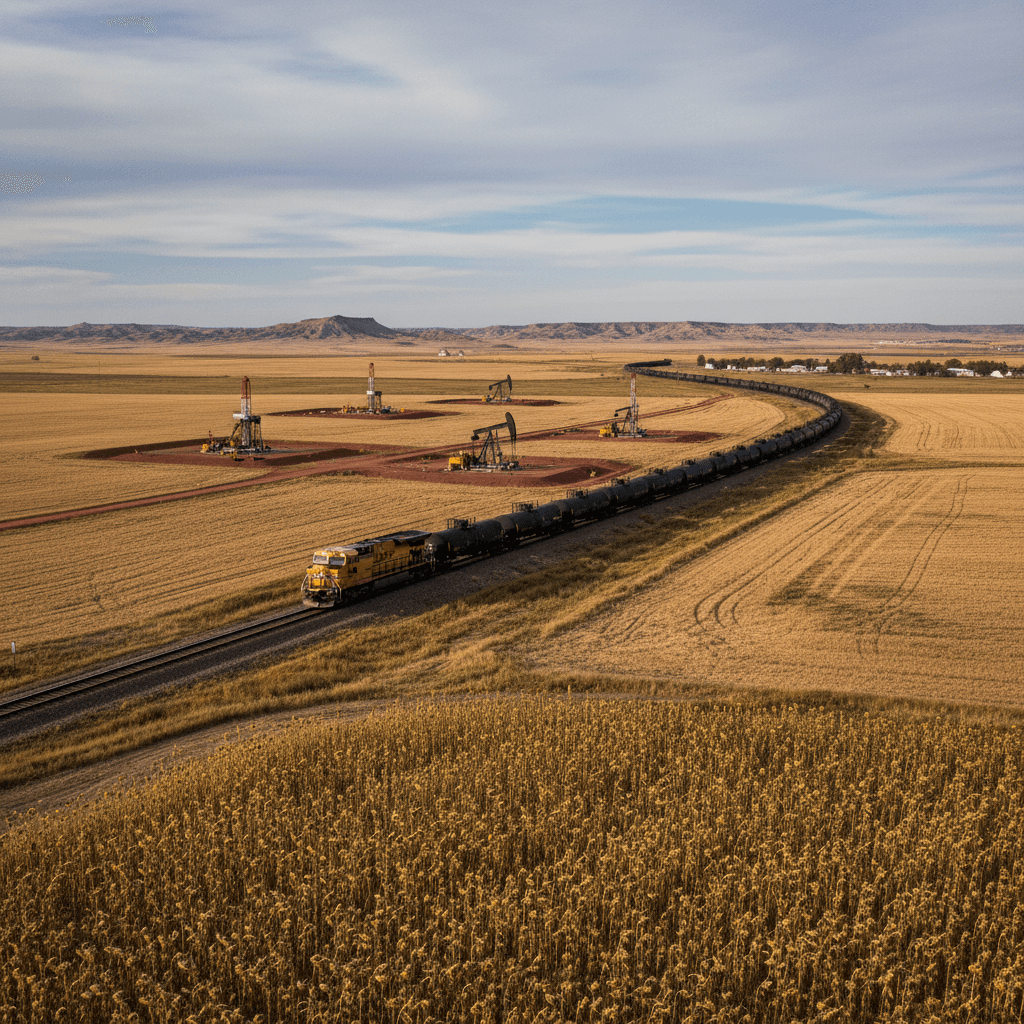
For Bakken operators and North Dakota royalty owners, these events reinforce the strategic importance of stable, secure production basins. Geopolitical volatility in the Middle East continues to threaten global supply routes and prices, while infrastructure challenges elsewhere can halt competing energy projects. North Dakota's integrated pipeline network and domestic security position its output as a reliable component in a turbulent global landscape.
Source
OilPrice.com

