WTI Crude--
Brent Crude--
Natural Gas--
ND Rig Count--
WTI Crude--
Brent Crude--
Natural Gas--
ND Rig Count--
Global Supply Risks Rise as Attacks Target Key Shipping Lanes - Bakken Wire
Operator News

Global Supply Risks Rise as Attacks Target Key Shipping Lanes

Strait of Hormuz and Black Sea incidents, alongside renewable fuel tests, highlight shifting energy landscape for Bakken crude.

Bakken Wire Staff·☀️Morning Wire·

Global oil supply risks intensified this week following new attacks on tankers in the Strait of Hormuz and the Black Sea, according to multiple reports. Simultaneously, a pilot program for renewable gasoline commenced in Europe, signaling ongoing energy transition efforts.

Another tanker was attacked in the Strait of Hormuz on Monday as renewed hostilities empty the waterway, Rigzone reported. The incident coincides with a threat by Houthi rebels to blockade Saudi Arabia in the Red Sea, which the source said is heightening regional maritime risks. Separately, a key Kazakh oil-export terminal on the Black Sea again halted loadings following a drone strike, according to a separate Rigzone report from July 20.

These disruptions in critical global chokepoints underscore the persistent geopolitical volatility that can support crude oil prices by threatening supply. For Bakken operators, sustained global price strength is a key factor for drilling economics and production growth in North Dakota. However, increased risk premiums can also contribute to market uncertainty.

In other industry news, automotive giants BMW and Toyota began a six-month pilot deployment of Repsol's Nexa 95 renewable gasoline, Rigzone reported. The test aims to evaluate the scalability of renewable fuel on existing vehicles. Developments in drop-in renewable fuels represent a longer-term factor for liquid fuel demand, which underpins the market for Bakken crude.

The Bakken formation, a key source of light sweet crude, remains sensitive to global supply disruptions and long-term demand trends shaped by alternative fuels. While immediate operational focus in western North Dakota remains on well efficiency and cost control, external market forces continue to exert significant influence on the region's oil and gas sector.

Source

Rigzone (Hormuz attack report), Rigzone (Renewable gasoline test), Rigzone (Black Sea terminal halt)
geopoliticsshippingrenewable fuelsglobal marketssupply disruption

Share this article

Related Articles

Operator News

ConocoPhillips Sells Norway Assets in $4.4B Deal, Proceeds for Share Buybacks

ConocoPhillips, a major operator in North Dakota's Bakken formation, announced Monday it will sell its entire business in Norway and a UK oil terminal stake to Vår Energi for $4.425 billion, according to OilPrice.com. The deal is part of continued consolidation on the Norwegian Continental Shelf. The definitive agreement covers ConocoPhillips' Norway business and its 40.25% interest in the UK Teesside oil terminal, with an effective date of January 1, 2026. The transaction is expected to close by the end of the first quarter of 2027, pending Norwegian regulatory approval. The assets sold include interests in the Greater Ekofisk Area and eight other fields, as well as pipeline infrastructure. For Bakken stakeholders, the key takeaway is the planned use of proceeds. ConocoPhillips stated it will use the cash from the deal for general corporate purposes and for discretionary share repurchases in 2027. This aligns with the company's long-standing commitment to...

☀️Morning Wire·Nov 23
Operator News

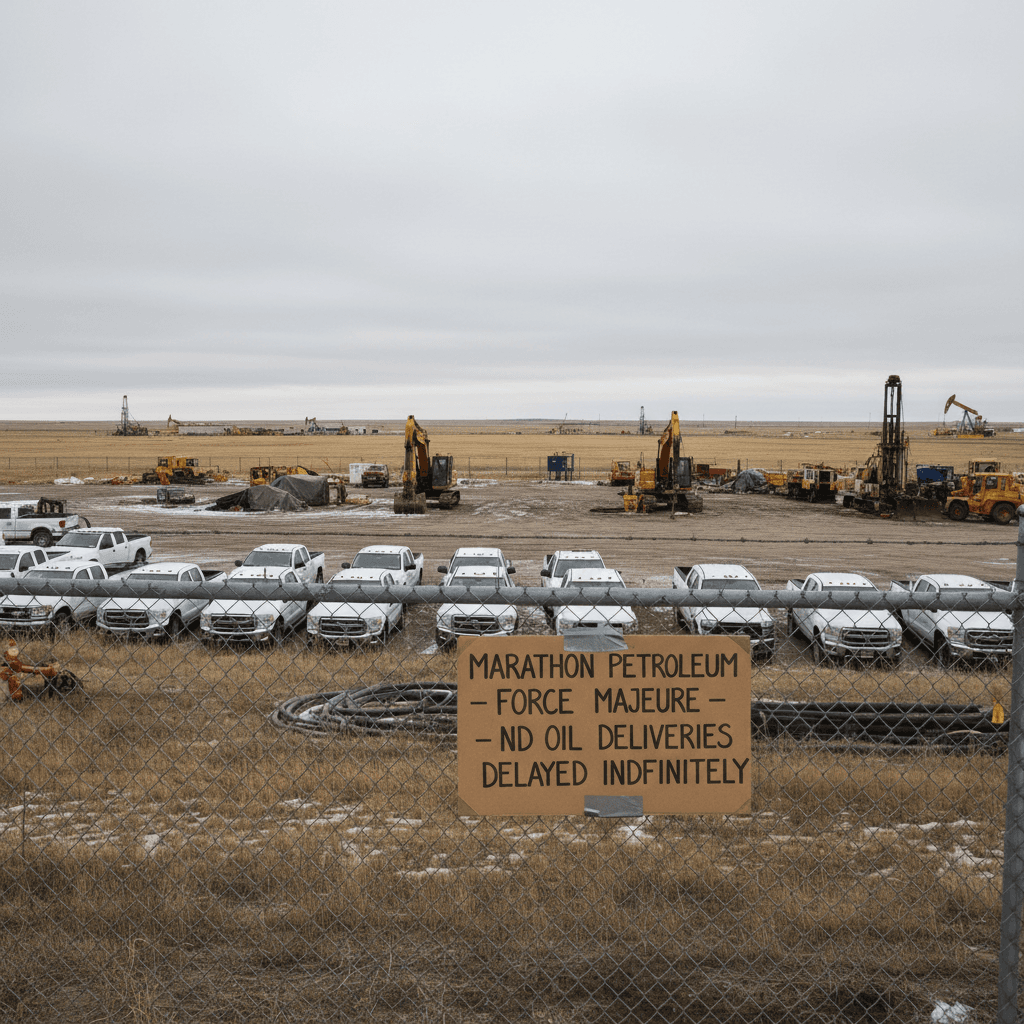
Marathon Petroleum Declares Force Majeure on ND Oil Deliveries

Marathon Petroleum has declared force majeure on oil pipeline deliveries from North Dakota, according to a report from Bing News. The announcement was made on November 19, 2026. The declaration follows what the source described as a flurry of crude contamination issues. Force majeure is a legal clause that frees parties from liability or obligation when an extraordinary event or circumstance occurs. For Bakken operators, this declaration creates immediate logistical and financial challenges. It can lead to involuntary well shut-ins if there is no alternative route to market for the affected crude. Even if production continues, operators may face significant price discounts for oil that must be rerouted to more expensive transportation methods, such as trucking or rail. The Bakken formation is a major oil-producing region where pipeline infrastructure is critical for moving crude to refineries and broader markets. Contamination issues can necessitate extensive cleaning of pipeline segments and storage...

☀️Morning Wire·Nov 21
Marathon Petroleum Declares Force Majeure on ND Oil Deliveries - Bakken Wire
Operator News

Marathon Petroleum Declares Force Majeure on ND Oil Deliveries

Marathon Petroleum Corp. has declared force majeure on North Dakota oil pipeline deliveries, according to a Bloomberg report. The announcement, made late Wednesday, November 18, comes after a series of crude contamination issues. The pipeline transporting Bakken crude has been operating intermittently since last week. The force majeure declaration is a legal provision invoked due to unforeseen circumstances that prevent a company from fulfilling its contracts. The immediate impact is a disruption to the flow of Bakken crude to market. For North Dakota producers and royalty owners, this creates logistical challenges and can lead to localized price volatility as barrels seek alternative routes, such as more expensive truck or rail transport. Pipeline operator Enbridge is involved in the situation, though specific details on the cause or remediation timeline were not provided in the report. Contamination events typically require flushing of the pipeline system and can lead to extended downtime. The...

🔆Midday Wire·Nov 20