Global Supply Shifts, LNG Demand Pose Mixed Outlook for Bakken
Middle East production rebound and strong Asian LNG demand create competing pressures for North Dakota's oil and gas sector.
Global oil markets face a significant increase in supply as Middle East production rebounds amid a ceasefire, according to analysis from Rystad Energy. The consultancy reported that crude oil production in the region has recovered to between 14.6 million and 15 million barrels per day earlier this month, with a full recovery to pre-war levels expected by year-end. This surge is led by Iran, Kuwait, and Saudi Arabia, and could pressure global crude prices, a key determinant of Bakken operator economics.
Rystad Energy MENA research director Aditya Saraswat noted the rapid pace of recovery, stating, “Two million barrels a day came back online in three weeks, and the recovery is spread across the region.” According to the Oilprice.com report, the volume of shut-in production is expected to fall below 2 million barrels daily by the end of September, down from an estimated 9.6 million barrels daily currently. For Bakken producers, this return of substantial volumes to the global market adds a bearish factor that could cap near-term price gains.
Conversely, the global natural gas picture, particularly for LNG, shows robust demand that could benefit associated gas production in the Bakken. According to a separate Oilprice.com report, China’s LNG imports for June are forecast at 5.29 million tons, a rebound from May's 4.9 million tons, driven by summer cooling demand. Analytics firm Kpler reported China’s LNG inventories were 46% full at the end of May, below the five-year average, supporting continued strong import demand through the third quarter.
This strengthening Asian LNG demand provides a supportive backdrop for global gas prices, which influence the value of the natural gas produced alongside Bakken crude oil. However, the report also notes China's heavy reliance on cheaper pipeline gas and coal, which may temper the upside for LNG. Furthermore, China is developing new LNG import capacity for Russian gas by October, which could alter long-term supply dynamics.
Separately, a Rigzone summary from June 26 noted the UK grid operator issued a second power supply warning, highlighting ongoing volatility and tightness in global energy systems. Such instability can contribute to broader energy price volatility, affecting the planning environment for Bakken operators.
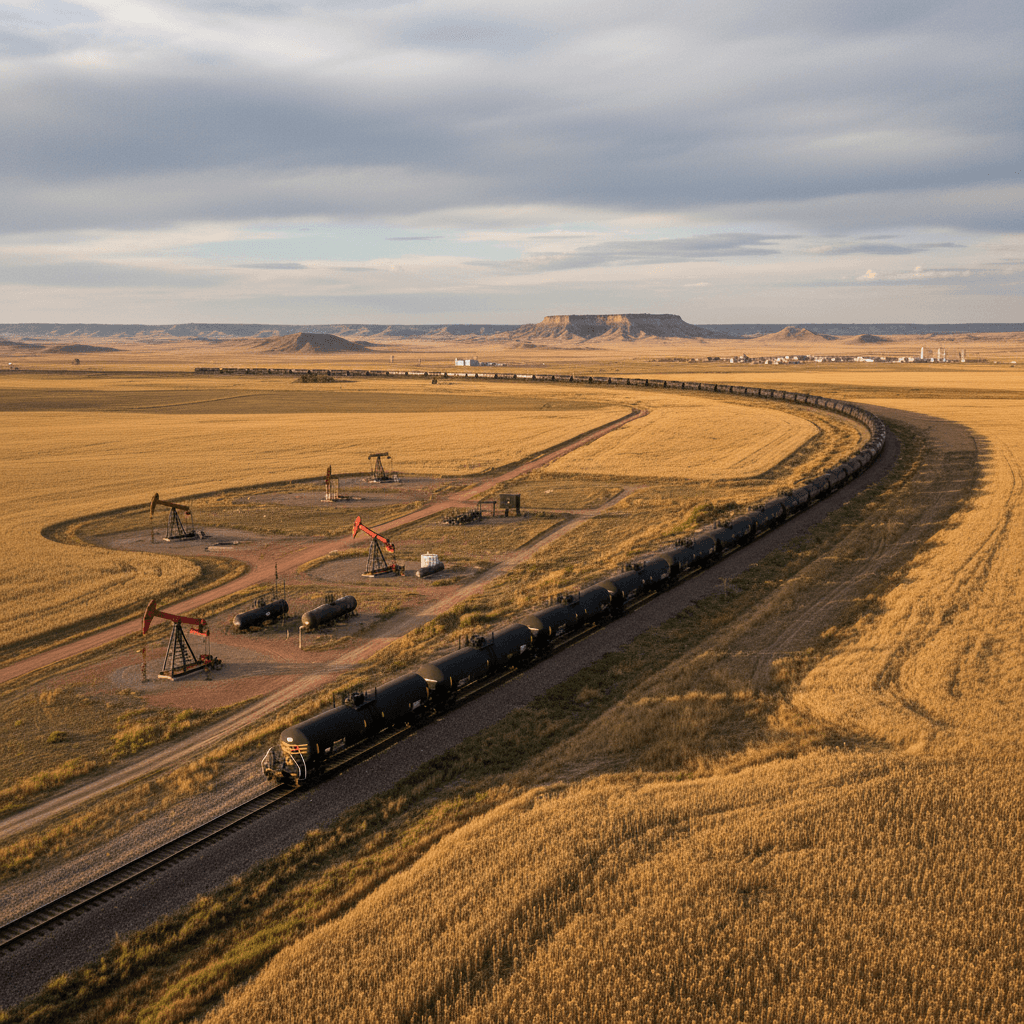
For North Dakota, these global developments present a mixed outlook: increasing crude oil supply from the Middle East may weigh on oil prices, while strong seasonal LNG demand offers potential support for natural gas. Bakken operators and royalty owners must navigate these competing forces in a market where the crucial Strait of Hormuz's stability, as noted by Rystad, remains a key factor for global oil flow and pricing.
Source
Oilprice.com, Rigzone

