Global Tensions, Tech Transfer, and Offshore Gains Shape Energy Outlook
North Dakota's fracking expertise eyed for geothermal, while Strait of Hormuz clashes and strong offshore drilling results impact the global oil market.
The U.S. military stated a ceasefire with Iran remains in place despite clashes in the Strait of Hormuz, a critical chokepoint for global oil shipments, according to a Rigzone report. Defense Secretary Pete Hegseth and General Dan Caine confirmed the truce on Tuesday, May 5, 2026, after a day of violence involving attacks on merchant vessels and missile strikes against the United Arab Emirates. The U.S. was implementing "Project Freedom," a temporary operation to assist neutral ships through the strait.
The UAE reported intercepting nearly 20 projectiles fired from Iran on Monday, marking the first such attack since the truce began about a month ago. Iran had attacked a South Korean bulk carrier and an empty UAE tanker. U.S. Central Command said American forces fought off Iranian drones, missiles, and boats while facilitating the passage of two merchant vessels. Over 1,550 commercial vessels with 22,000 sailors are currently trapped in the Persian Gulf, Rigzone reported.
Oil prices reacted to the volatility, with Brent crude declining around 3.6% to under $111 a barrel on Tuesday after jumping almost 6% on Monday. The ongoing impasse centers on a U.S. naval blockade of Iranian ports, which Tehran insists must be lifted before new peace talks.
In industry news, offshore drilling contractor Transocean Ltd. reported higher first-quarter revenue, signaling strength in the deepwater market. The company posted Q1 2026 revenue of $1.08 billion, up $175 million from Q1 2025, according to a separate Rigzone report. President and CEO Keelan Adamson cited "increasing demand for offshore exploration and development drilling services," adding the company believes it is in the early days of a multi-year upcycle. Transocean's backlog stood at $7.1 billion.
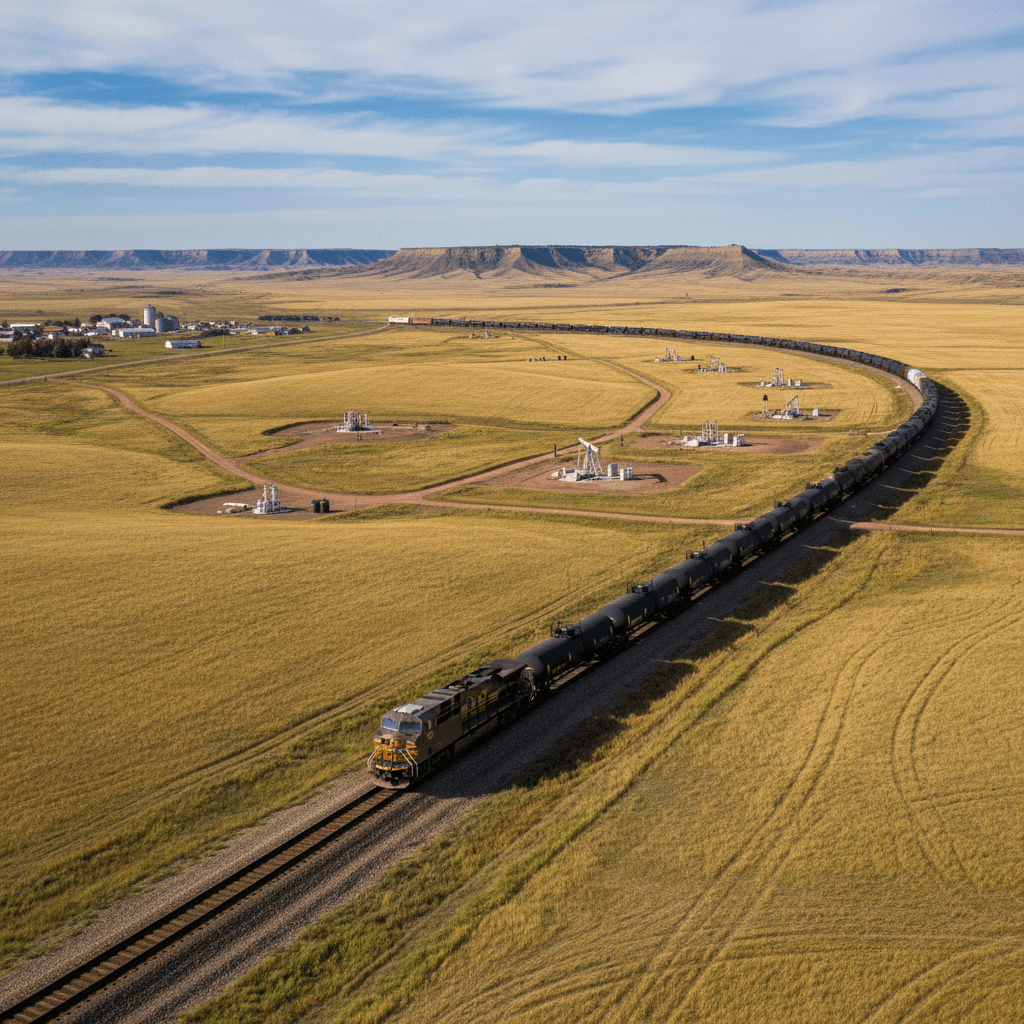
Closer to home, North Dakota's oilfield technology is being evaluated as a key to unlocking geothermal energy in the state. Researchers from the Energy and Environmental Research Center (EERC) presented a report last week suggesting fracking technology could create the necessary permeability in tight rock formations for geothermal systems, according to a Bing News article.
"The solution may lie with the technologies, workforce and expertise used in North Dakota by the oil and gas industry," said Tyler Hamman, EERC assistant vice president for strategic partnerships. He noted that advancements from the shale revolution have brought down costs, making enhanced geothermal systems more feasible. However, the report cautioned that significant work remains to determine cost-effectiveness and power generation potential in North Dakota's specific geology.
Source
According to reports from Rigzone and Bing News.

