WTI Crude--
Brent Crude--
Natural Gas--
ND Rig Count--
WTI Crude--
Brent Crude--
Natural Gas--
ND Rig Count--
Haida Nation Sends Funds, Protesters to North Dakota DAPL Site - Bakken Wire
Pipeline & Infrastructure

Haida Nation Sends Funds, Protesters to North Dakota DAPL Site

Indigenous group from British Columbia provides financial and symbolic support to Standing Rock Sioux, highlighting ongoing pipeline opposition.

Bakken Wire Staff·☀️Morning Wire·

The Council of the Haida Nation from British Columbia is providing financial support and personnel to the protest camps opposing the Dakota Access Pipeline (DAPL) in southern North Dakota, according to a CBC News report. The report details that Haida business owner Erica Ryan-Gagne drove 30 hours from Haida Gwaii, B.C., with her two children to join the Standing Rock demonstrations.

Ryan-Gagne stated that the fight against DAPL is connected to pipeline battles in British Columbia. "Whether it's Lelu Island, Flora Banks, a liquified natural gas plant proposed at the mouth of the Skeena [River], Enbridge Northern Gateway or the Dakota Access pipeline, it's all connected. It's all big oil," she said. The Council of the Haida Nation supports her trip and sent several thousand dollars for the Sioux Nation's legal defense fund.

The Dakota Access Pipeline is a $3.8 billion project designed to transport light sweet crude oil from the Bakken formation to Illinois. Its route passes close to the Standing Rock Sioux Reservation. Enbridge is investing $1.5 billion to be part of the project, the report notes.

The protest has seen volatile moments, including equipment vandalism, the use of pepper spray and dogs by guards against protesters, and the deployment of the National Guard. Ryan-Gagne described herself as a peaceful protester, bringing traditional songs and prayers to the camp. "This is what I'm teaching my children," she said. "You don't talk about it. You do it. We've come so far. and we're standing with them."

The involvement of an international Indigenous group underscores the broad, symbolic resistance facing key Bakken oil infrastructure. For Bakken operators, the protest represents a continued point of contention and potential risk for a major crude oil export route from the region. The pipeline is a critical piece of infrastructure intended to move Bakken oil to market more efficiently.

The report illustrates how local infrastructure disputes can attract national and international attention, potentially complicating project timelines and operations. The movement of protesters and resources across the U.S.-Canada border to North Dakota highlights the interconnected nature of opposition to hydrocarbon transport projects.

Source

According to a CBC News report published September 15, 2016.
dakota access pipelinedaplstanding rockprotestinfrastructureenbridgeenergy transfer partnersbakken

Share this article

Related Articles

Pipeline & Infrastructure

Canada Moves to Fast-Track Oil Pipeline for Asian Markets

Canadian Prime Minister Mark Carney is invoking new powers to fast-track regulatory approval for a major new oil pipeline, according to a report from Rigzone. The move aims to expand Canada's access to Asian crude markets. While the specific pipeline project was not named in the report, the push for increased export capacity from Canada represents a significant shift in North American energy infrastructure policy. For Bakken operators, the development carries both competitive and logistical considerations. Increased pipeline capacity from Western Canada could influence crude pricing benchmarks across the continent, including the Bakken's own local price at Clearbrook, Minnesota. Greater volumes of Canadian crude reaching global markets can affect the supply-demand balance for similar light sweet crudes produced in the Williston Basin. Historically, pipeline constraints have limited Canadian crude to primarily U.S. Midwest markets, keeping a lid on prices. A new high-capacity outlet to Asia could alter that dynamic, potentially...

☀️Morning Wire·Oct 4
Canadian Prime Minister Fast-Tracks New Oil Pipeline for Asian Markets - Bakken Wire
Pipeline & Infrastructure

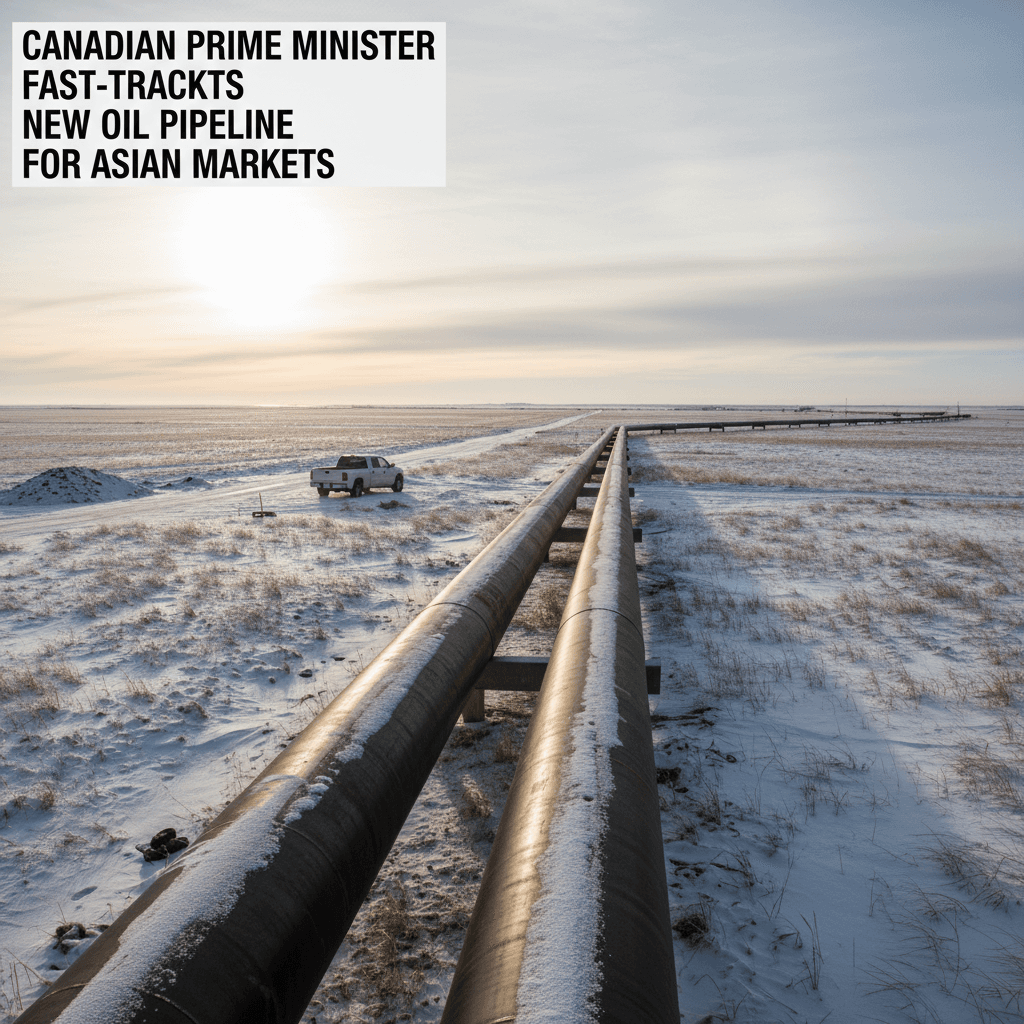
Canadian Prime Minister Fast-Tracks New Oil Pipeline for Asian Markets

Prime Minister Mark Carney has invoked new powers to expedite regulatory approval for a new, high-capacity oil pipeline, according to a report from Rigzone. The move aims to expand Canada's access to Asian markets. The development, reported on October 2, signals a renewed push by Canada to move its crude oil to West Coast export terminals. For Bakken operators in North Dakota, new Canadian pipeline capacity can influence regional market dynamics. Increased pipeline takeaway capacity from Western Canada can affect the flow of competing crudes, including Bakken barrels, through existing midcontinent pipeline systems. Changes in these flows can impact local basis differentials—the difference between the price of Bakken crude at the wellhead and the U.S. benchmark price. While the Rigzone report did not specify a pipeline route or capacity, any major new Canadian export conduit could alter crude oil logistics in North America. Bakken crude often moves to market via...

🔆Midday Wire·Oct 3
Pipeline & Infrastructure

Canada Moves to Fast-Track Oil Pipeline for Asian Market Access

Canadian Prime Minister Mark Carney is expediting regulatory approval for a new, high-capacity oil pipeline intended to expand Canada's access to Asian markets, according to a report from Rigzone. The report, published October 2, stated Carney has invoked new powers to fast-track the project. The development highlights ongoing efforts by North American producers to reach lucrative overseas markets beyond domestic and traditional refining hubs. Increased Canadian export capacity to Asia could influence global crude pricing benchmarks and shipping routes. For operators in North Dakota's Bakken formation, new Canadian pipeline capacity represents a shifting competitive landscape. Bakken crude, which primarily moves to market via pipelines, rail, and truck, often competes with Canadian heavy and light crude grades in the U.S. Midwest and Gulf Coast refining markets. Enhanced Canadian access to Asian buyers could, over time, alter flow patterns and competition for pipeline space within the continent. However, the specific impact on...

🌅Afternoon Wire·Oct 2