ND Court Blocks Greenpeace Dutch Suit; Iran War Spurs Export Ban Bill
A North Dakota Supreme Court ruling favors Energy Transfer, while escalating Middle East tensions drive legislative efforts to halt U.S. oil exports, impacting Bakken markets.
The North Dakota Supreme Court ruled on Thursday that Greenpeace International cannot relitigate a defamation case in the Netherlands that a state jury decided against the group last year, according to Courthousenews.com. In a 4-1 decision, the court reversed a lower court and granted an antisuit injunction to Dallas-based Energy Transfer, owner of the Dakota Access Pipeline (DAPL).
The court found Greenpeace's Dutch complaint sought declarations that directly undermined the North Dakota jury's verdict. Justice Jerod Tufte wrote that the foreign proceeding "undermines confidence in the domestic judicial process," Courthousenews.com reported. The state jury had found Greenpeace liable for defamation related to protests against DAPL in 2016 and 2017, awarding Energy Transfer hundreds of millions in damages.
Separately, escalating U.S.-Iran tensions are prompting new political pressure on oil markets. U.S. Secretary of State Marco Rubio said on Friday, May 8, that Iran "should" respond by the end of the day to a new U.S. peace proposal, Rigzone reported. The war has sent energy prices soaring and triggered recent skirmishes, including U.S. airstrikes on Iranian tankers and Iranian attacks on vessels in the Strait of Hormuz.
In response to the price surge, Congressman Brad Sherman (D-CA) introduced a bill on Thursday, May 7, seeking a moratorium on U.S. crude and refined product exports for the duration of the conflict, according to Rigzone. The "Stop Oil Exports to Lower Gas Prices Act" would ban exports until the President certifies military operations against Iran have ceased and the Strait of Hormuz is fully open.
Sherman's office stated the bill aims to prioritize domestic supply to lower consumer prices, arguing that current exports to replace Middle East oil are reducing U.S. supply and raising prices. The proposed moratorium covers crude, gasoline, and diesel. The bill includes limited exceptions for crude that cannot be efficiently refined domestically, provided refined products are returned to the U.S.
The U.S. Energy Information Administration's latest data shows weekly regular gasoline prices averaged $4.452 a gallon, up $1.305 from last year, with diesel at $5.64 per gallon, Rigzone reported. The EIA cited higher crude prices and tight global supplies.
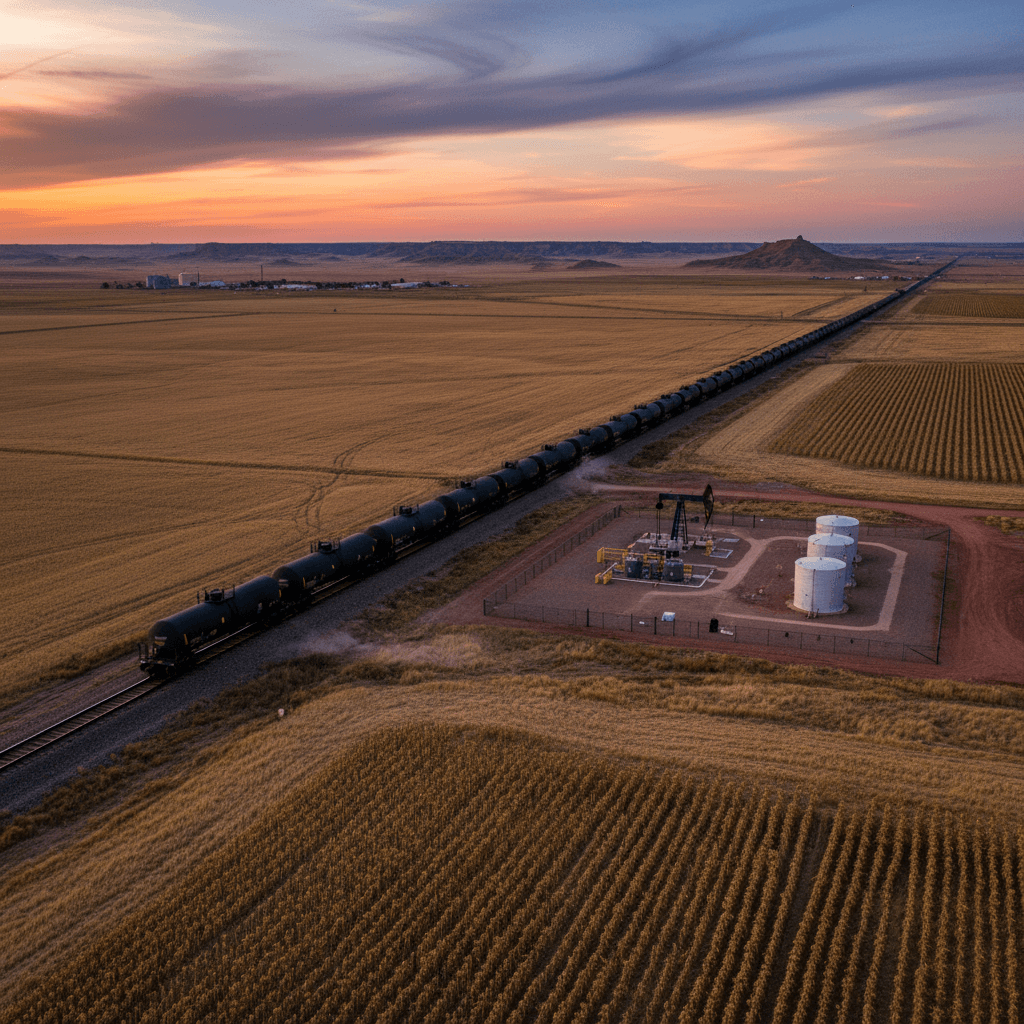
For Bakken operators, the legal victory provides certainty regarding the DAPL litigation, while the proposed export ban represents a significant market risk. DAPL, which can transport up to 750,000 barrels per day from North Dakota's shale fields to Illinois, is a critical outlet for Bakken crude. An export moratorium could disrupt flows and potentially lower the price received for Bakken crude relative to international benchmarks.
Source
Courthousenews.com (May 7, 2026), Rigzone (May 8, 2026)