WTI Crude--
Brent Crude--
Natural Gas--
ND Rig Count--
WTI Crude--
Brent Crude--
Natural Gas--
ND Rig Count--
ND Rig Count at 33 After No Day-Over-Day Changes - Bakken Wire
Rig Report

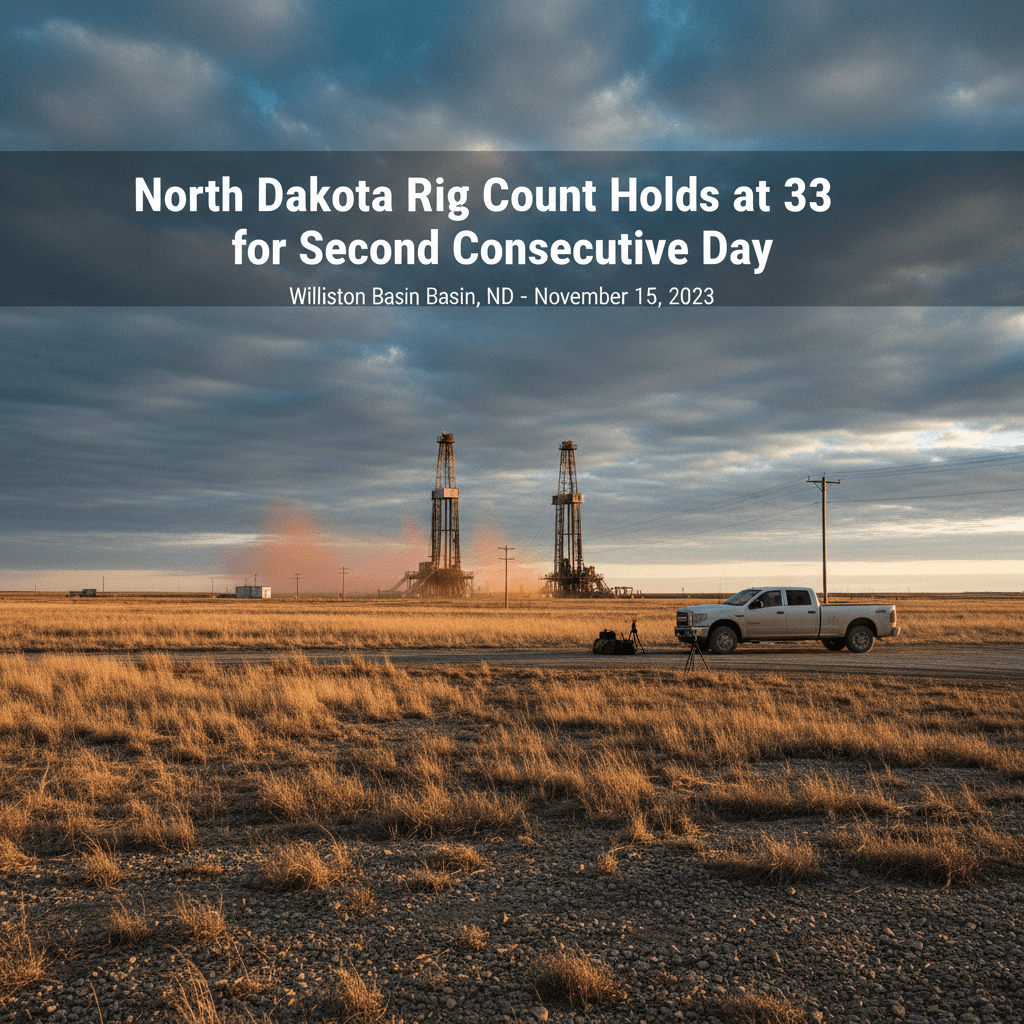
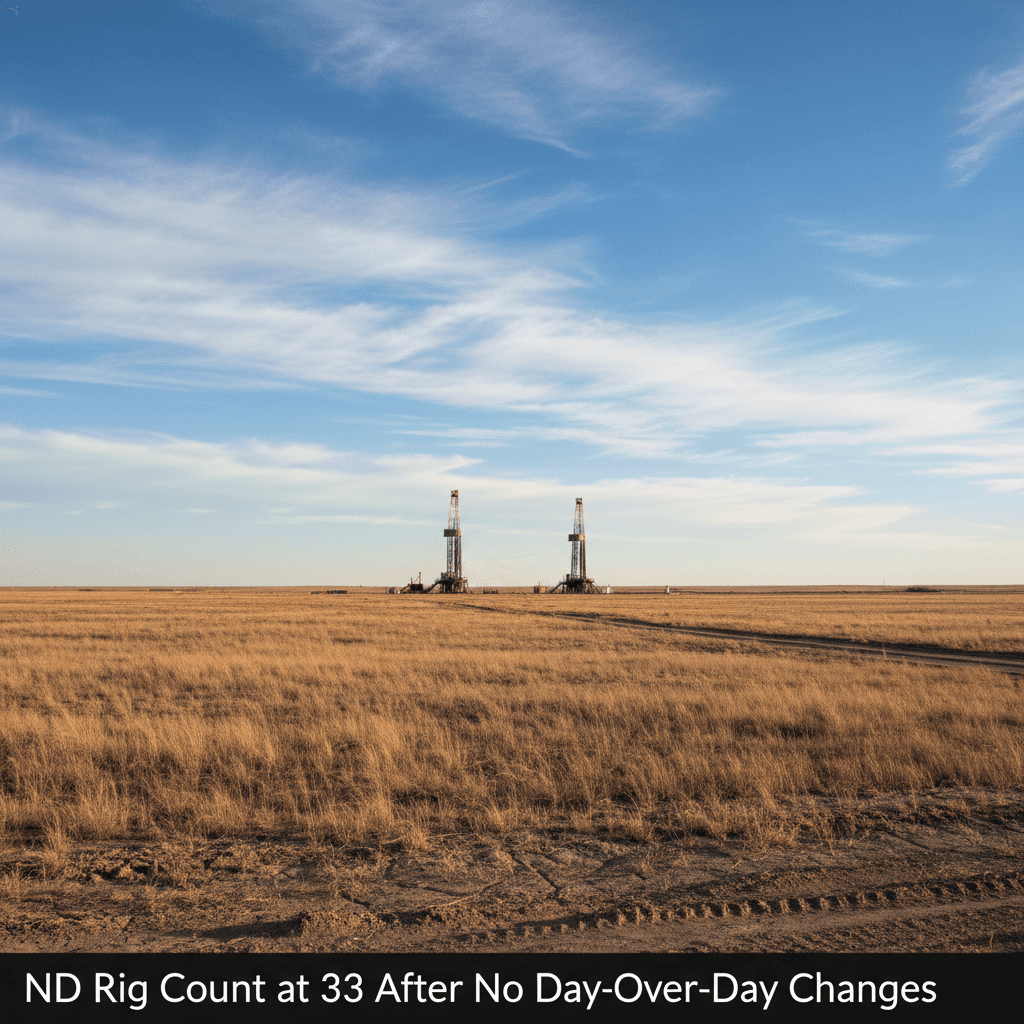
ND Rig Count at 33 After No Day-Over-Day Changes

North Dakota active rigs remain unchanged Monday but stay below last week's and last month's counts.

Bakken Wire Staff·☀️Morning Wire·

North Dakota's active rig count stood at 33 on Monday, according to live rig data.

The data showed no movement from the prior day. No new rigs were reported since Sunday, no rigs were removed and no rigs changed location, leaving the count unchanged at 33 active rigs.

The flat day-over-day reading came after a week in which the count fell by two rigs. A week ago, on Oct. 5, North Dakota had 35 active rigs.

The count is also one rig lower than it was a month ago. On Sept. 12, the state reported 34 active rigs.

For Bakken operators, the unchanged Monday tally means the reported active rig base did not expand or contract over the latest day-to-day comparison. The week-over-week decline, however, shows the rig base remains below where it stood seven days earlier.

For royalty owners and North Dakota energy communities, rig counts are closely watched because they indicate how many active drilling operations are underway at a given point. The Bakken formation is a central part of North Dakota's oil production, and active rig levels can influence well development activity, service demand and drilling-related spending.

The current 33-rig count sits below both the one-week and one-month comparisons. It is two rigs below the Oct. 5 level and one rig below the Sept. 12 level.

The absence of day-over-day moves means the decline from last week's 35 rigs and last month's 34 rigs has not continued into Monday's snapshot. The latest report showed zero additions, zero removals and zero rig relocations.

Rig activity reports typically reflect active drilling rigs at a given point in time and can change when operators add crews, release rigs or move rigs to new locations. Monday's data showed no such movements.

The Bakken's active rig tally remains a key indicator for oil and gas market participants tracking North Dakota drilling momentum. With the count unchanged from the prior day but lower than both recent benchmarks, the latest data points to a stable short-term snapshot within a slightly reduced rig base.

The report's day-over-day stability also provides a clear baseline for the next update. If new rigs are added, rigs are removed or rigs move location in the next period, those changes would be reflected in the state's active rig count.

The Monday reading gives operators a point-in-time view of active drilling presence in the state. A count of 33 active rigs is not a production figure, but it is a measure of active drilling operations as reported in the rig data.

The historical comparisons show the rig base has shifted modestly rather than dramatically over the past four weeks. The one-month decline of one rig and the one-week decline of two rigs both point to a smaller active fleet than recent reference points.

The zero movements reported for Monday mean the 33-rig count did not change because of additions, removals or relocations during the latest reporting window.

Source

Live rig data and historical context provided for Bakken Wire.
north dakotabakkenrig activityactive rigswilliston basinoil and gasdrilling

Share this article

Related Articles

North Dakota Rig Count Holds at 33, Down 2 from Last Week - Bakken Wire
Rig Report

North Dakota Rig Count Holds at 33, Down 2 from Last Week

North Dakota's active drilling rig count remained unchanged at 33 on Sunday, October 11, 2026, according to live rig data from Bakken Wire. The data showed no new rigs added, no rigs removed, and no rigs that moved location compared to the previous day. The current count represents a decrease of two rigs from the total of 35 active one week ago, on October 4. Compared to one month ago, when the state reported 34 active rigs on September 11, the fleet is down by one unit. The Bakken formation is North Dakota's primary oil-producing region, and the rig count is a closely watched leading indicator of future production activity and capital expenditure by operators. A stable or declining rig count can signal a period of capital discipline or a response to commodity price volatility. The recent dip from 35 to 33 rigs over a week suggests a minor pullback...

🌅Afternoon Wire·Oct 11
North Dakota Rig Count Holds at 33 for Second Consecutive Day - Bakken Wire
Rig Report

North Dakota Rig Count Holds at 33 for Second Consecutive Day

North Dakota's active drilling rig count remained unchanged at 33 on Sunday, October 11, 2026, according to live data from Bakken Wire. No rigs were added, removed, or moved location since the previous day. The current count reflects a continued period of stability at a reduced level of drilling activity. The state's rig fleet is down by two units compared to one week ago, when 35 rigs were active on October 4. Compared to one month ago, on September 11, the count is down by one rig from a total of 34. The Bakken formation is North Dakota's primary oil-producing region, and the rig count is a closely watched leading indicator of future production activity and capital expenditure by operators. A rig count in the low 30s represents a significant reduction from the boom-era highs of over 200 rigs but has been typical for the region in recent years under...

☀️Morning Wire·Oct 11
North Dakota rig count dips to 33 with one rig released - Bakken Wire
Rig Report

North Dakota rig count dips to 33 with one rig released

North Dakota's active drilling rig count fell to 33 on Saturday, October 10, 2026, down by one rig from the previous day, according to live rig data from Bakken Wire. No new rigs were added and none moved locations. The sole rig removed from the count was the NABORS X25, operated by Slawson Exploration Company, Inc. It was released from its location at 148-100-1 in McKenzie County, the core of the Bakken formation. The current count of 33 rigs represents a decrease of two rigs compared to one week ago, when 35 rigs were active on October 3. The count also shows a two-rig decline from the level seen one month ago on September 10, which also stood at 35 active rigs. The rig count is a key leading indicator for future oil production in the Williston Basin. A stable or increasing count typically signals operator confidence and planned drilling...

🌅Afternoon Wire·Oct 10