ND Secures $27.8M Final DAPL Settlement; Global Oil Flow Recovery Seen as Slow
North Dakota recovers costs from federal government as Middle East producers face lengthy ramp-up after Strait of Hormuz reopening deal.
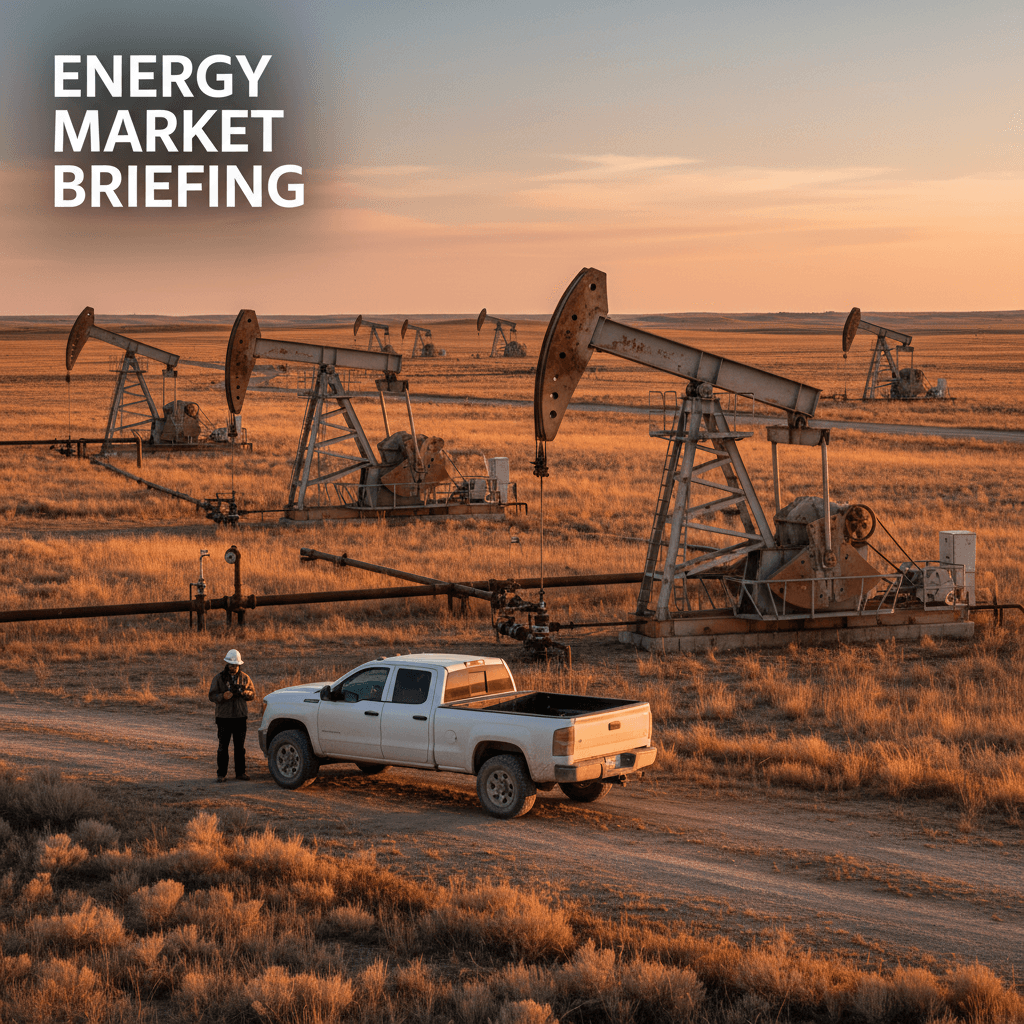
North Dakota will recover nearly $38 million from the federal government for expenses related to the 2016-17 Dakota Access Pipeline protests, following a final settlement announced last week, according to a report from Native News Online. State Attorney General Drew Wrigley secured a $27.8 million reimbursement, combined with a previously secured $10 million payment.
Meanwhile, a deal to reopen the Strait of Hormuz does not mean a swift return to previous global oil and gas trade levels, OilPrice.com reported Monday. Middle Eastern producers have been forced to shut in more than 10 million barrels per day (bpd) of oil production since the Strait closed three and a half months ago, and a full ramp-up could take months to a year.
Energy consultancy Wood Mackenzie said that, assuming a controlled ramp-up, affected fields could reach 70% of prior production within three months and 90% within six months, according to the OilPrice.com report. The final 1 million bpd will take considerably longer. Analysts note that Iraq, which had to curtail the highest proportion of its production, could be particularly challenged due to difficult fields.
"The speed at which supply chains normalise and export flows recover will also play a key role in determining how much of the geopolitical risk premium remains embedded in the market,” Ole Hansen of Saxo Bank told OilPrice.com. Practical issues like organizing insurance for shipping could further delay the recovery.
In other global energy news, India's solar capacity is set to grow by 22% each year through 2035, driven by a data center boom, according to a separate OilPrice.com report citing a study by consultancy Nuvama. India's Central Electricity Authority projects the country will have 509 gigawatts of solar capacity by the end of the 2035-36 fiscal year, up from 140 GW in January 2026.
Back in the U.S., a Senate deadline passed last week protecting the 2025 management plan for Utah's Grand Staircase-Escalante National Monument, according to Native News Online. The missed deadline makes passage of legislation seeking to overturn the plan far less likely, which the Grand Staircase-Escalante Inter-Tribal Coalition called a victory for Tribal co-stewardship.
In New Mexico, Democratic gubernatorial nominee Deb Haaland unveiled a renewable energy plan aimed at lowering utility costs by expanding solar, wind, and geothermal development, Native News Online reported.
Source
Native News Online, OilPrice.com