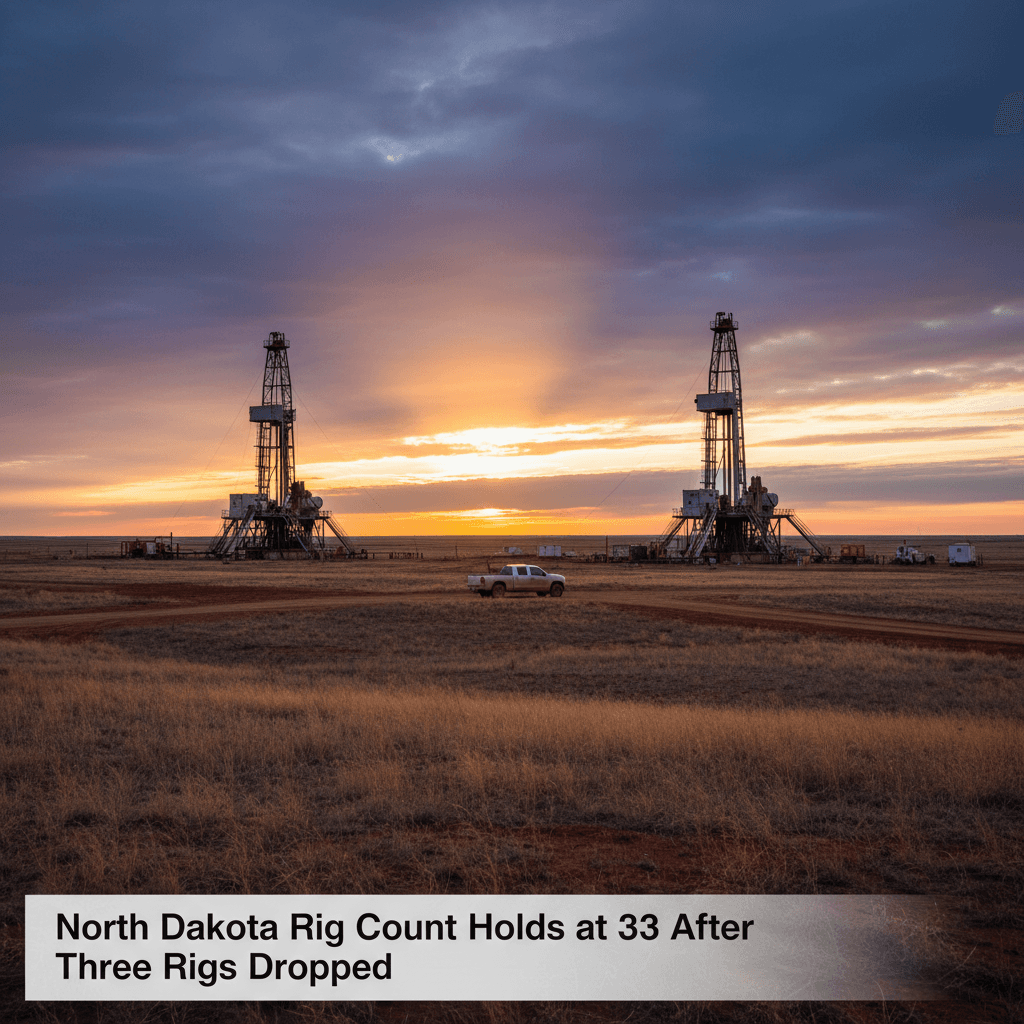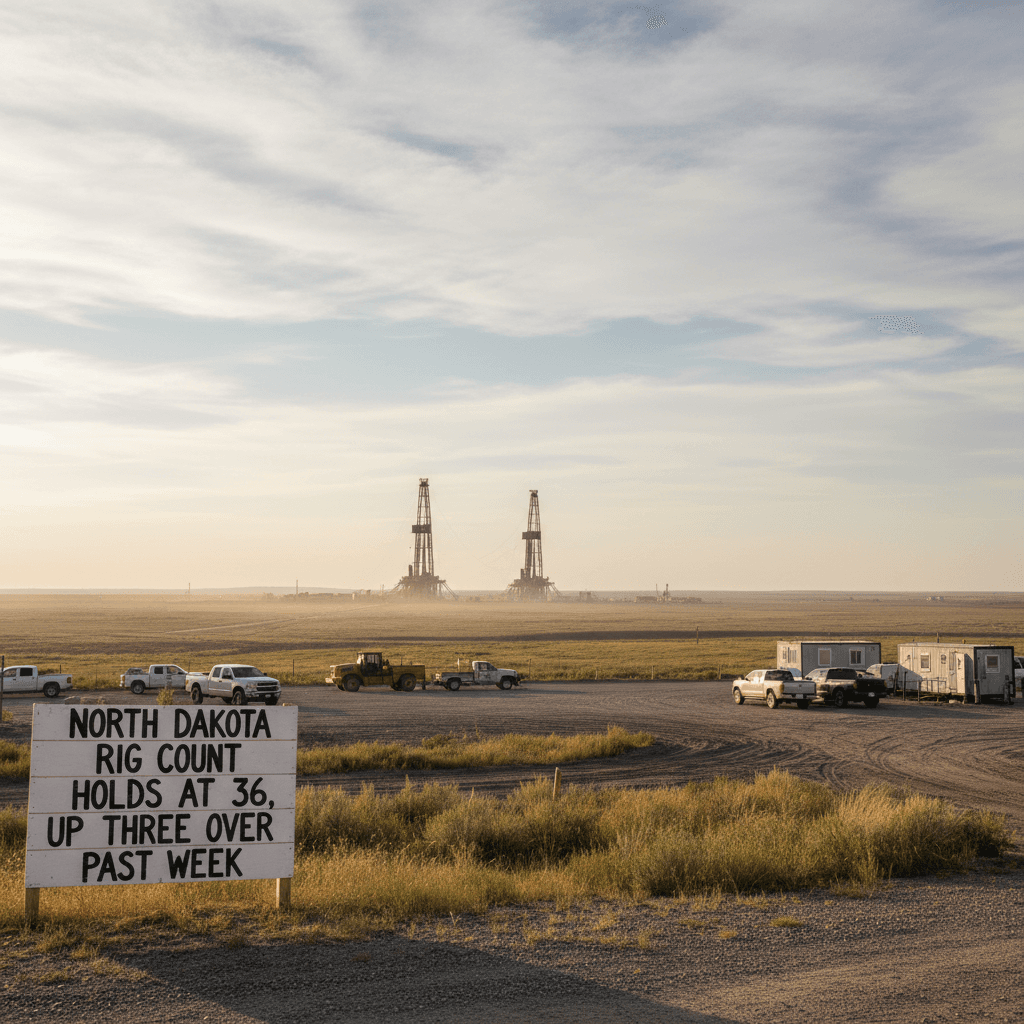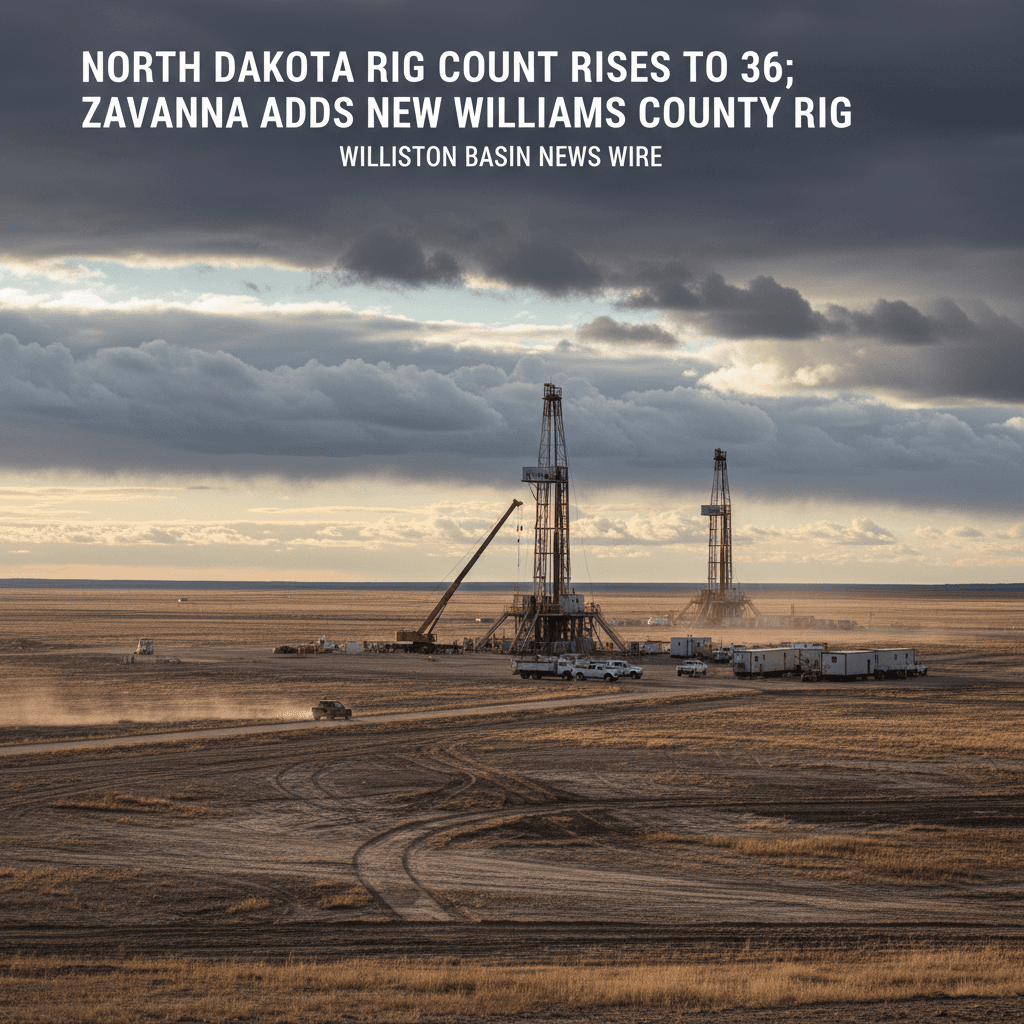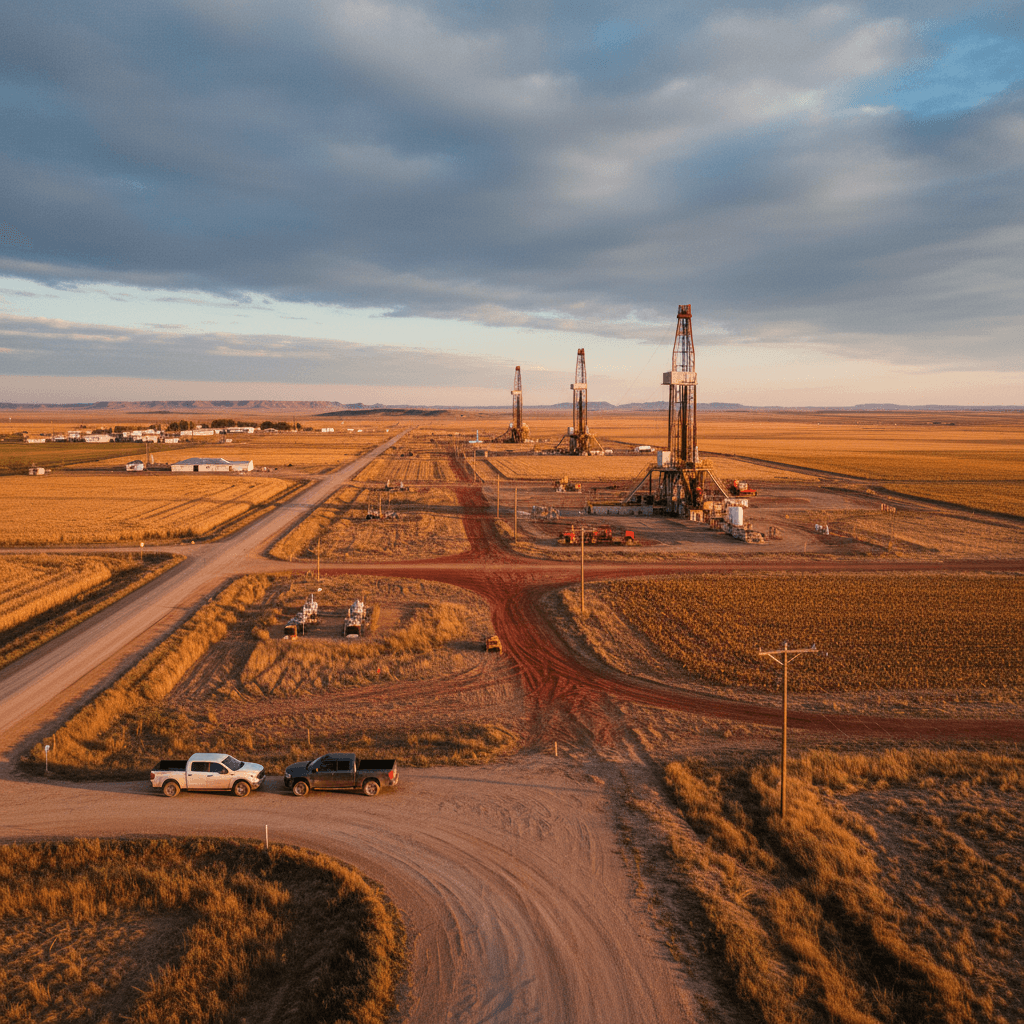
North Dakota Rig Count Holds at 28, Up 4 from Previous Week
The state's active drilling fleet has increased by three rigs over the past month, signaling sustained operator activity in the Bakken.
North Dakota's active drilling rig count held steady at 28 on Tuesday, August 4, according to live data from Bakken Wire. The total showed no day-over-day change, with no new rigs added, removed, or relocated since Monday's report.
The current figure represents a notable increase from levels seen just one week prior. On July 28, 2026, the state reported 24 active rigs, meaning the fleet has grown by four units over the past seven days. Compared to one month ago, activity is also higher; the count stood at 25 rigs on July 5, marking a net gain of three rigs over the four-week period.
The stability at 28 rigs continues a pattern of modest growth in the Williston Basin's drilling activity this summer. Rig counts are a closely watched leading indicator of future oil production, as each active rig represents a crew drilling new wells. The current level, while significantly below the historic peaks seen in the early 2010s, reflects a focused and efficient drilling strategy by operators in the mature Bakken formation.
The increase from 24 to 28 rigs in one week suggests a pickup in permitting or crew deployments by one or more operators, though the specific companies involved were not detailed in the live data report. Such movements often correlate with commodity price stability and operator confidence in the economic viability of new wells.
For royalty owners and service companies in western North Dakota, a rig count in the upper 20s indicates a steady pace of new development. It supports ongoing demand for hydraulic fracturing crews, well completion services, and related oilfield logistics. The count remains a key metric for gauging the health of the state's primary industrial sector.
The North Dakota Department of Mineral Resources typically correlates rig activity with future production forecasts. A sustained count near 30 rigs is generally necessary to maintain or slightly grow the state's oil output, which has been holding above 1 million barrels per day for an extended period. The recent upward trend from 24 to 28 active units, if maintained, could contribute to stabilizing production volumes in the coming months.
Source
Bakken Wire live rig data and historical context