North Dakota Rig Count Holds at 30 Amid Sustained Slowdown
The state's active drilling fleet shows no daily movement but has declined by four rigs over the past month.
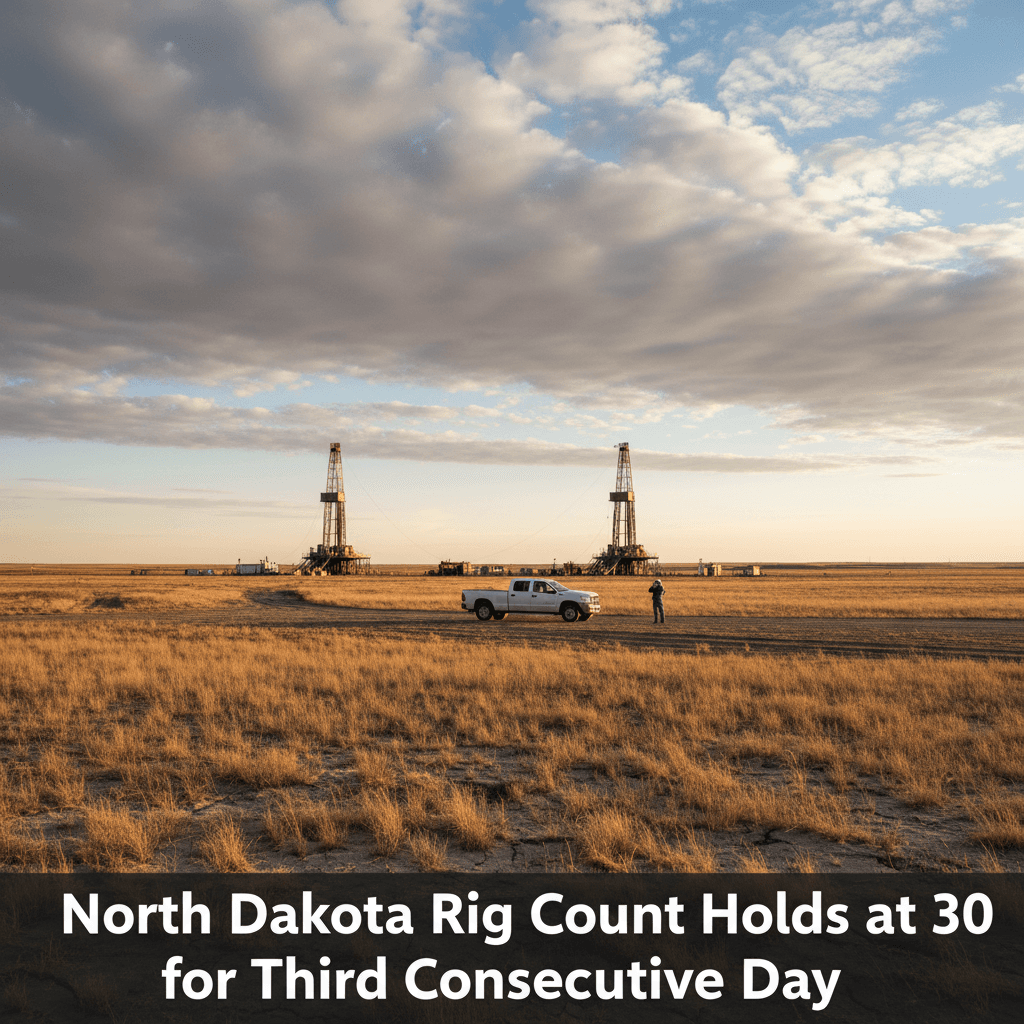
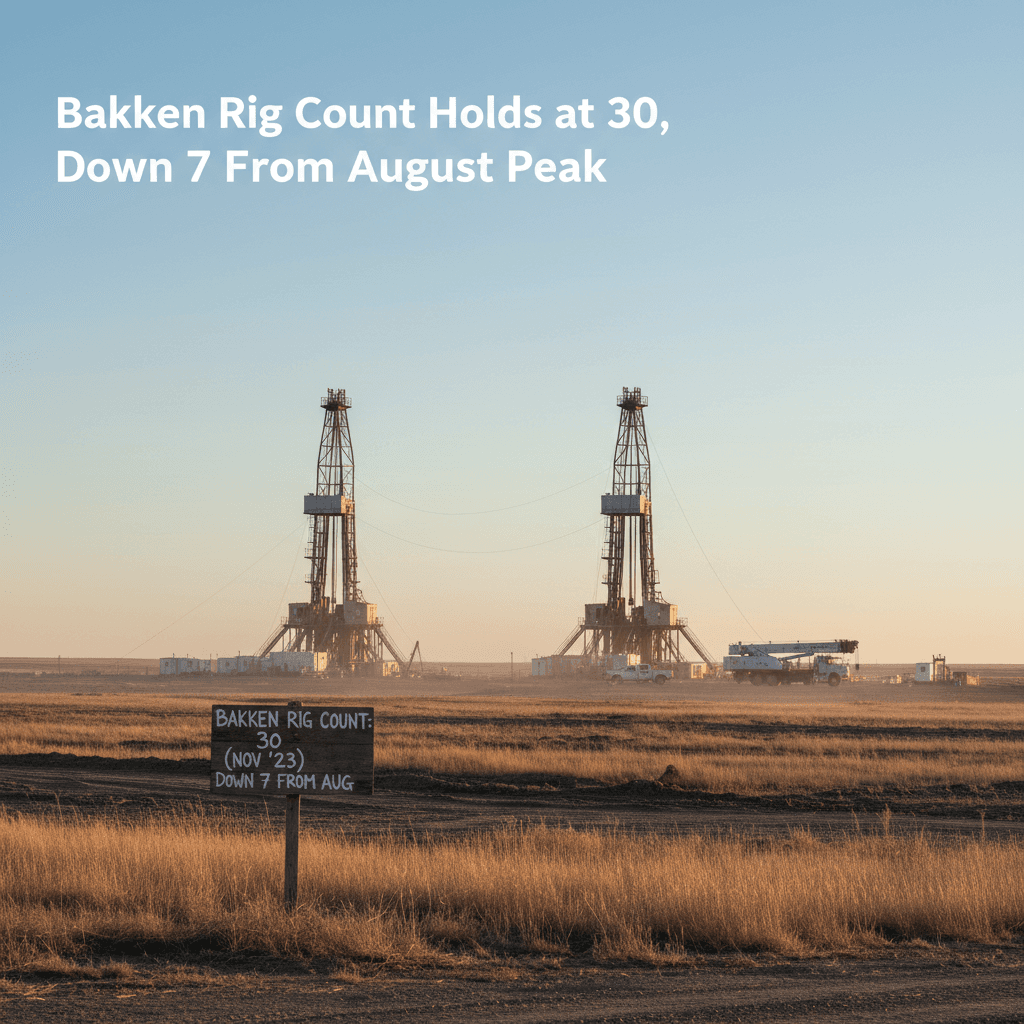
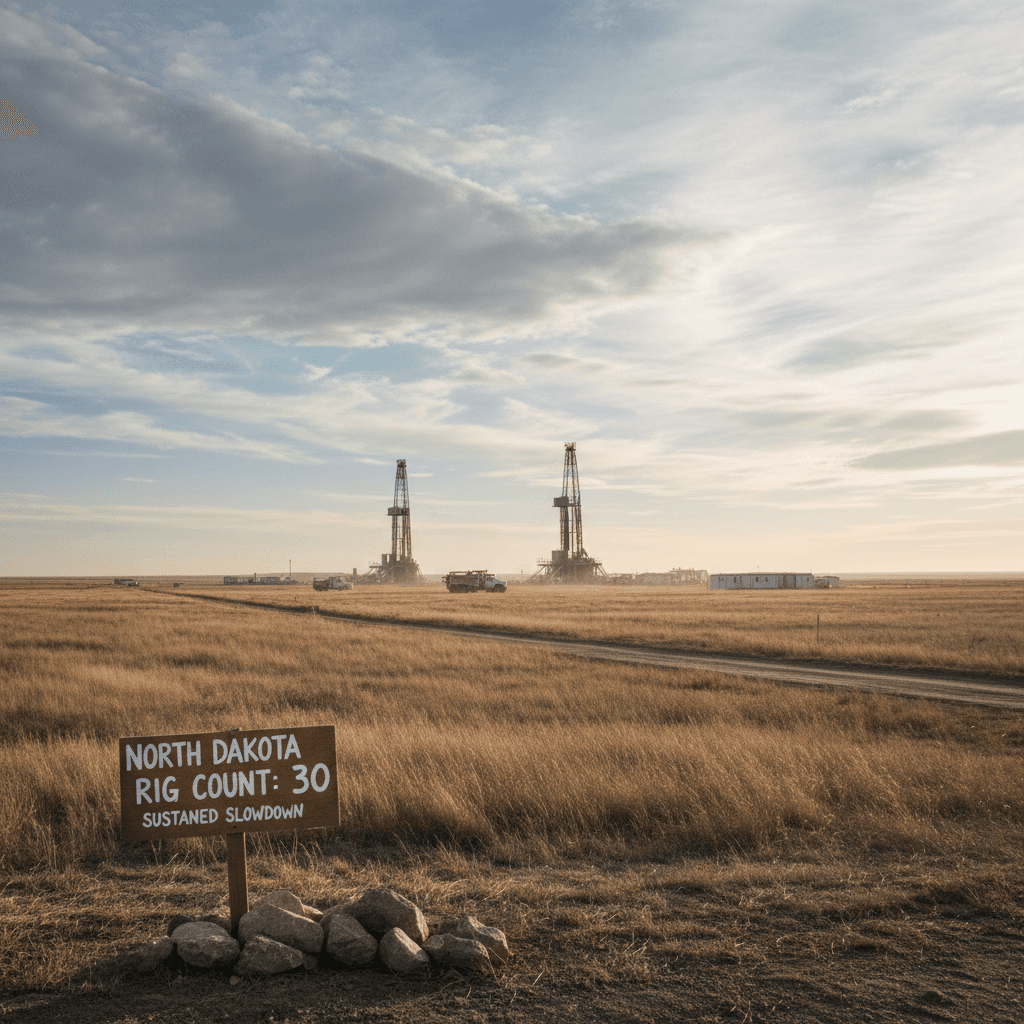
North Dakota's active drilling rig count remained at 30 on Saturday, September 26, 2026, according to live rig data. The figure showed no day-over-day change, with no new rigs added, none removed, and none relocated since the prior day's report.
The current count represents a continued moderation in drilling activity within the Bakken formation. Compared to one week ago, on September 19, 2026, the active rig fleet has declined by two units. The broader one-month trend shows a more pronounced slowdown, with four rigs coming offline since the count of 34 reported on August 27, 2026.
A rig count in the low 30s reflects a period of disciplined capital spending by operators in the Williston Basin. While the count provides a snapshot of current drilling operations, it is a leading indicator for future oil production, typically lagging by several months. The current level suggests a focus on efficiency and well completion within existing drilling programs rather than a significant expansion of activity.
The stability at 30 rigs follows typical industry patterns where weekend operations see little change. However, the sequential declines over the past week and month highlight a cautious approach amid broader market conditions. Operators continue to prioritize shareholder returns and debt reduction over aggressive production growth, a trend that has defined the sector's post-pandemic era.
For royalty owners and service companies in North Dakota, the rig count is a key barometer of near-term economic activity. The current level sustains a baseline of operations but does not signal an impending surge in drilling or associated jobs. Production levels are expected to remain relatively flat in the coming quarters, supported by the completion of drilled but uncompleted wells (DUCs) even as the active drilling pace moderates.
The North Dakota Department of Mineral Resources closely monitors the rig count as part of its monthly production reports. The state remains the third-largest oil-producing region in the United States, with the Bakken formation as its core asset. The current operational tempo is consistent with maintaining that position without exerting significant downward pressure on oil prices through rapid supply growth.
Source
Live Rig Data, Historical Context provided