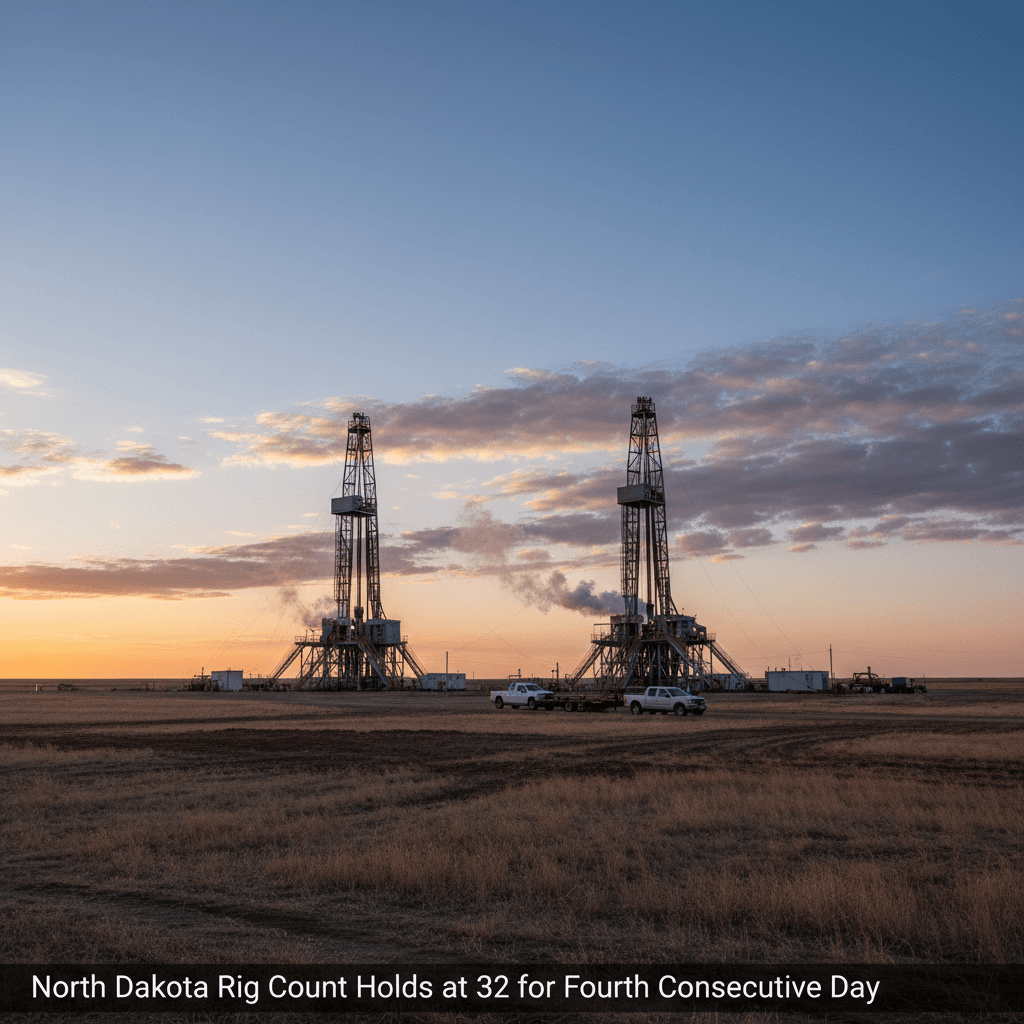
North Dakota Rig Count Holds at 32 for Fourth Consecutive Day
The state's active drilling fleet remains down by two rigs compared to levels seen one month ago, reflecting a sustained period of stable but reduced activity.
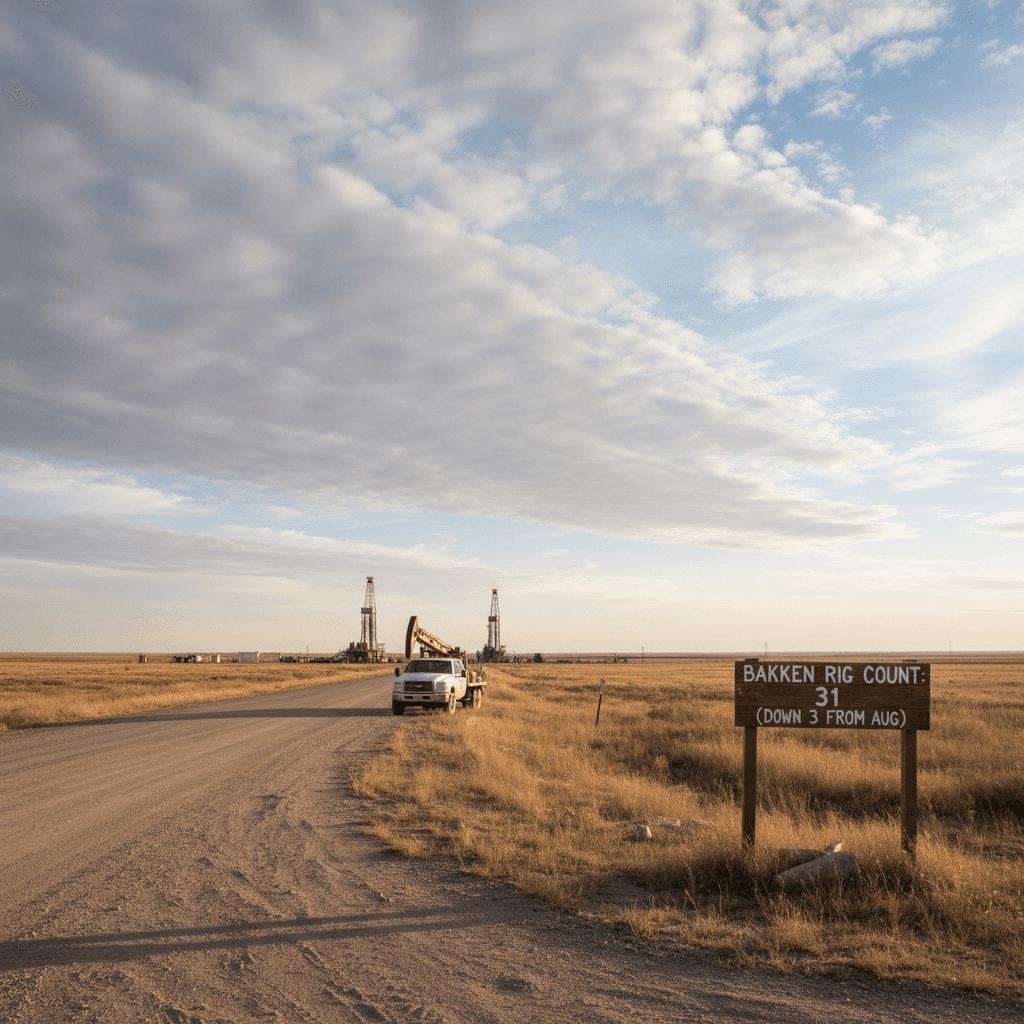
North Dakota's active drilling rig count remained unchanged at 32 on Wednesday, September 23, according to live data from Bakken Wire. No new rigs were added, none were removed, and no rigs moved locations compared to the previous day's tally.
This marks the fourth consecutive day the count has held at 32 rigs, indicating a plateau in drilling activity in the Williston Basin. The current level represents a slight decline from recent historical benchmarks.
Compared to one week ago, on September 16, the active rig fleet is down by one rig. The broader trend shows a gradual easing from levels seen earlier in the summer. The current count of 32 rigs is down by two from the 34 rigs active one month ago on August 24.
The stability in the rig count suggests operators are maintaining a disciplined capital expenditure approach, focusing on core development areas and maximizing efficiency from existing drilling programs. The Bakken formation remains North Dakota's primary oil-producing region, and the current rig level is sufficient to sustain production, though it limits significant near-term growth.
A rig count in the low 30s has been a common range for the state throughout much of 2026, as companies balance shareholder returns, operational costs, and commodity price outlooks. The slight downtrend over the past month aligns with a typical seasonal pattern where activity can moderate heading into the final quarter of the year.
The lack of day-to-day movement in rigs—with no additions, deletions, or relocations reported—points to a period of operational steadiness among Bakken operators. Major producers continue to drill and complete wells from their inventory of permitted locations, but are not currently expanding their active fleets.
The next significant movement in the rig count will likely depend on sustained shifts in oil price fundamentals or explicit changes to annual drilling budgets announced by leading operators in the basin. For now, the drilling pace remains consistent and predictable.
Source
Bakken Wire live rig data and historical context.