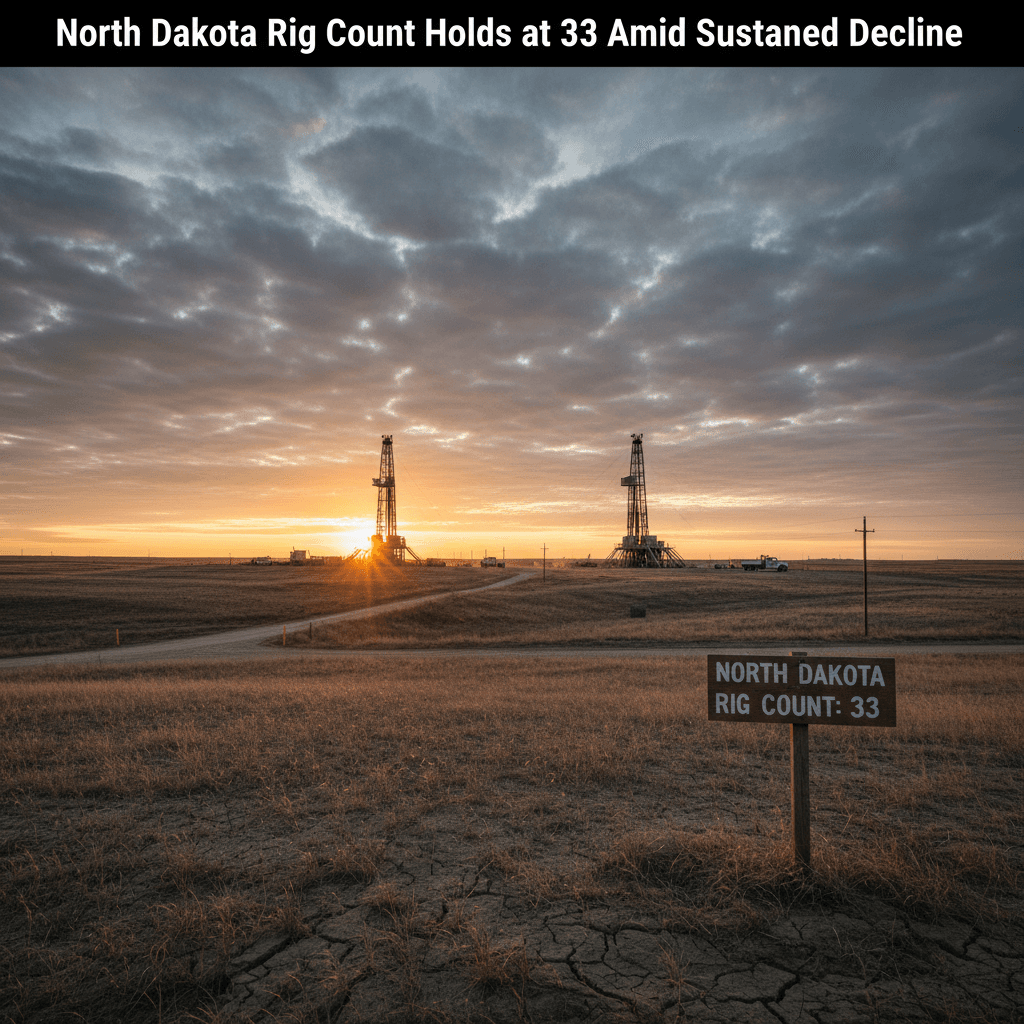
North Dakota Rig Count Holds at 33 Amid Sustained Decline
The state's active drilling fleet remains steady from Friday but is down six rigs from a month ago, reflecting a broader slowdown in Bakken activity.
North Dakota's active drilling rig count held at 33 on Saturday, November 28, 2026, with no day-over-day changes, according to live rig data from Bakken Wire. The count showed no new rigs added, none removed, and no rigs moving location since the previous day.
The steady figure, however, masks a broader downward trend in Bakken drilling activity. Compared to one week ago, on November 21, the active rig count is down by two. The decline is more pronounced over a longer period, with the state's drilling fleet down by six rigs from the 39 active rigs reported a month ago on October 29.
A rig count in the low 30s represents a significant cooling from the higher activity levels seen earlier in the year and throughout much of the previous decade. The rig count is a leading indicator of future oil production, as new wells must be drilled and completed to offset the steep decline rates typical of Bakken shale wells.
The sustained reduction in drilling activity is often tied to operator responses to volatile commodity prices, capital discipline mandates from investors, and the high efficiency of modern rigs and completion techniques. With fewer rigs, operators can still maintain production by focusing on core, high-return acreage within the Bakken formation's most productive regions, such as the McKenzie, Mountrail, Dunn, and Williams county core.
The current rig count level suggests a focus on maintaining production rather than aggressive growth. For royalty owners and service companies in the Williston Basin, a lower and stable rig count can translate to predictable, if moderated, cash flows and service work compared to the boom-and-bust cycles of the past.
Analysts typically watch the rig count alongside completion crew activity and well permitting data to gauge the industry's health. A prolonged period with a rig count in the 30s, unless accompanied by a significant increase in the number of wells completed per rig, would point to flat or declining North Dakota oil production in the coming months.
Source
Bakken Wire live rig data and historical context