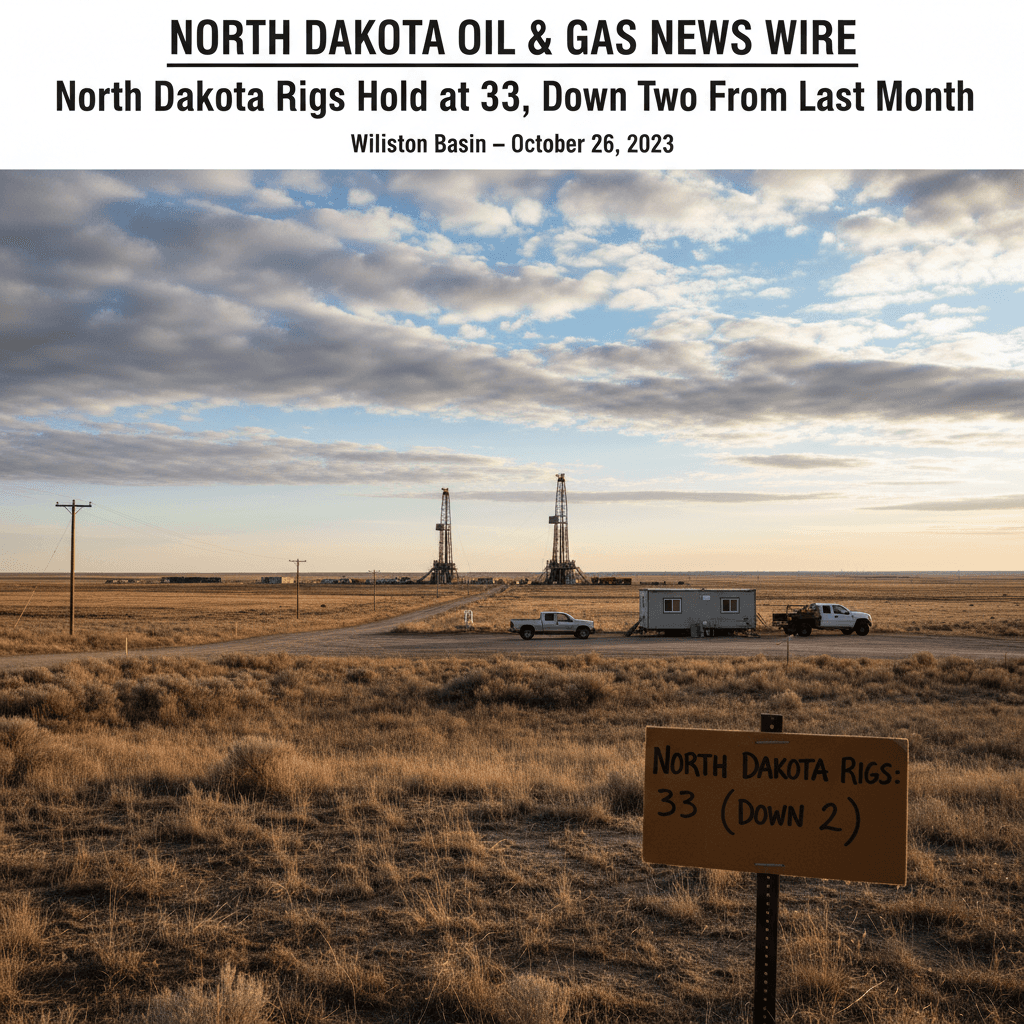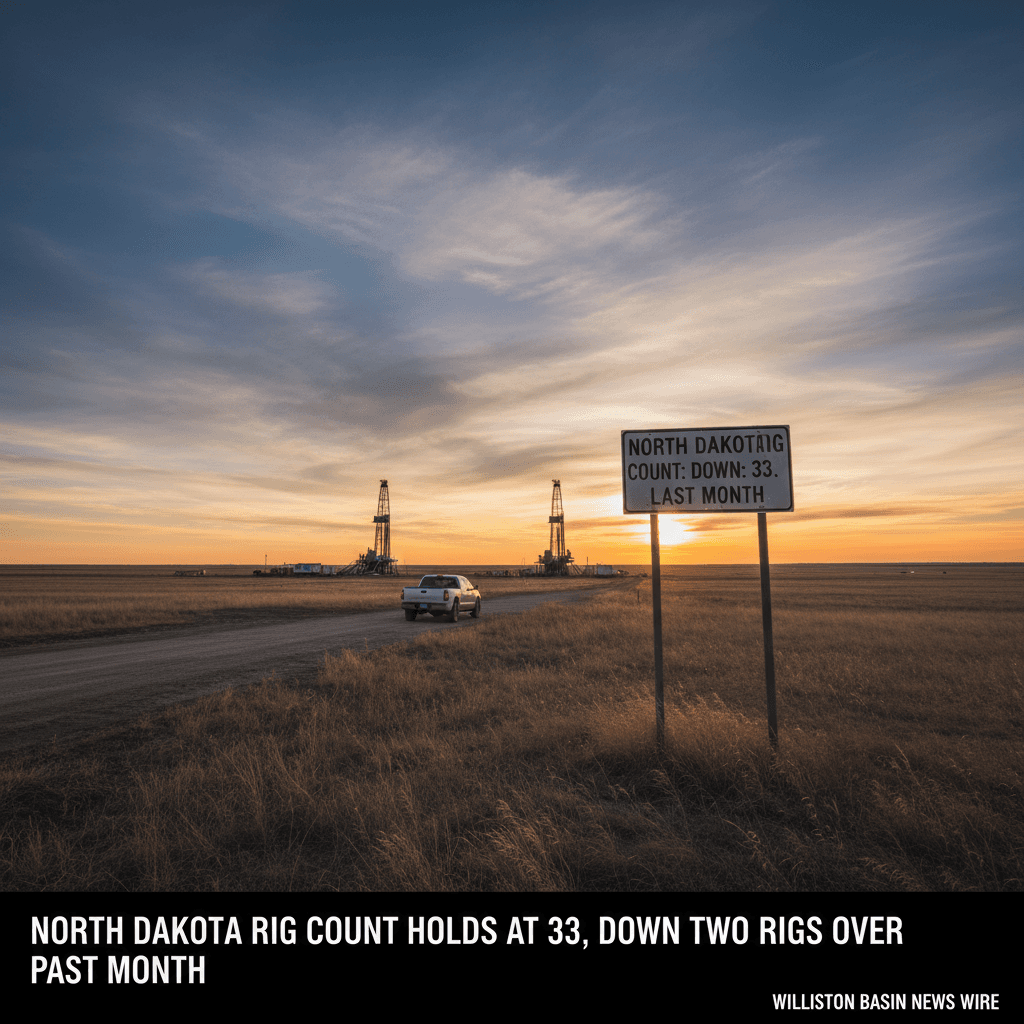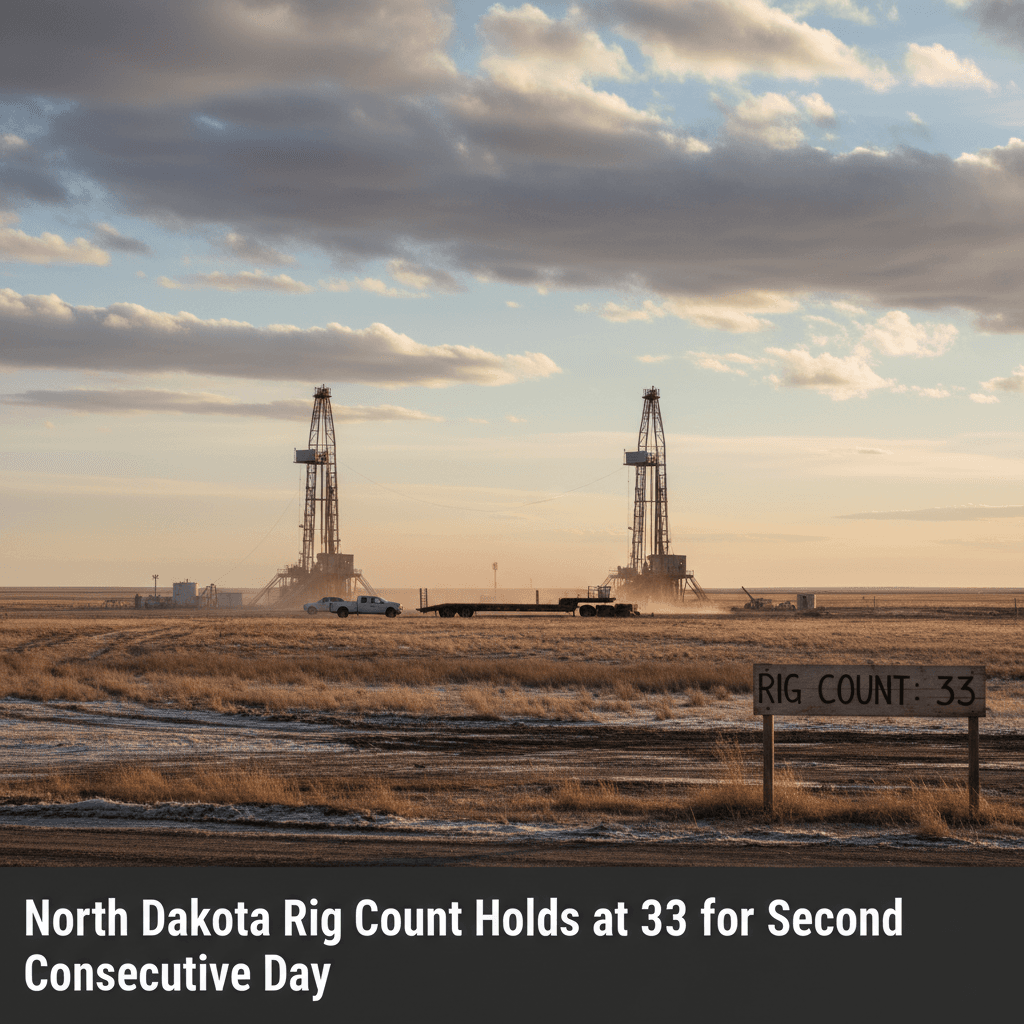
North Dakota Rig Count Holds at 33 for Second Consecutive Day
The state's active drilling fleet remains unchanged but sits four rigs below its level from one week prior.
North Dakota's active drilling rig count remained at 33 on Saturday, November 14, 2026, according to live data from Bakken Wire. The total showed no daily change, with zero new rigs added, zero rigs removed, and zero rigs moving location since Friday.
The current count represents a decline from recent historical levels. The state's active fleet is down by four rigs compared to one week ago, when 37 rigs were operational on November 7. Compared to one month ago, on October 15, the count is down by two rigs from a total of 35.
The rig count is a key leading indicator for future oil production in the Bakken formation and the broader Williston Basin. A stable or declining count can signal a period of capital discipline among operators or a response to prevailing commodity prices and operational costs. The current level of 33 rigs is consistent with activity seen during periods of moderated drilling budgets.
The lack of daily movement—with no rigs added, removed, or relocated—suggests a pause in field-level adjustments by drilling contractors and exploration and production companies. Major operators in the basin, including Continental Resources, Hess Corporation, and Marathon Oil, typically drive rig activity based on their quarterly and annual development plans.
While the daily count is static, the weekly decline of four rigs may reflect the conclusion of specific drilling programs, routine rig maintenance and moves, or strategic pullbacks in certain areas. Such fluctuations are normal but are monitored closely by service companies, royalty owners, and local economies dependent on drilling activity.
Sustained activity at or near current levels is generally required to maintain North Dakota's oil production, which has historically hovered around 1.2 million barrels per day. The state's Department of Mineral Resources regularly correlates rig activity with production trends, noting that modern rigs drilling longer laterals have improved efficiency, allowing fewer rigs to support substantial output.
The next weekly data point from state regulators will provide further context on whether the recent dip represents a short-term adjustment or the beginning of a longer-term trend. Market watchers will also monitor upcoming quarterly earnings reports from Bakken-focused operators for commentary on 2027 capital expenditure and drilling plans.
Source
Bakken Wire Live Rig Data, Historical Context Data