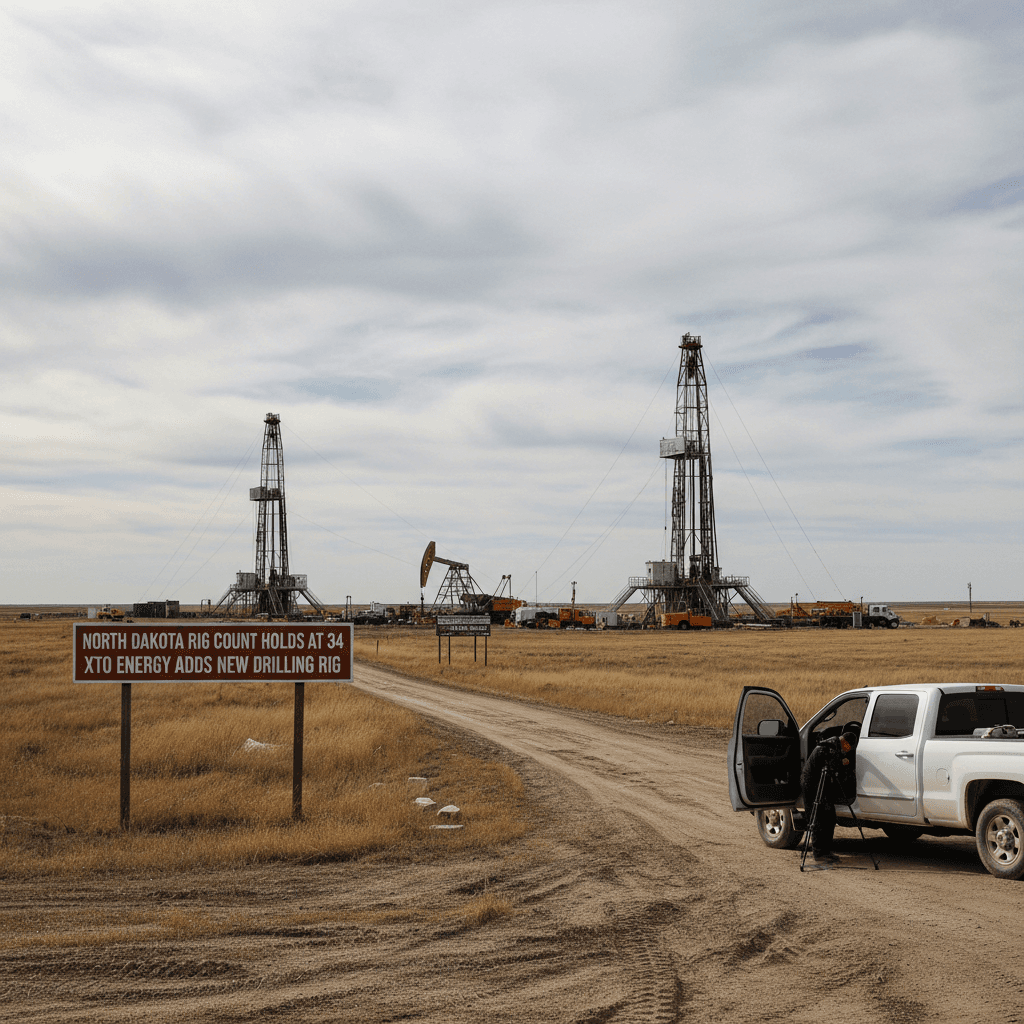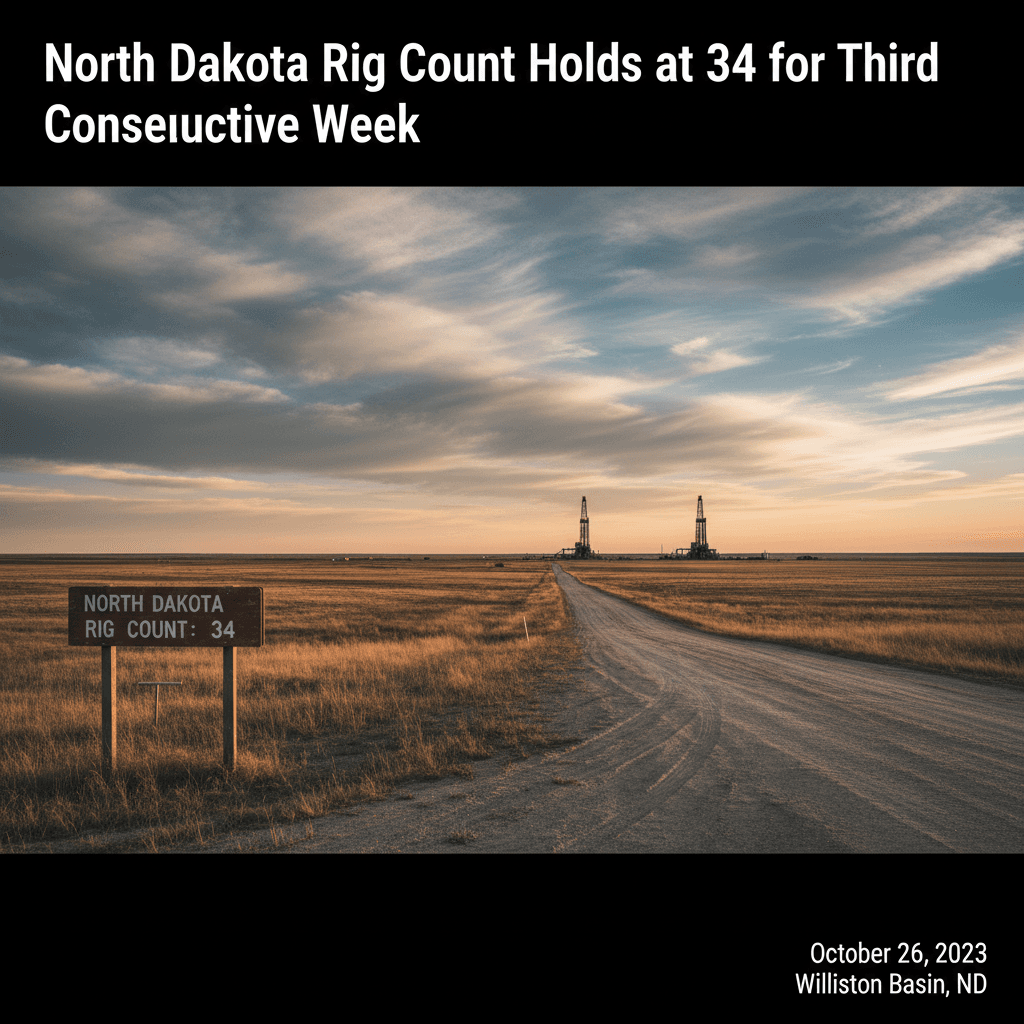
North Dakota Rig Count Holds at 34 for Third Consecutive Week
The state's active drilling fleet remains unchanged from levels reported a week and a month ago, indicating a period of operational stability.
North Dakota's active drilling rig count held steady at 34 on Friday, October 9, according to live data from Bakken Wire. The figure represents no change from the previous day, with zero new rigs added, zero rigs removed, and zero rigs moving location.
The current count is identical to the level reported one week ago, on October 2, 2026. It also matches the active rig count from one month ago, on September 9, 2026, indicating a sustained period of stability in the state's drilling activity.
This extended plateau suggests operators in the Bakken formation and wider Williston Basin are maintaining a consistent, measured pace of development. A stable rig count often reflects a balance between capital expenditure plans, commodity price outlooks, and operational efficiency goals. For North Dakota, which relies heavily on oil and gas production for state revenue and employment, a steady drilling pace supports ongoing production levels and royalty owner income.
While the headline number is unchanged, activity within the basin continues. Operators typically use these rigs to drill new horizontal wells targeting the Bakken and Three Forks formations. The focus for many companies remains on drilling longer laterals and completing wells with more intensive fracturing stages to maximize recoveries from each pad, a trend that has supported production even with a lower overall rig count compared to previous boom periods.
The current count of 34 active rigs is a fraction of the peak activity seen in the Bakken's heyday but aligns with the industry's post-pandemic emphasis on capital discipline and shareholder returns. A stable count over a month suggests operators are not currently reacting to short-term price fluctuations with immediate adjustments to their drilling programs.
For service companies and local economies in western North Dakota, a consistent rig count provides a predictable level of demand for crews, housing, and equipment. The lack of day-to-day movement in the rig tally points to a settled operational environment as the industry moves deeper into the fourth quarter of 2026.
Source
Bakken Wire Live Rig Data, Bakken Wire Historical Data