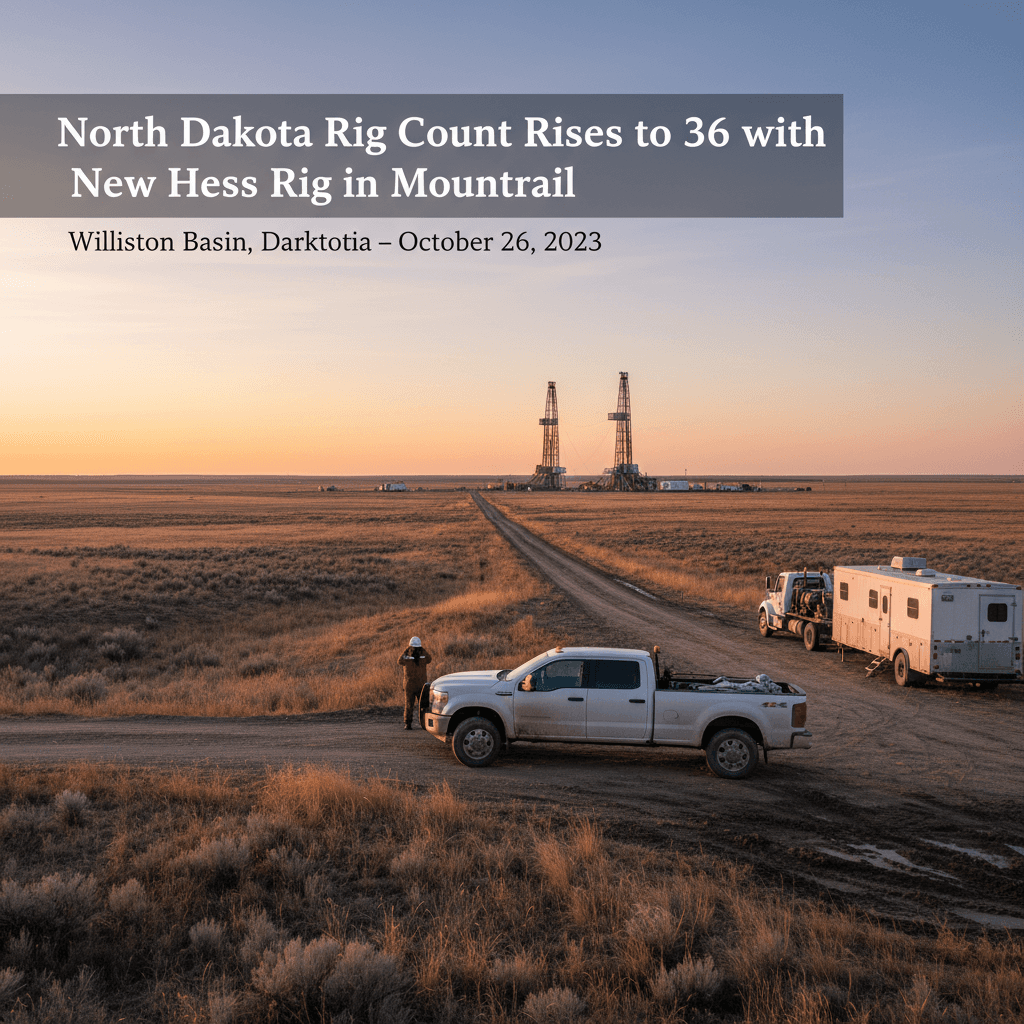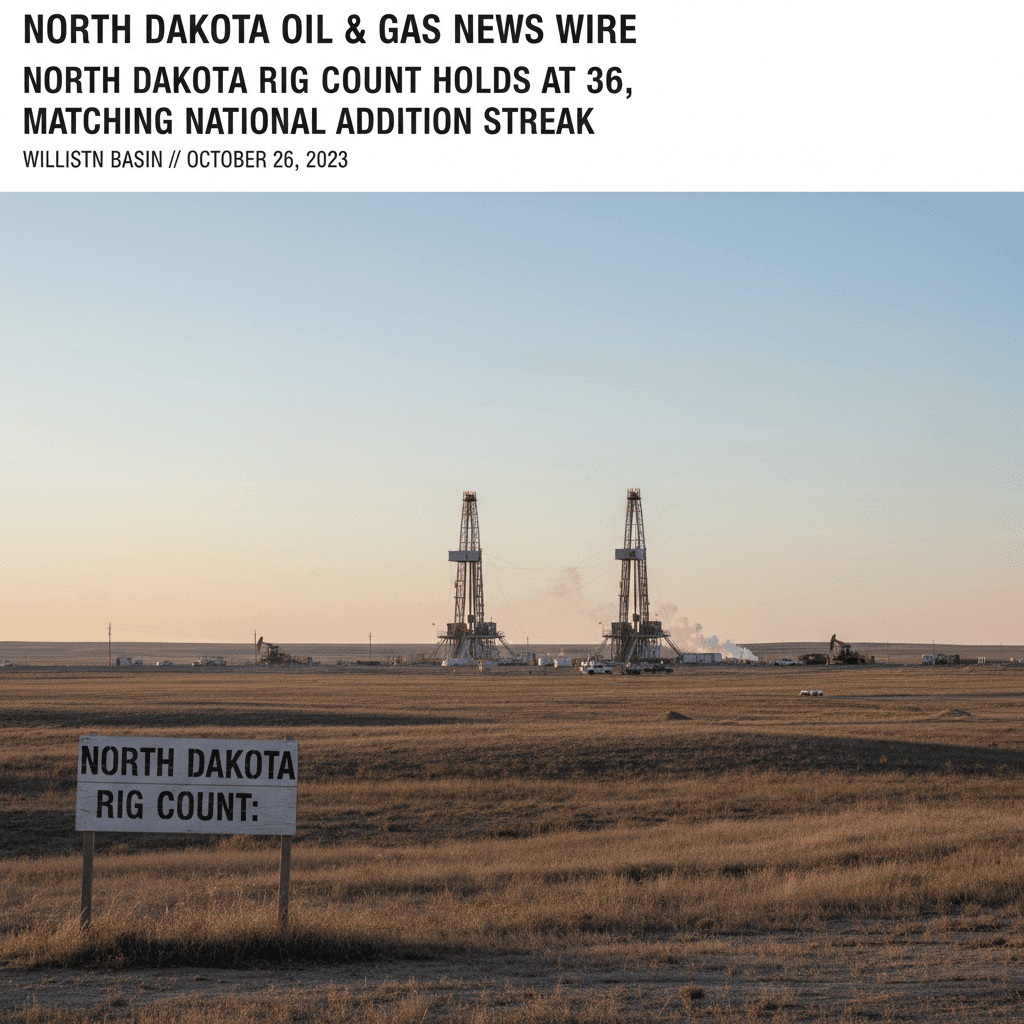
North Dakota Rig Count Holds at 36, Matching National Addition Streak
State's drilling activity remains stable as Baker Hughes reports a four-rig weekly increase across North America.
North Dakota's active drilling rig count remained unchanged at 36 on Tuesday, according to live data from Bakken Wire. The count showed no daily movement, with no new rigs added, removed, or relocated since Monday.
The current figure represents a slight increase from one week ago, when the state reported 35 active rigs on November 17, 2026. However, activity is down by one rig compared to a month ago, when 37 rigs were active on October 25.
The stability in the Bakken comes as broader North American drilling activity shows signs of growth. According to a report from Baker Hughes published November 23 and cited by Rigzone, the continent added four rigs week-on-week, entering what the service company described as a "rig addition streak."
This national trend underscores a continued, measured focus on oilfield development. While North Dakota's count is steady, the push for operational efficiency and regulatory streamlining remains a key industry topic. In a related development from Texas, the historic election of the first Democrat in 36 years to a seat on the Texas Railroad Commission (RRC) could signal a shift in regulatory focus. The newly elected commissioner stated he plans to work with Republican colleagues to speed up permitting, according to a November 23 Rigzone report. While specific to Texas, such regulatory movements are closely watched by operators nationwide for potential impacts on the pace of development.
Separately, news of permitting progress elsewhere highlights the ongoing process for energy projects. Rigzone also reported on November 23 that Europa Oil & Gas received an environmental permit for an appraisal well for its onshore Cloughton gas project in the UK. The company noted this approval is separate from the planning permission for the full project, for which it is appealing a local council's rejection.
For Bakken operators and royalty owners, the stable rig count suggests a period of consolidation and execution following recent minor fluctuations. The focus likely remains on maximizing production from existing wells and deploying capital efficiently in a stable commodity price environment. The juxtaposition of a steady state-level count with a rising continental trend will be monitored to see if increased activity elsewhere eventually influences capital allocation decisions within the Williston Basin.
Source
Bakken Wire Live Rig Data, Rigzone