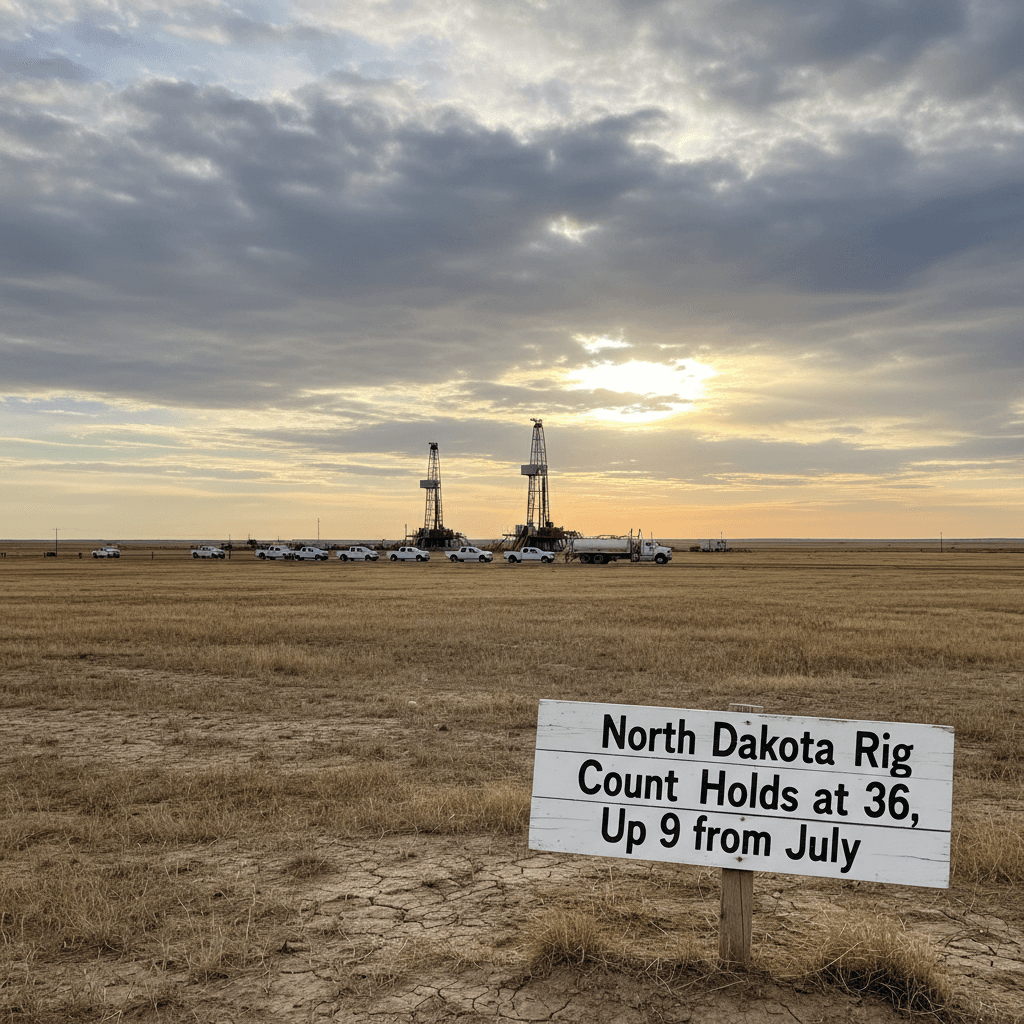
North Dakota Rig Count Holds at 36, Up 9 from July
The Williston Basin's active drilling fleet shows stability after recent gains, maintaining a level not seen in over a month.
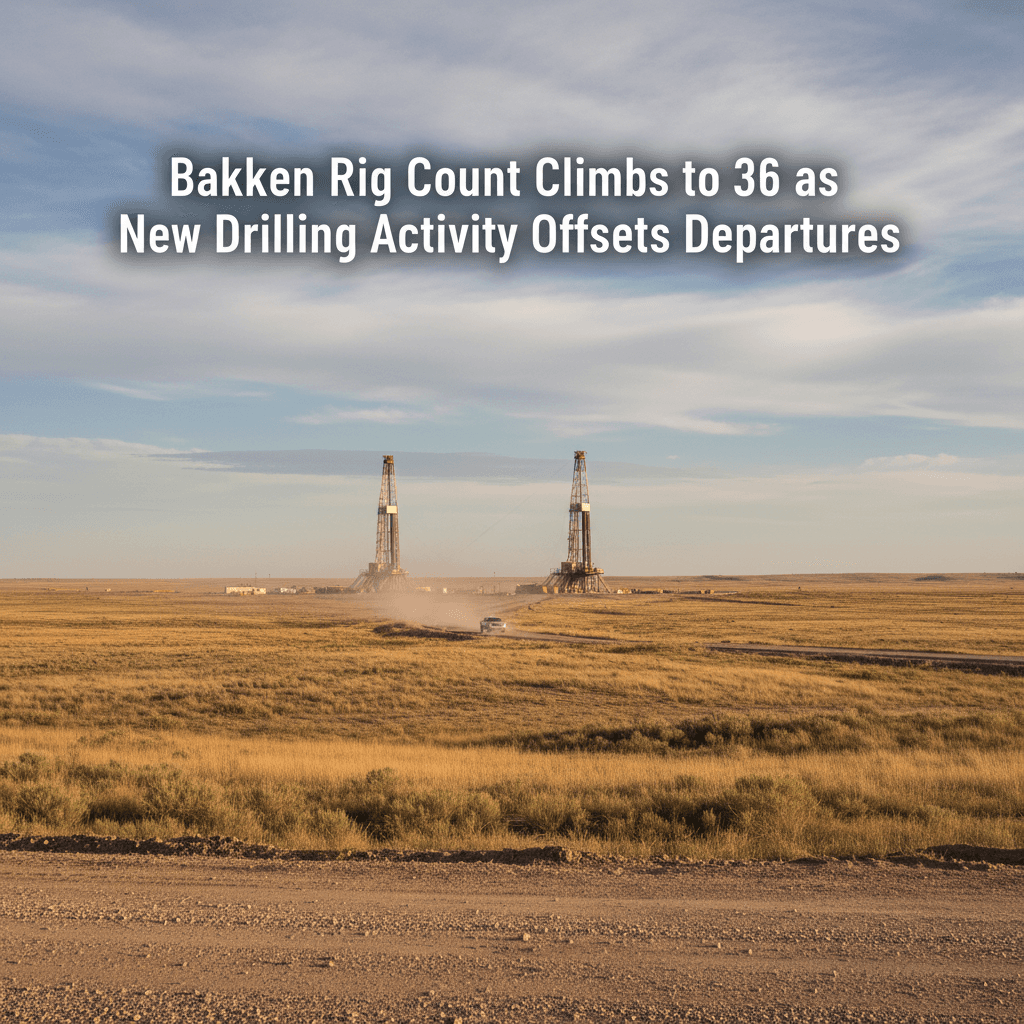
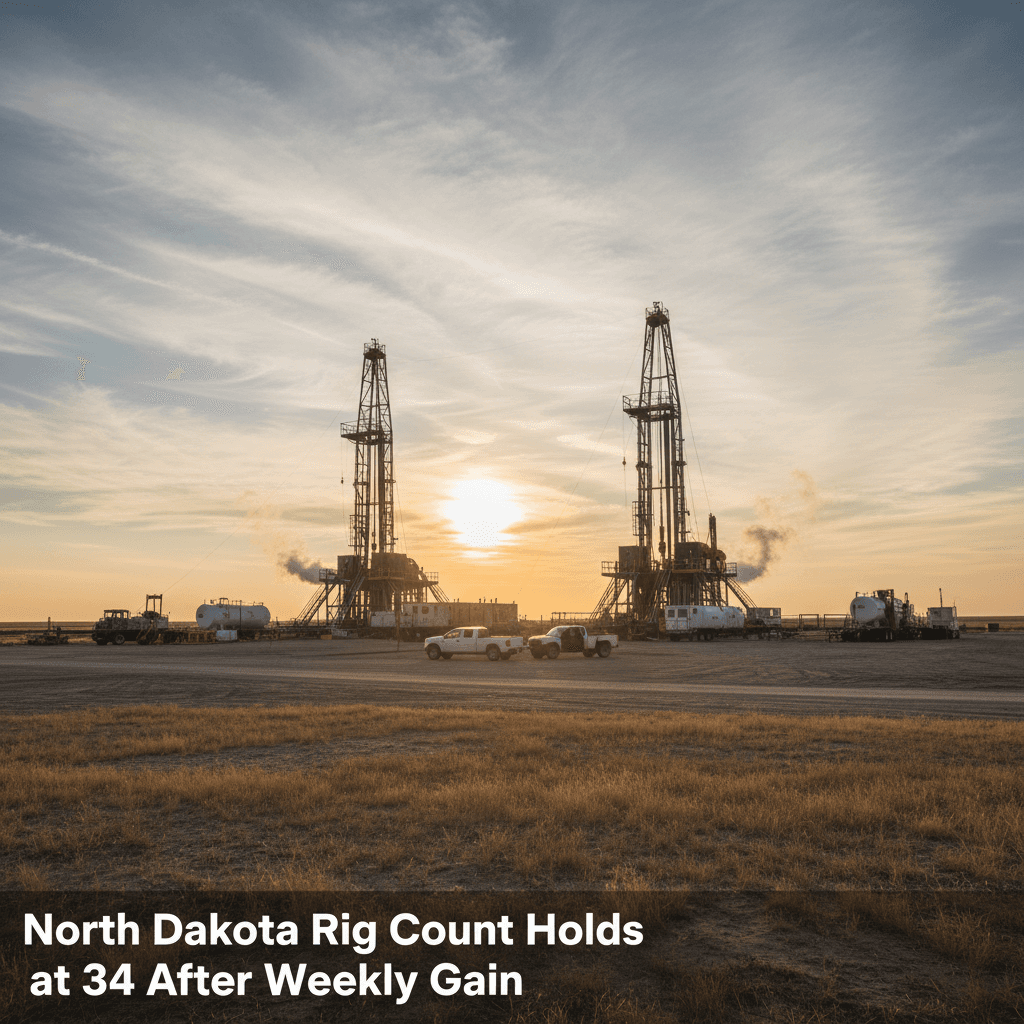
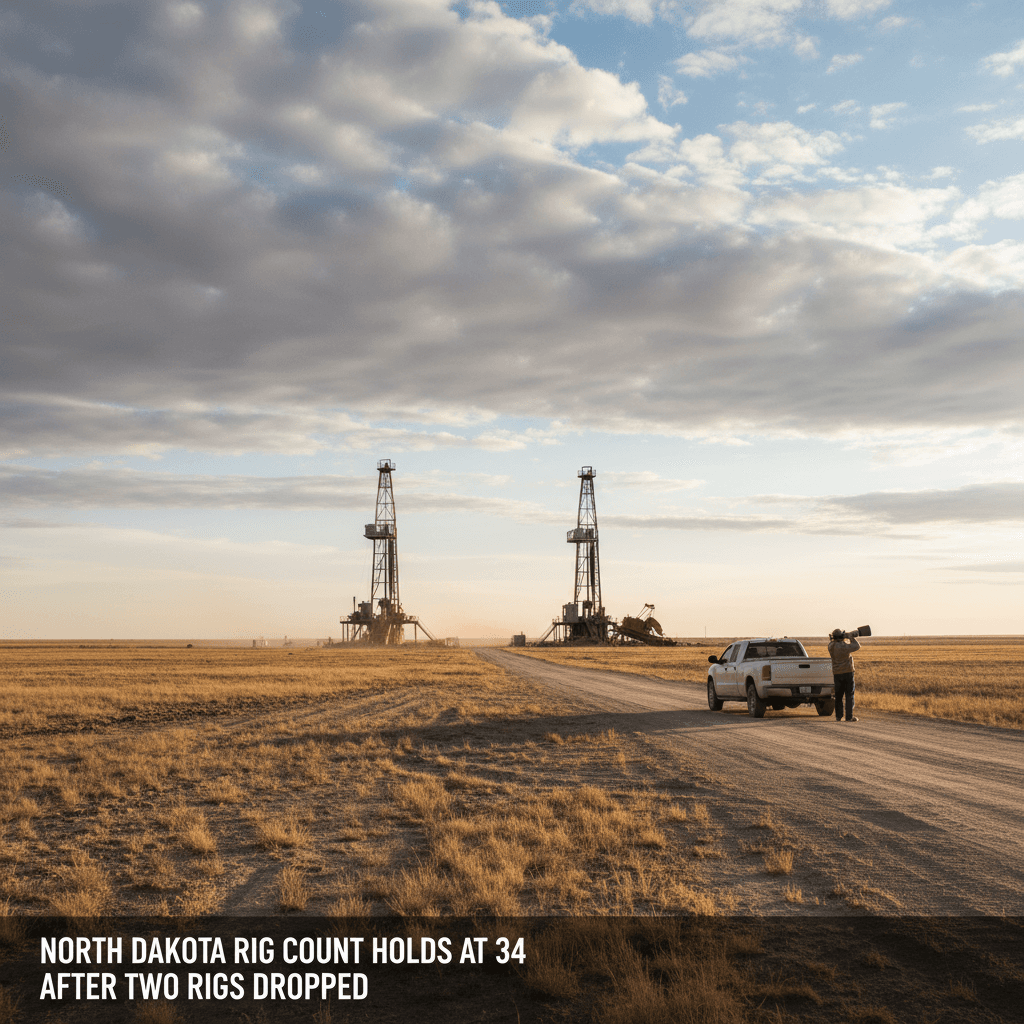
The number of active drilling rigs in North Dakota held steady at 36 on Sunday, according to the latest live rig data from Bakken Wire. The count showed no day-over-day change, with no new rigs added, none removed, and none moving locations.
The current level represents a significant increase from recent lows, underscoring a period of regained activity in the Bakken formation. Compared to one week ago, the rig count is up by two, having risen from 34 active rigs on August 23, 2026.
The more pronounced trend emerges when looking back one month. The active rig fleet has grown by nine units since July 31, 2026, when the state reported only 27 rigs in operation. This sustained increase suggests operators are committing more capital to drilling programs as market conditions permit.
The Williston Basin's rig count is a closely watched leading indicator for future oil production in North Dakota, the nation's third-largest oil-producing state. A stable or rising count typically points to anticipated growth in output several months ahead, while declines can signal a pullback in development spending.
For Bakken operators, maintaining a rig count in the mid-30s indicates a sustained, moderate pace of development focused on core acreage. For royalty owners, this activity level supports continued leasehold production and the potential for new wells.
The current count of 36 rigs remains below the peaks seen in previous boom cycles but reflects a managed approach to development in the mature Bakken play. Operators continue to focus on drilling efficiency, longer lateral wells, and enhanced completions to maximize returns from each drilling location.
Analysts monitor rig movements between counties, particularly within the core "Four Counties" region of McKenzie, Mountrail, Dunn, and Williams, which accounts for the bulk of Bakken production. While no rigs moved location today, such shifts can signal changing operator focus within the basin.
The stability in the rig count comes as operators finalize budgets and plans for the remainder of the year and look ahead to 2027. The recent month-long build suggests confidence in maintaining a baseline level of activity to hold production steady or achieve modest growth.
Source
Bakken Wire Live Rig Data, Historical Context Data