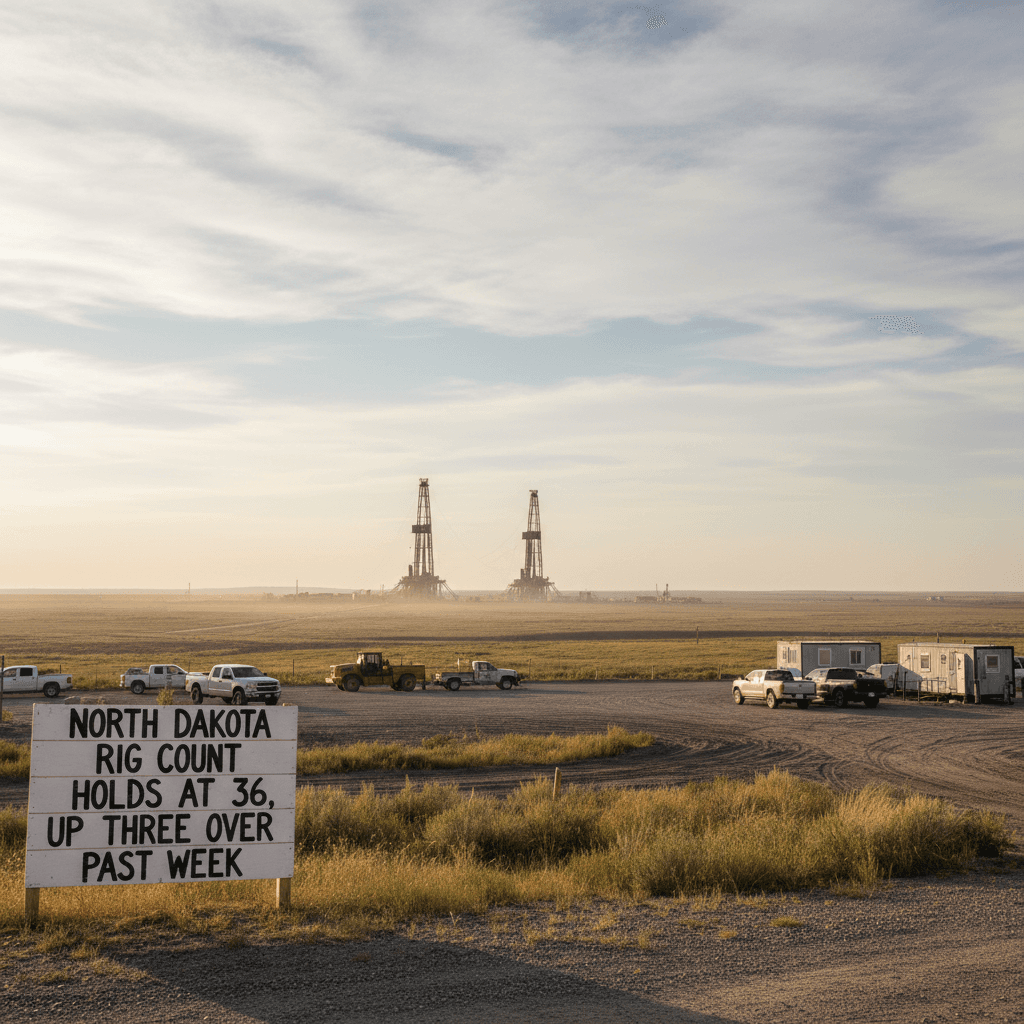
North Dakota Rig Count Holds at 36, Up Three Over Past Week
The state's drilling activity remains steady, maintaining a gain from last week's count and showing slight growth over the past month.
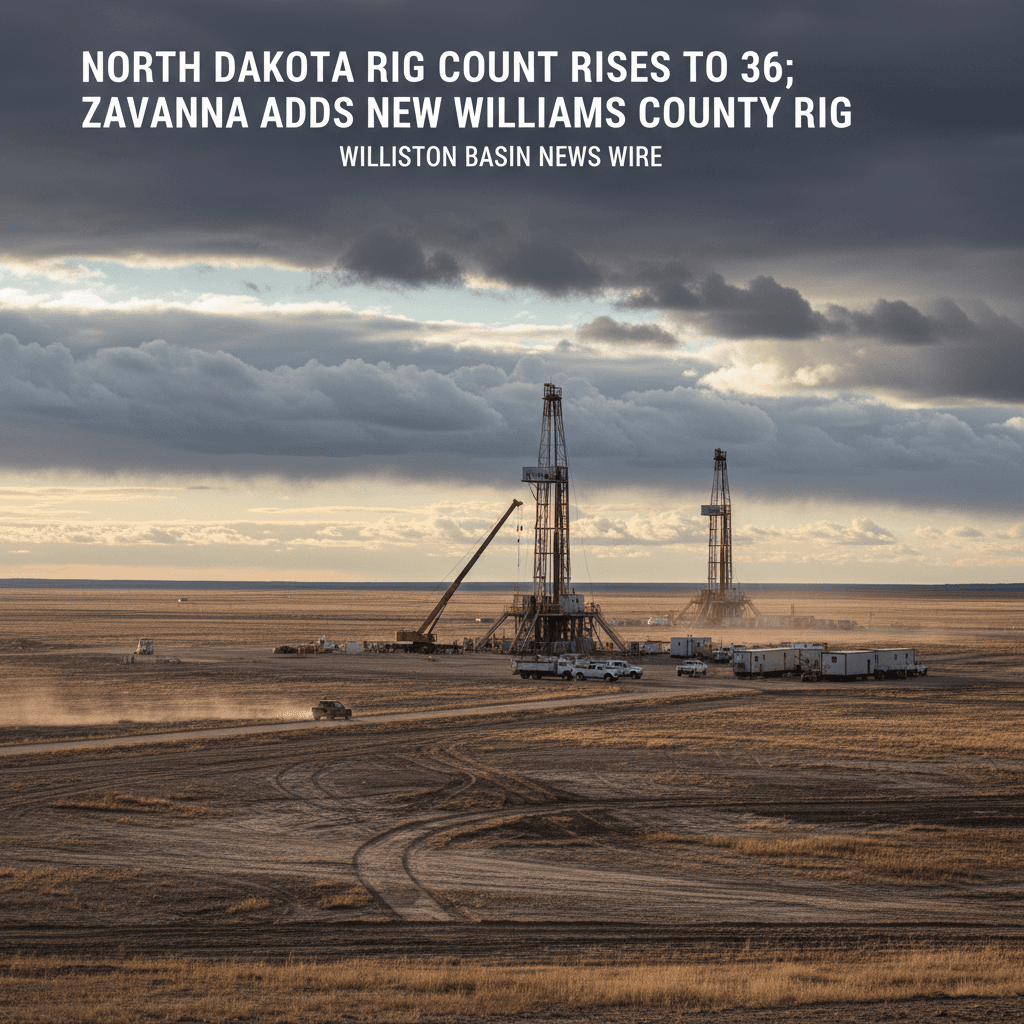
North Dakota's active drilling rig count held steady at 36 on Wednesday, October 7, 2026, according to live rig data from Bakken Wire. The data showed no new rigs added, none removed, and no rigs moving location since the prior day.
The current count represents a gain of three rigs compared to one week ago, when the state reported 33 active rigs on September 30, 2026. Compared to one month ago, activity is up by one rig from the 35 rigs reported on September 7.
A rig count in the mid-30s is consistent with the operational tempo seen in the Bakken formation over recent years, as producers focus capital discipline and efficiency gains in the mature shale play. The stability in the count suggests operators are maintaining, but not aggressively expanding, their drilling programs as of early October.
The Williston Basin, home to the Bakken and Three Forks formations, remains a key contributor to U.S. oil production. Rig activity is a leading indicator of future production, and a steady count typically points to stable output levels in the coming months.
The lack of day-to-day movement in the rig tally underscores a period of consolidation following the recent weekly increase. Major operators in the region, including Continental Resources, Hess Corporation, and Marathon Oil, have historically guided their drilling pace based on commodity prices, service costs, and inventory of drilled but uncompleted wells (DUCs).
While the live data does not specify operator-level activity or precise basin locations, the overall state count provides a snapshot of industry investment and confidence. The sequential increase from the prior week's level will be watched by market analysts for signs of a sustained uptick or a return to lower activity.
For royalty owners and service companies in western North Dakota, a stable rig count near current levels suggests continued, predictable activity in the oilfields. The focus for many operators has shifted to maximizing recovery from existing wells and optimizing completion designs, rather than purely increasing the pace of new drilling.
The next weekly petroleum status report from the U.S. Energy Information Administration will provide further context on how the current rig activity is translating into Bakken production volumes.
Source
Bakken Wire Live Rig Data, Historical Context Data