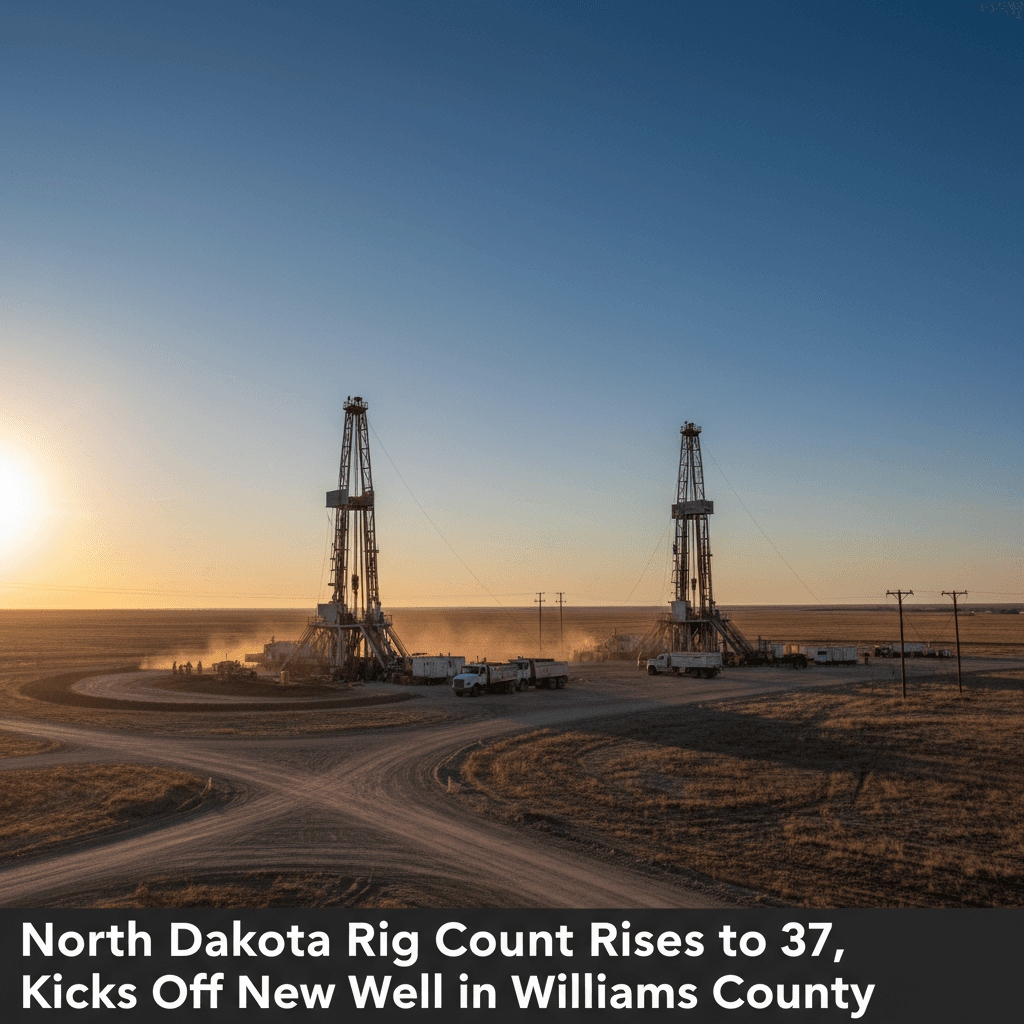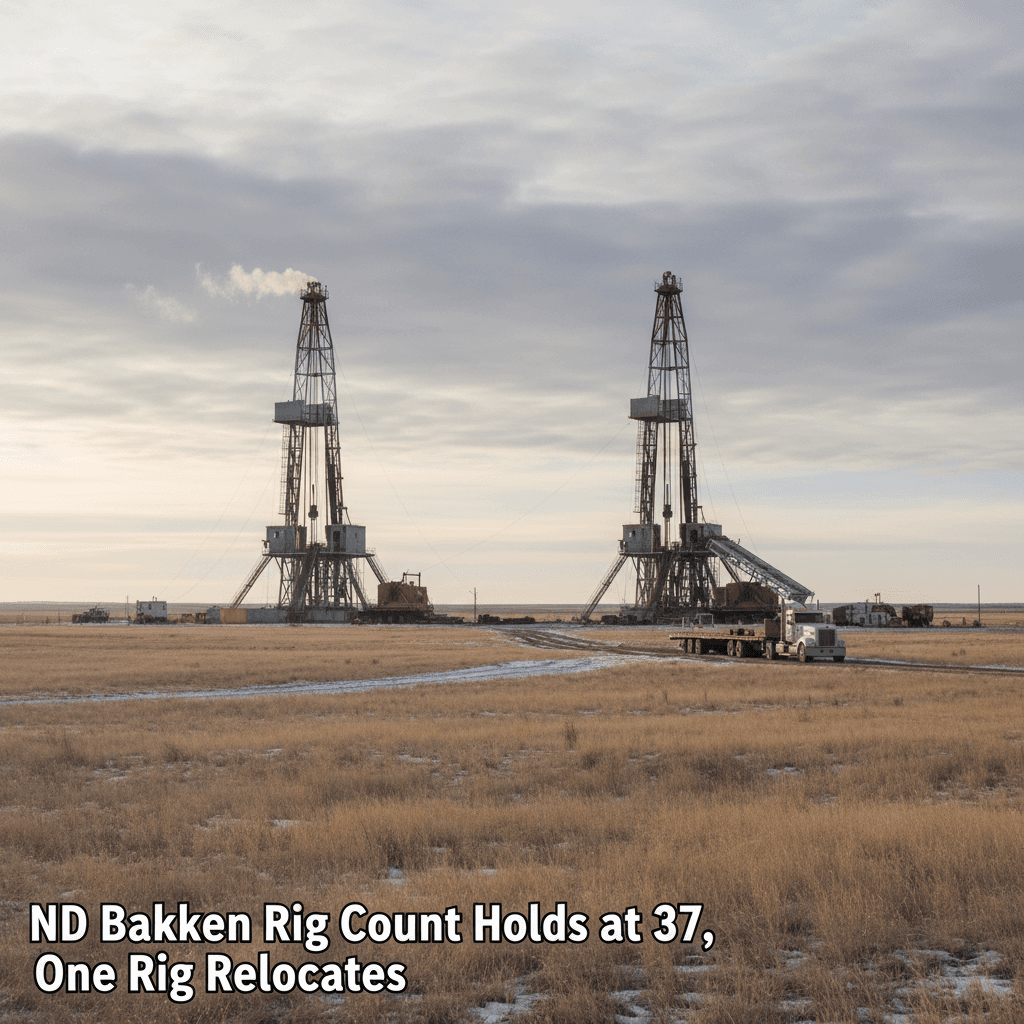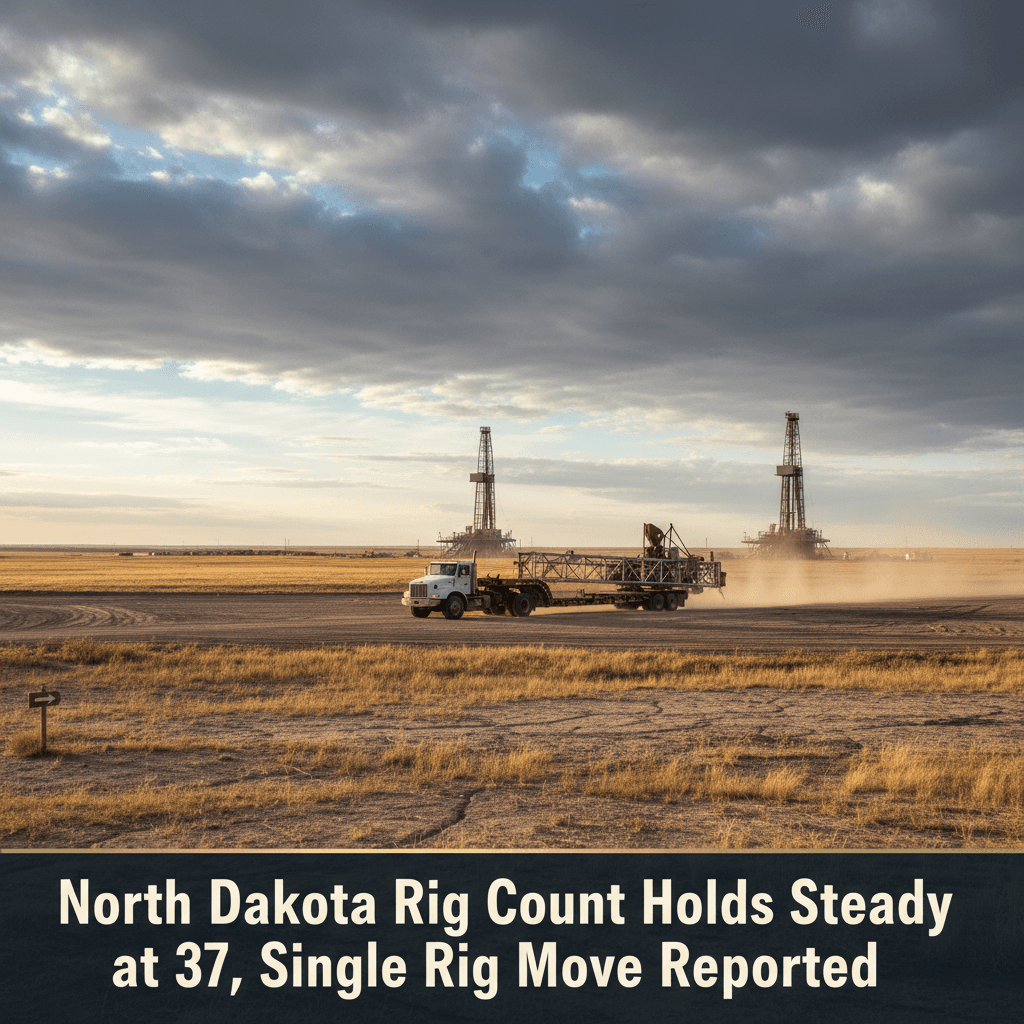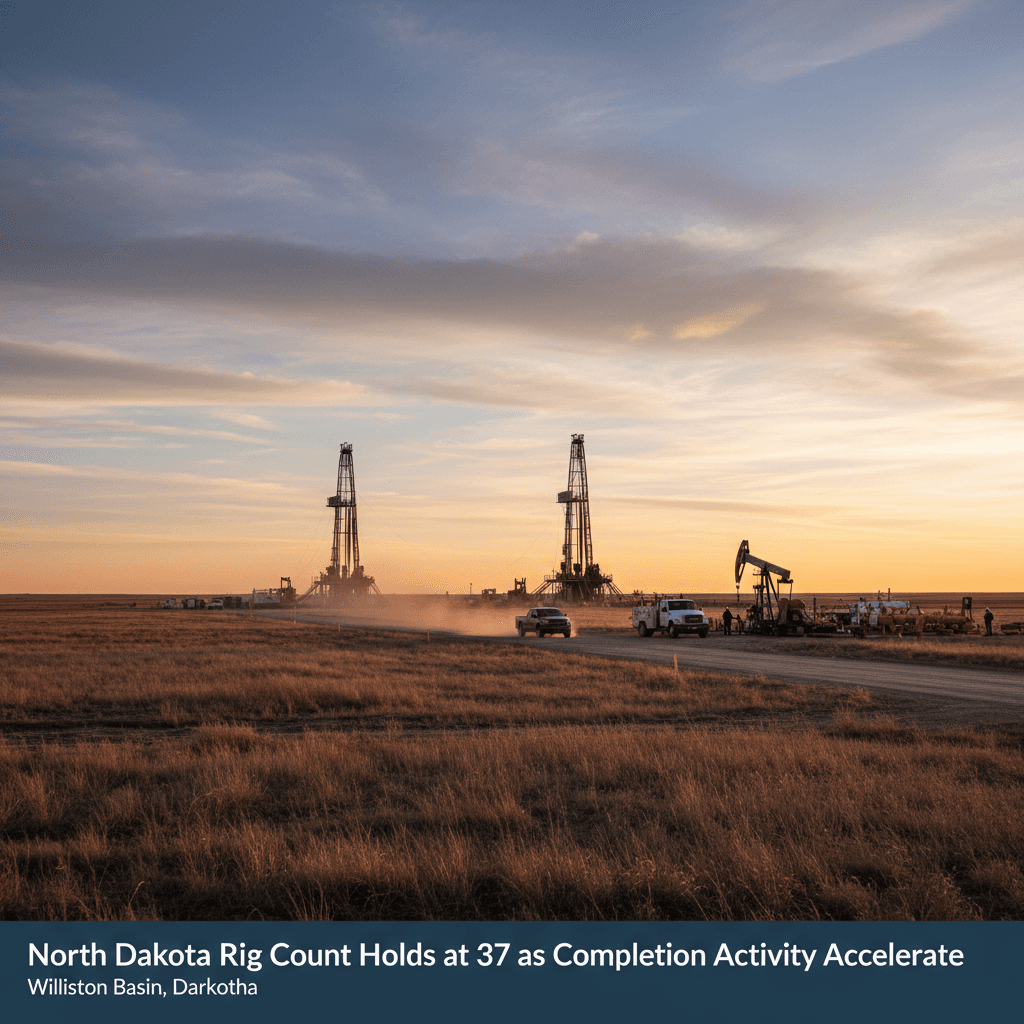
North Dakota Rig Count Holds at 37 as Completion Activity Accelerates
The state's active drilling fleet remains steady after recent gains, while regulators report operators are speeding up well completions to capitalize on high prices.
The number of active drilling rigs in North Dakota's oil fields remained unchanged at 37 on Wednesday, according to live data from Bakken Wire. The count showed no day-over-day movement, with no new rigs added, none removed, and none relocating.
The current fleet size represents a gain of two rigs compared to one week ago, when 35 rigs were active. The rig count is also up by five from the level seen one month ago, indicating a recent, gradual expansion of drilling activity in the Bakken formation.
This steady drilling activity comes as operators are focusing on turning drilled wells into producing ones. According to a report from Reuters, North Dakota oil companies are accelerating well completions and boosting production, encouraged by high crude prices, the state's top oil regulator said on Tuesday. The state is the nation's third-largest oil producer.
The trend suggests a strategic shift for some operators: maintaining a consistent pace of new drilling while working through a backlog of drilled but uncompleted wells (DUCs). Bringing these wells online is typically a faster way to increase oil output than deploying new rigs, providing a more immediate response to favorable market conditions.
A rig count in the upper 30s reflects a sustained, moderate level of investment in the Bakken play. While significantly higher than the historic lows seen during industry downturns, it remains below the boom-era peaks that exceeded 200 rigs a decade ago. The current activity level is generally seen as supportive of maintaining, and potentially slightly growing, North Dakota's oil production, which had recently been flirting with record levels.
The stability in the rig count over the past day, following recent increases, may indicate that operators are evaluating the current price environment and logistical capacity before committing to further expansion of their drilling programs. Factors such as crew availability, supply chain costs for steel and sand, and takeaway capacity for oil and gas continue to influence drilling decisions.
For service companies and mineral rights owners in the Williston Basin, a steady rig count provides predictability. The concurrent increase in completion activity, as reported by state officials, signals that cash flow from new production is being prioritized, which can impact royalty payments and local economic activity.
The North Dakota Department of Mineral Resources will release its next monthly production data in early November, which will show the output impact of both the recent rig count increases and the reported acceleration in well completions.
Source
Bakken Wire Live Rig Data, Reuters (2026-10-20)