North Dakota Rig Count Holds Steady at 24
The Williston Basin's active drilling fleet showed no change in Monday's report, maintaining a recent level of activity.
The number of active drilling rigs in North Dakota's oil fields remained unchanged at 24 on Monday, April 13, 2026, according to live data from Bakken Wire. The report showed no new rigs added, no rigs removed, and no rigs that moved location since the previous day.
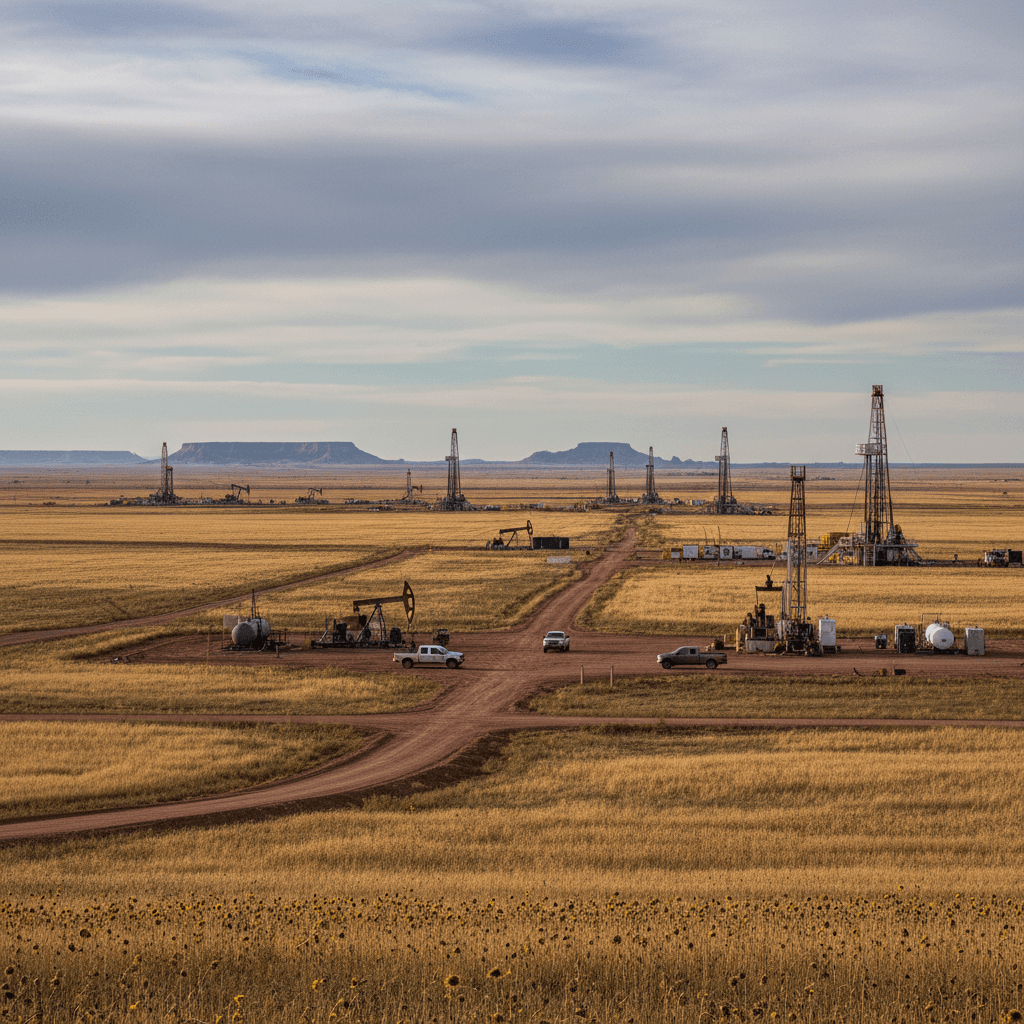
This stability continues a period of relatively flat activity in the Bakken formation, the primary oil-producing region within the larger Williston Basin. The basin's geological structure, which extends into Canada, South Dakota, and Montana, is the source of North Dakota's prolific oil production, according to a recent report from Bing News.
The current rig count of 24 provides a snapshot of the capital expenditure and operational tempo among exploration and production companies working in the state. A steady count suggests operators are maintaining, but not aggressively expanding, their drilling programs given current market conditions.
Rig count is a leading indicator of future oil production, as new wells must be drilled to offset natural declines from existing wells. The consistency at this level indicates a focus on efficiency and development of core acreage by Bakken operators.
For mineral rights owners and service companies in the region, a stable rig count can signal predictable, though not booming, activity. It reflects a balanced approach by operators who are likely prioritizing generating free cash flow while carefully managing their drilling inventories.
The Williston Basin, while famed for its oil, is a multi-resource play. However, the active rigs reported are primarily targeting the Bakken and Three Forks shale formations for crude oil. The concentration of activity remains in the core counties of McKenzie, Mountrail, Dunn, and Williams.
The lack of day-to-day movement in the rig fleet is not uncommon and often reflects the logistical planning involved in moving massive drilling equipment. A single rig can drill multiple wells from a pad before being released or moved to a new location.
Longer-term trends in the rig count will be more telling for the basin's output trajectory. Market observers monitor these figures alongside oil prices, well productivity data, and company guidance to gauge the health of the North Dakota oil industry.
Source
Bakken Wire live rig data, Bing News