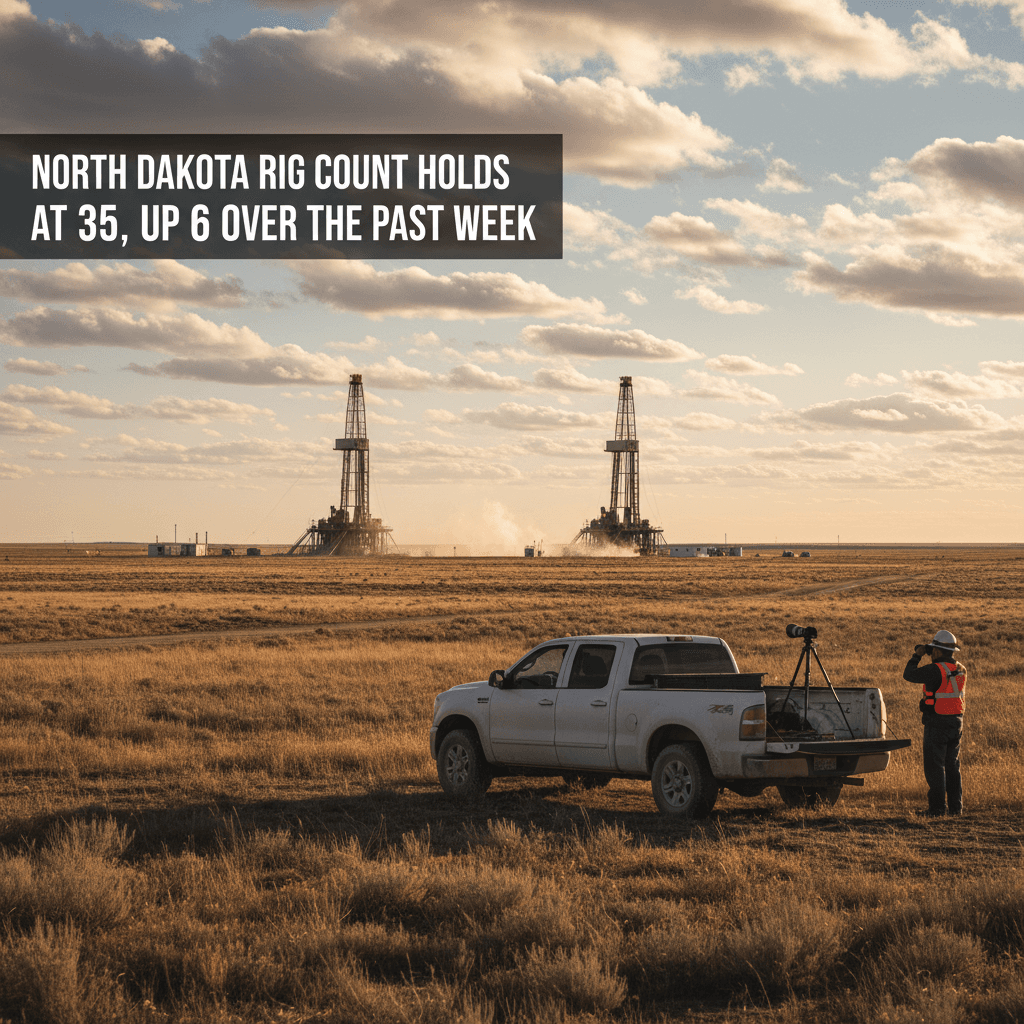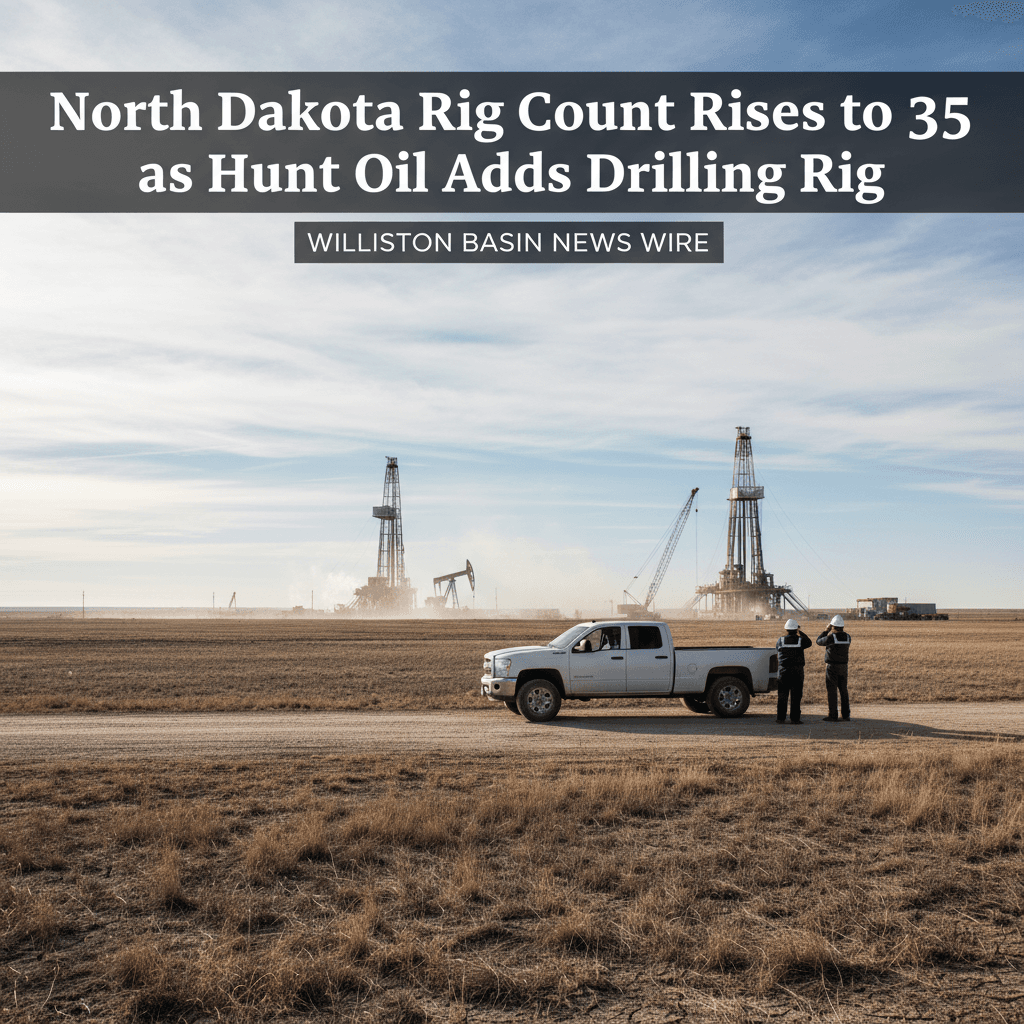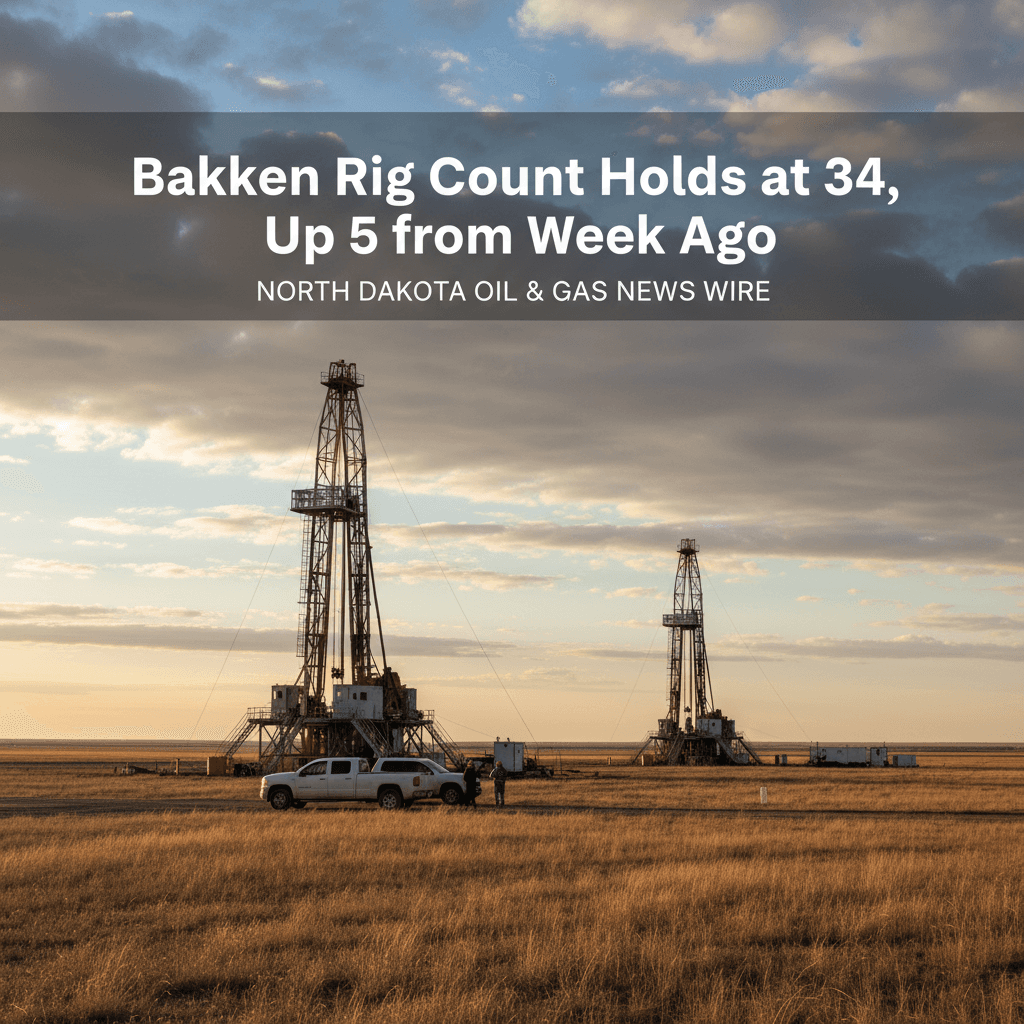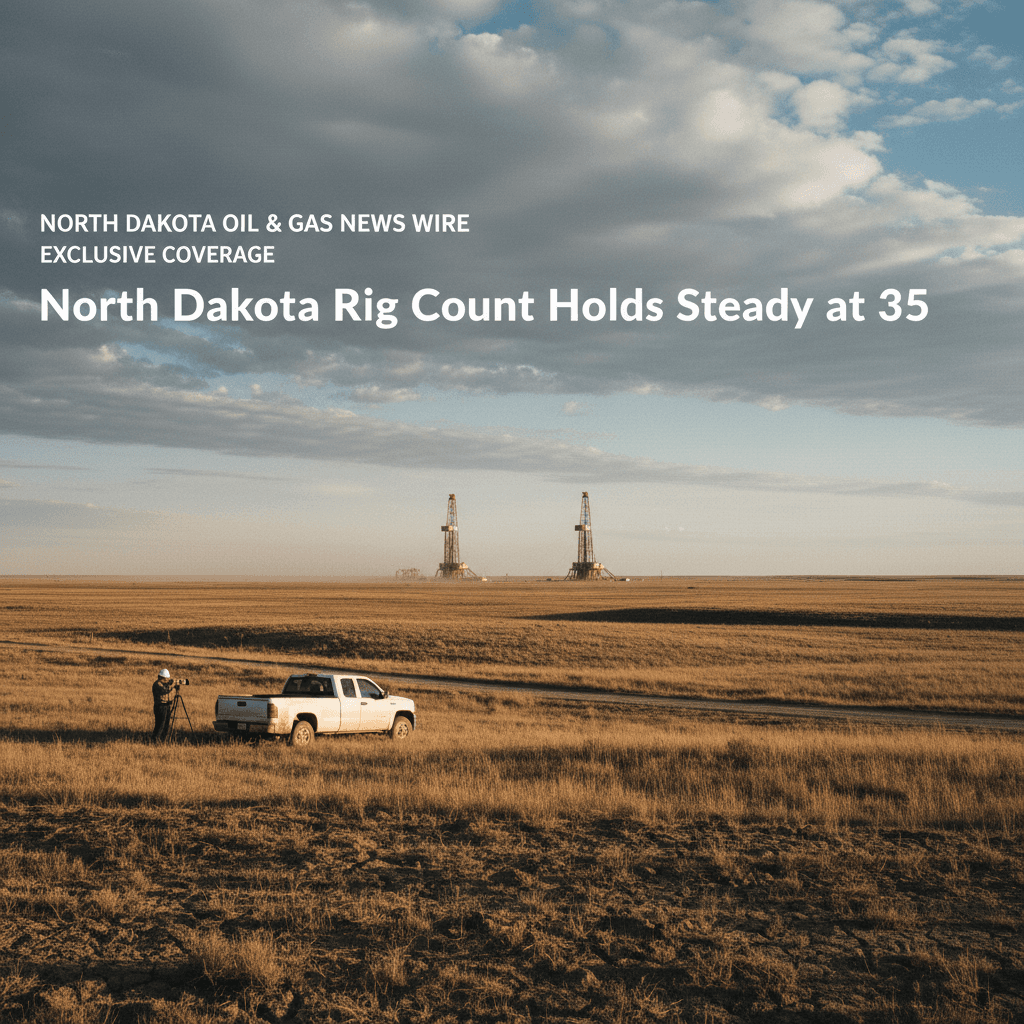
North Dakota Rig Count Holds Steady at 35
The state's active drilling fleet shows no daily movement, maintaining a six-rig gain from the previous week.
North Dakota's active drilling rig count remained unchanged Sunday, October 4, holding at 35 rigs, according to live rig data from Bakken Wire. The data showed no new rigs added, none removed, and none that moved location since the previous day.
The current count represents a significant weekly increase, standing six rigs higher than the 29 active rigs reported one week ago on September 27, 2026. On a monthly basis, activity is up by a single rig from the 34 rigs active on September 4.
The steady count follows a period of notable volatility, with the six-rig weekly gain marking one of the more substantial short-term increases in recent months. The stability at 35 rigs suggests operators may be consolidating their drilling programs after a recent build-up in activity.
The Bakken formation, North Dakota's primary oil-producing region, has seen its rig count fluctuate within a relatively narrow band throughout 2026, often driven by adjustments to capital budgets, well completion schedules, and commodity price signals. A rig count in the mid-30s is consistent with a maintenance level of development activity for the basin.
Industry analysts typically view the rig count as a leading indicator of future oil production, with a stable or rising count pointing to sustained output levels in the coming months. The current level of drilling activity is sufficient to offset natural production declines from existing wells.
The lack of daily movement in the rig fleet indicates no major new drilling campaigns were initiated or concluded on Sunday. Major operators in the Williston Basin, including Continental Resources, Hess Corporation, and Marathon Oil, often drive these fleet-level changes through their quarterly development plans.
The one-rig monthly gain, while modest, continues a pattern of incremental growth observed since early September. The more pronounced weekly jump suggests a possible catch-up in deploying rigs following earlier delays or the start of new multi-well pads.
Market observers will monitor whether the count stabilizes at this new plateau or if operators choose to add further capacity ahead of winter drilling season, which can see increased activity before spring thaw restrictions.
Source
Bakken Wire Live Rig Data