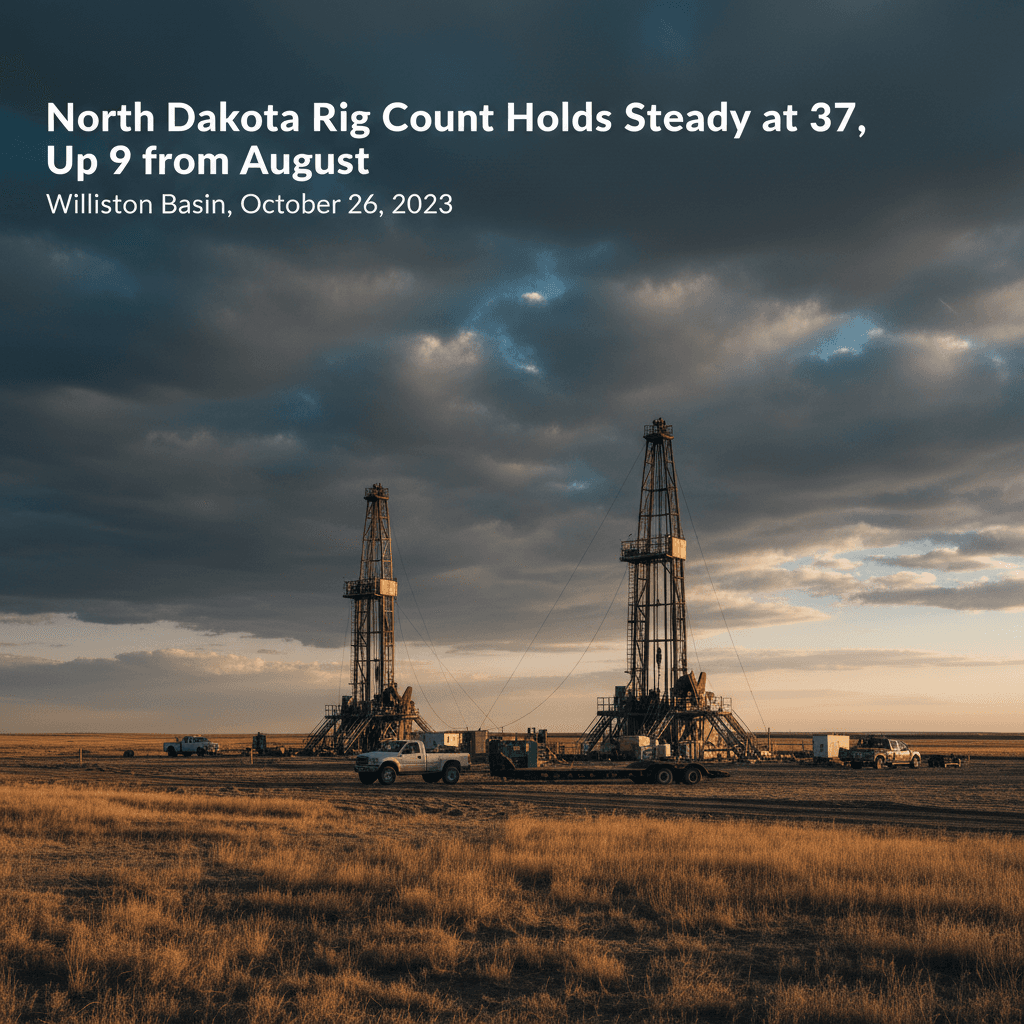
North Dakota Rig Count Holds Steady at 37, Up 9 from August
The state's active drilling rigs show no daily movement but maintain a significant increase over the past month, reflecting sustained operator activity.
North Dakota's active drilling rig count remained unchanged at 37 for Thursday, September 3, according to live data from Bakken Wire. The count showed no new rigs added, none removed, and none that moved location since the previous day's report.
The current activity level represents a notable increase from recent historical benchmarks. The rig count is up by three units from one week ago, when 34 rigs were active on August 27. More significantly, it is up by nine rigs from the count of 28 recorded one month ago on August 4.
The stability at a higher plateau suggests operators in the Williston Basin are maintaining a consistent pace of development drilling. The rig count is a key leading indicator for future oil production from the Bakken formation, North Dakota's primary oil-producing region. A count in the upper 30s indicates a sustained, moderate level of investment by exploration and production companies.
While day-to-day movements can be volatile, the broader trend over the past month points to a period of expanded drilling activity. This increase could be driven by several factors typical to the industry, including manageable service costs, stable oil prices that support drilling budgets, and the ongoing need to drill new wells to offset natural production declines from existing wells.
For royalty owners and service companies, a steady or rising rig count signals continued economic activity and capital deployment in the oil fields. The current level of 37 rigs is closely watched by market analysts as a gauge of operator confidence in the Bakken's economics.
The lack of daily movement in today's report underscores that after a period of growth, activity has entered a phase of consolidation at this higher level. Operators are likely executing planned drilling programs without significant adjustments to their fleet size in the near term. The focus now shifts to the efficiency and productivity of these active rigs as they work to bring new wells online.
Source
Bakken Wire live rig data and historical context