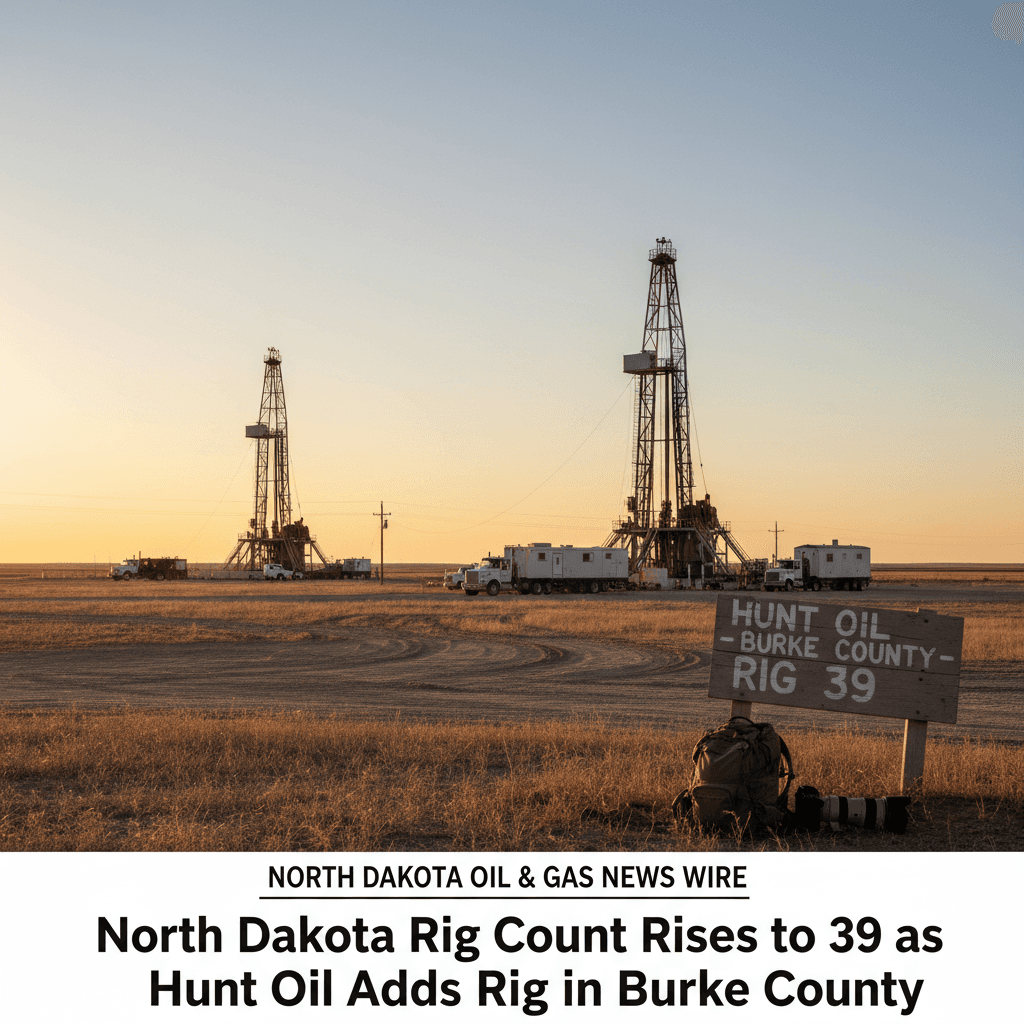
North Dakota Rig Count Rises to 39 as Hunt Oil Adds Rig in Burke County
The state's active drilling fleet grew by one rig overnight, continuing a steady month-long expansion from 30 rigs in late September.
North Dakota's active drilling rig count increased to 39 on Thursday, October 29, 2026, according to live rig data from Bakken Wire. The count rose by one rig from the previous day, with no rigs taken offline or moved between locations.
The single addition was the Hunt Oil Company-operated rig NABORS B21, spudding in Burke County at the 160-90-31 location. The new activity underscores the ongoing, measured expansion of drilling operations in the Bakken formation, North Dakota's primary oil-producing region.
The current fleet of 39 rigs represents a sustained uptick in activity over recent weeks. Compared to one week ago, on October 22, 2026, the rig count is up by three from 36 active rigs. The growth trend is more pronounced over the past month, with the count climbing by nine rigs since September 29, 2026, when 30 rigs were active.
Rig counts are a closely watched leading indicator for future oil production, as each active rig represents new wells being drilled and completed. The steady month-long climb from 30 to 39 rigs suggests operators are cautiously increasing capital deployment for drilling in the Williston Basin. This expansion often correlates with stable or improving crude oil prices and manageable operating costs.
The addition in Burke County, located in the northwestern portion of the state, indicates continued operator interest in the core Bakken and Three Forks shale formations. While McKenzie and Williams counties typically host the highest concentration of rigs, activity in neighboring counties like Burke reflects the geographic breadth of the play.
The incremental growth, adding roughly one rig per week on average over the last month, points to a disciplined approach by operators rather than a rapid boom. Companies are likely focusing capital on their highest-return acreage, with rig additions following detailed evaluations of well economics and hedge positions.
For service companies, royalty owners, and local communities, the rising rig count signals increased near-term activity for drilling crews, hydraulic fracturing teams, and related oilfield services. Each new rig supports hundreds of direct and indirect jobs and generates royalty payments for mineral owners.
Market analysts monitor these figures to gauge the health of the Bakken oil patch and predict future supply contributions to the national output. The current trajectory suggests a gradual contribution to future production volumes from North Dakota, barring any significant downturn in commodity prices.
Source
Bakken Wire Live Rig Data