North Dakota rig count stays at 36 amid flat weekly activity
Williston Basin drilling holds steady for a week after adding three rigs over the past month
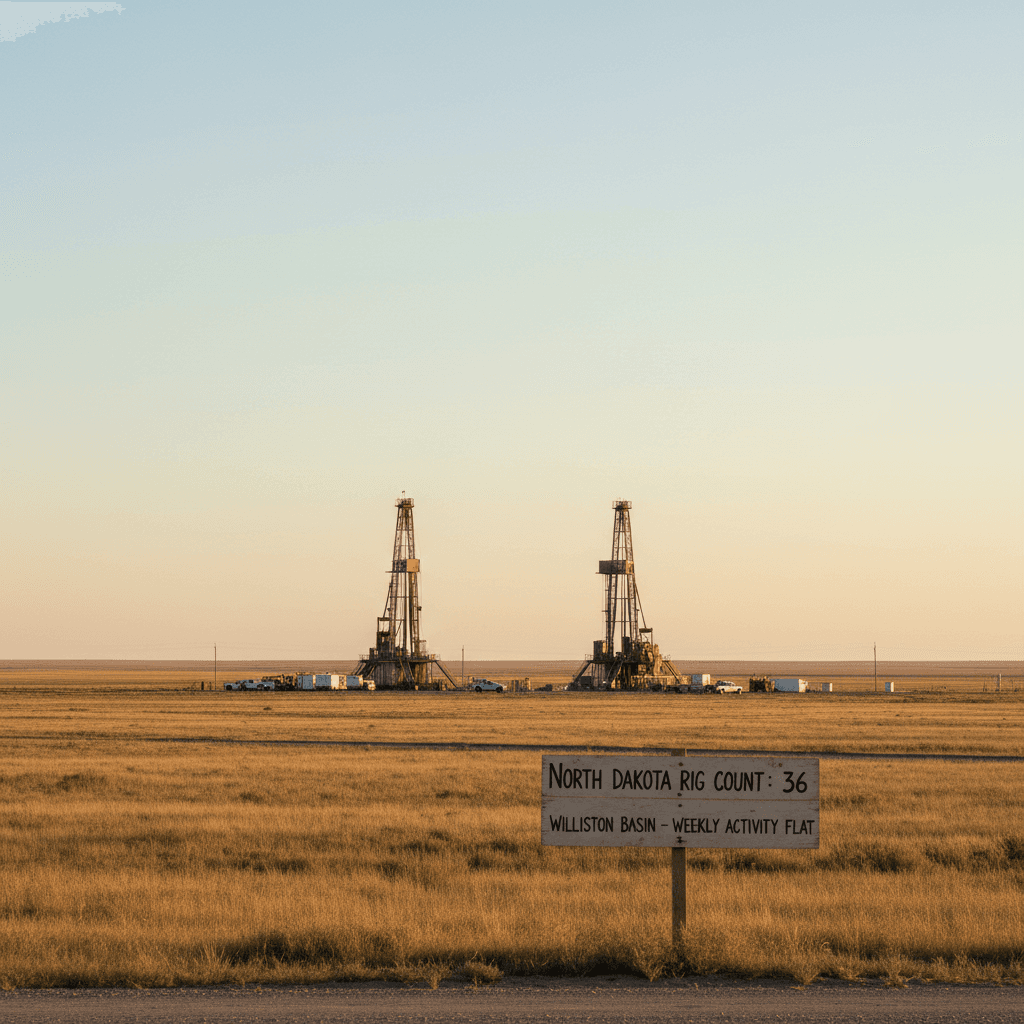
Bismarck, N.D. — Active drilling rigs in North Dakota remained at 36 on Friday, Nov. 6, 2026, with no new rigs, rigs removed or rigs that moved location reported day-over-day, according to the latest rig data.
The unchanged count leaves the state's rig fleet flat for the week. One week ago, on Oct. 30, North Dakota also reported 36 active rigs, according to the historical rig data. That stability follows a modest increase over the past month: as of Oct. 7, the state had 33 active rigs, meaning the count is up three rigs from four weeks earlier.
For Bakken operators, the pattern suggests drilling activity has entered a holding phase after a short-term expansion. A flat week-over-week count can indicate that operators are completing or repositioning existing projects rather than starting a new wave of spud activity. The three-rig gain over the month may reflect operators adding slots in core areas, testing completion designs or advancing development plans that were already in the pipeline.
North Dakota's rig count remains a key indicator for Williston Basin production, service companies and royalty owners. Because much of the region's oil output comes from tight, stacked pay intervals in the Bakken and Three Forks, operators often coordinate rigs across pads to maximize capital efficiency. A steady 36-rig count means service demand from drilling crews, frac operations, completions and field logistics is likely to remain broadly consistent with recent weeks, though the mix of activity can shift from new wells to workovers, tie-ins and multi-well pad development.
The Bakken formation is North Dakota's primary oil-producing region, and rig counts are closely watched by producers, landowners and mineral-interest holders. Royalty owners in particular track whether activity is spreading across new acreage or concentrating on established pads, because timing and location can affect production declines, infrastructure needs and lease obligations. The data showing no rigs moved location Friday gives no indication of a sudden shift in drilling focus, though operators often reposition rigs between reporting cycles as wells are finished or new pads become ready.
Energy-policy developments can shape longer-term expectations for drilling technology and capital allocation. Rigzone reported that the U.S. Department of Energy's Advanced Research Projects Agency-Energy, or ARPA-E, is the self-styled “disruption wing” of the energy department. While the source did not provide North Dakota-specific drilling plans, such federal innovation efforts are generally relevant to shale producers as they consider digital drilling, automation, low-carbon energy technologies and operational efficiency.
For now, the North Dakota rig story is one of stability after a modest monthly build. The state's active rig fleet stood at 36 as of Friday, unchanged from Oct. 30, and higher than the 33 rigs reported on Oct. 7. If the trend continues, operators will likely need to add rigs again to signal a broader expansion in Williston Basin drilling activity.
Source
Bakken Wire rig data; Rigzone