WTI Crude--
Brent Crude--
Natural Gas--
ND Rig Count--
WTI Crude--
Brent Crude--
Natural Gas--
ND Rig Count--
Oil Falls as Ceasefire Holds; Lagarde Warns on Energy Security - Bakken Wire
Operator News

Oil Falls as Ceasefire Holds; Lagarde Warns on Energy Security

Bakken producers face price pressure from easing Mid-East tensions as European leader cites conflict's impact.

Bakken Wire Staff·🌅Afternoon Wire·

Crude oil prices fell Tuesday as a ceasefire between the U.S. and Iran remained in place, removing a key risk premium from global markets. According to Rigzone, crude markets entered relief mode as tensions failed to escalate further.

The U.S. played down the prospect of a return to active war with Iran, Rigzone reported. This confirmation of a sustained ceasefire has shifted market focus from supply disruption risks back to fundamental factors like demand and inventory levels.

The recent period of conflict had underscored global energy vulnerabilities. In a related development, European Central Bank President Christine Lagarde said soaring energy costs due to the Iran war should act as a wake-up call for Europe to reduce its dependence on energy imports, Rigzone reported.

For Bakken operators and royalty owners, the immediate impact is downward pressure on the wellhead price of North Dakota light sweet crude. The Bakken benchmark often tracks broader moves in West Texas Intermediate (WTI), which is sensitive to geopolitical events in key producing regions like the Middle East. A sustained ceasefire and lower prices could dampen near-term cash flows and potentially influence drilling budgets, though the Bakken's breakeven economics remain competitive.

The broader call for European energy security highlights the long-term geopolitical stakes for global oil and gas trade. While not a direct exporter to Europe, the Bakken formation is a major contributor to overall U.S. production, which plays a stabilizing role in global markets. Shifts in European energy policy aimed at reducing import reliance could eventually alter long-term demand patterns for oil and gas.

The market's reaction illustrates the continued sensitivity of Bakken-linked revenues to overseas conflicts, even as domestic production remains strong. Operators will be monitoring whether the ceasefire holds and if the price decline marks a short-term correction or the start of a longer trend.

Source

Rigzone (May 5, 2026 reports: "Oil Falls as Ceasefire Holds," "USA Says Iran Ceasefire Still in Place," "Lagarde Urges Europe to Reduce Energy Import Dependency")
crude pricesgeopoliticsiranceasefirebakken productionmarket volatility

Share this article

Related Articles

Operator News

Gulf Hurricane Threat Evacuates Workers, Could Tighten Oil Markets

Major oil companies are evacuating workers from the Gulf of Mexico ahead of a strengthening tropical storm, a move that could introduce new volatility to crude markets with potential implications for Bakken producers. Chevron is evacuating workers from all its Gulf platforms, while Shell is pulling non-essential personnel from six offshore platforms and BP is also conducting evacuations, according to reports from Reuters and CNN. While production at the facilities currently remains normal, the storm is forecast to reach the Gulf Coast by Friday, potentially as a Category 2 hurricane. Analysts warn the storm is an "unwelcome complication for crude, raising the prospect of production and refining disruptions at a time when the market already has enough supply-side headaches," KCM Trade chief analyst Tim Waterer told Reuters. The potential impact on Gulf Coast refineries is a primary concern for the broader oil market, including Bakken crude which often flows to...

☀️Morning Wire·Oct 7
Supreme Court Hears Climate Suit, Industry Warns of 'Judicially Ordered Carbon Tax' - Bakken Wire
Operator News

Supreme Court Hears Climate Suit, Industry Warns of 'Judicially Ordered Carbon Tax'

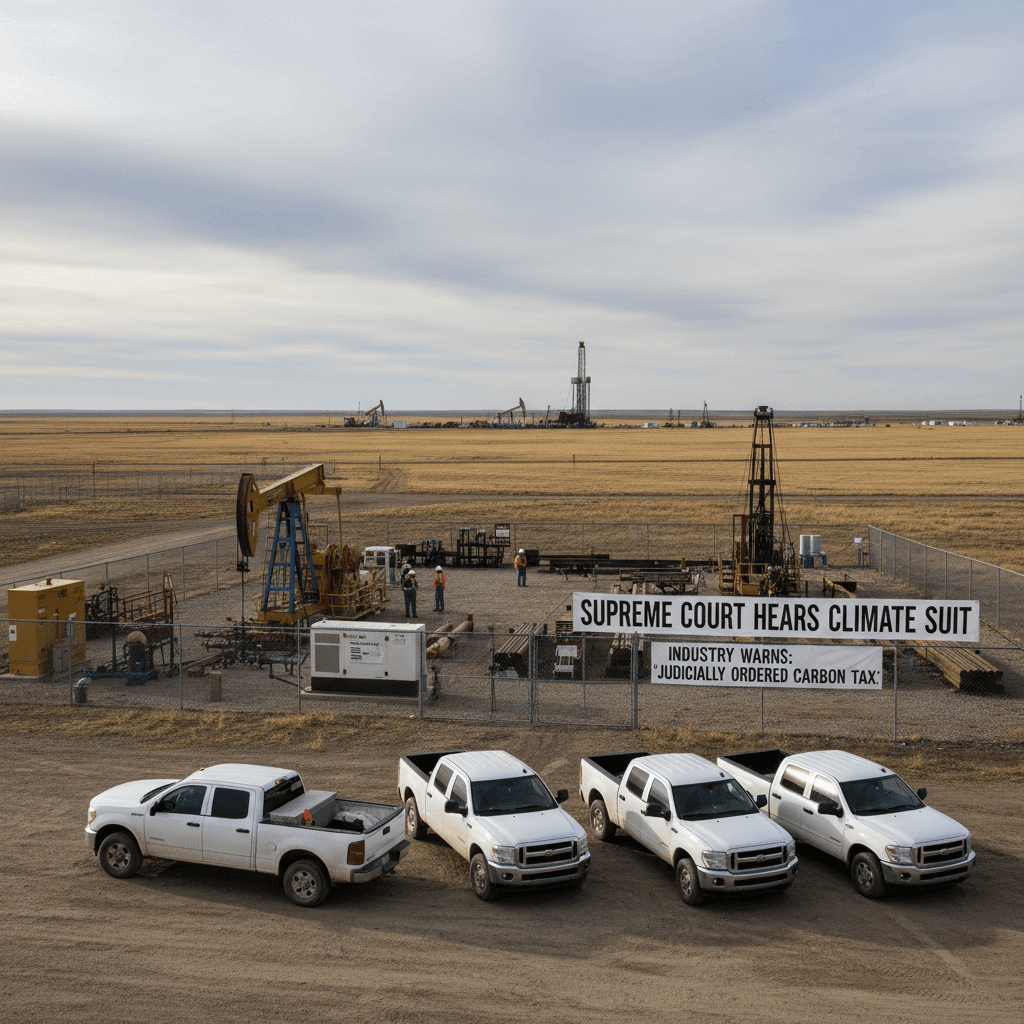
The U.S. Supreme Court heard arguments Monday in a pivotal climate liability case that could open the door to state-level lawsuits against oil and gas companies, a prospect the industry warns could act as a "judicially ordered carbon tax," according to a report from OilPrice.com. The case involves a lawsuit filed by Boulder County, Colorado, against ExxonMobil and Suncor Energy Inc., seeking damages for local climate-change-related impacts. The Canadian-based Suncor and Texas-based ExxonMobil argue that climate policy and alleged damages are exclusively federal matters, and the state suit should be dismissed. Boulder County contends it is only seeking compensation for local damage from decades of emissions, not aiming to change federal policy, OilPrice.com reported. For Bakken operators, the case represents a significant liability threat. The industry argues that a victory for Boulder County would allow a flood of similar lawsuits to proceed, potentially targeting producers based on their historical emissions....

🔆Midday Wire·Oct 5
Operator News

ConocoPhillips Signs 20-Year LNG Supply Deal with Venture Global

ConocoPhillips has entered a 20-year agreement to purchase liquefied natural gas from Venture Global LNG, according to a report from Rigzone. The deal, finalized on October 2, 2026, will see ConocoPhillips buying one million metric tons per year of LNG starting in 2030. For Bakken operators, this long-term LNG offtake agreement by a key player highlights the growing importance of global natural gas markets for the region's production. The Bakken formation is a major oil-producing region, but its operations also yield significant volumes of associated natural gas. Such a deal provides ConocoPhillips, a major operator in the Williston Basin, with a secured outlet for future natural gas production. While the specific source of the LNG is not detailed in the report, long-term contracts like this underpin investment in gas gathering, processing, and transportation infrastructure that can benefit the broader Bakken region. The move aligns with industry trends of securing stable...

☀️Morning Wire·Oct 5