WTI Crude--
Brent Crude--
Natural Gas--
ND Rig Count--
WTI Crude--
Brent Crude--
Natural Gas--
ND Rig Count--
Oil Prices Dip as India Diversifies Supply, US Inventories Fall - Bakken Wire
Oil Prices

Oil Prices Dip as India Diversifies Supply, US Inventories Fall

WTI crude trades near $89 despite a weekly drawdown in U.S. commercial stocks and ongoing global supply disruptions from conflict.

Bakken Wire Staff·☀️Morning Wire·

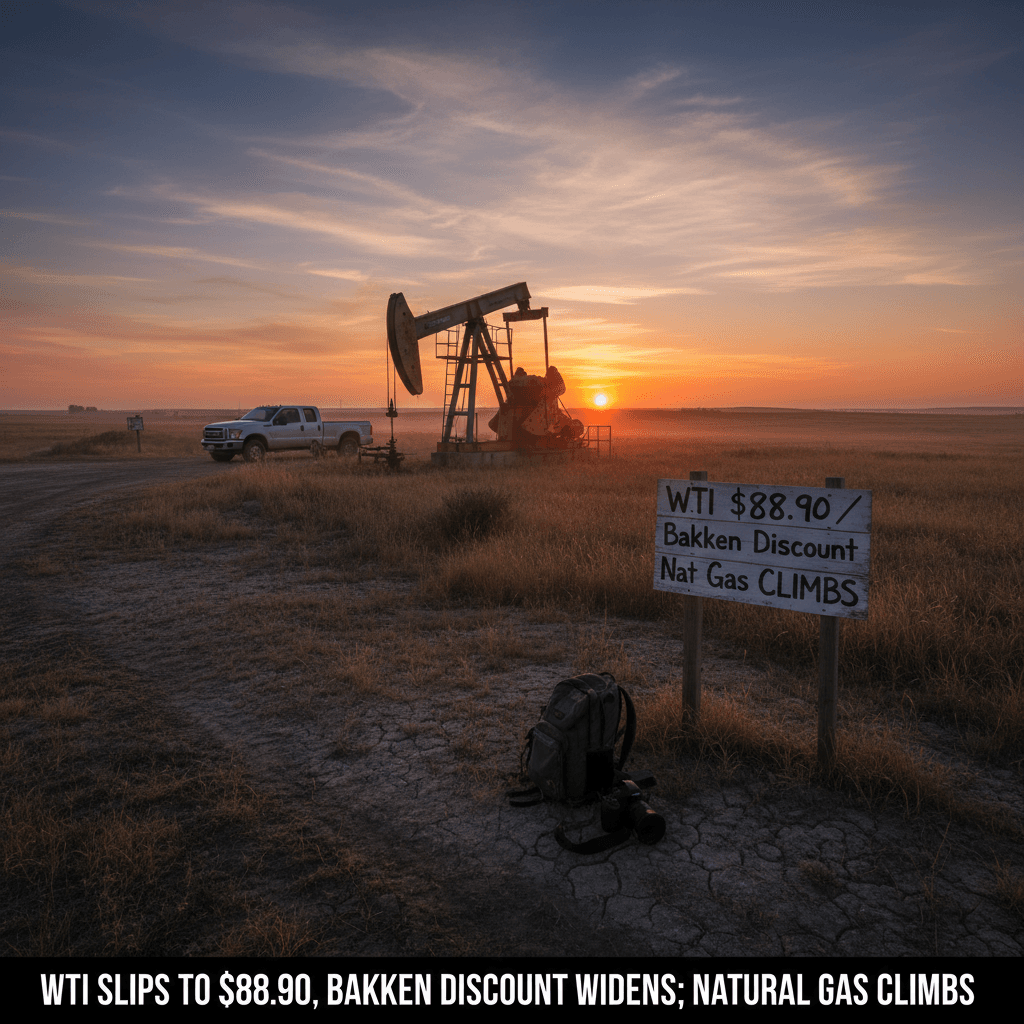
Oil prices fell in early trading Thursday, with West Texas Intermediate (WTI) crude down 1.3 percent to $88.86 per barrel. The global benchmark, Brent crude, declined 1.46 percent to $91.74, according to live price data. Bakken crude was trading at a discount of $3.42 below WTI.

The price decline comes despite a significant drawdown in U.S. commercial crude inventories. According to Rigzone, the U.S. Energy Information Administration's latest weekly report showed commercial crude oil stocks, excluding the Strategic Petroleum Reserve, fell to 426.5 million barrels for the week ending June 5. This represents a draw of over 7 million barrels from the previous week.

Offsetting the supportive inventory data, market sources pointed to efforts by major importers to secure supply from outside traditional conflict zones. OilPrice.com reported that Indian refiners have secured crude supply at least through August by boosting purchases from the United Arab Emirates (UAE), Africa, and Brazil. India, the world's third-largest crude importer, has accelerated efforts to diversify its imports following the Middle East crisis, increasing volumes from West Africa and South America.

However, the overall global supply picture remains constrained by ongoing conflict. Rigzone cited a Rystad Energy analysis indicating that cumulative oil supply losses due to war have now reached one billion barrels. "Cumulative losses have now reached one billion barrels and are on track to nearly double by year-end under our base case," said Rystad Energy MENA Research Director Aditya Saraswat.

For Bakken operators, the price environment remains profitable with WTI holding near $89, though the regional differential of -$3.42 means Bakken crude is priced closer to $85.44. The steady, high-volume demand from large importers like India, even as they diversify sources, provides underlying market support. The substantial draw in U.S. inventories suggests robust domestic demand or lower import levels, which can help balance the market against new supply sources entering global trade.

Natural gas prices also saw a slight decline, trading at $3.12 per MMBtu. The combined market signals point to a complex landscape where near-term price pressure from new supply arrangements competes with longer-term structural supply deficits caused by persistent geopolitical disruptions.

Source

Live Price Data, OilPrice.com, Rigzone
wtibrentoil pricesbakken differentialinventoriesindiaimportssupply disruption

Share this article

Related Articles

Oil Prices Steady as Bakken Discount Widens - Bakken Wire
Oil Prices

Oil Prices Steady as Bakken Discount Widens

Oil prices showed little movement in Sunday trading, with West Texas Intermediate (WTI) crude holding steady at $87.06 per barrel, according to live market data. The global benchmark, Brent crude, was also unchanged at $94.39. Natural gas prices were flat at $2.81 per MMBtu. For Bakken producers, the more critical figure is the regional price differential. Bakken crude at the Clearbrook, Minnesota, hub was trading at a discount of $3.42 per barrel below the WTI benchmark price. This spread is a direct determinant of the netback price received by North Dakota operators and directly impacts cash flow and drilling economics. The static price action follows a volatile week driven by mixed signals from global inventories and ongoing geopolitical tensions. Market analysts note that prices found a footing above $86 for WTI after U.S. government data showed a larger-than-expected drawdown in crude stockpiles last week, indicating robust demand. However, this was...

🌅Afternoon Wire·Aug 23
Oil Prices Edge Higher Midday as Bakken Discount Holds at $3.42 - Bakken Wire
Oil Prices

Oil Prices Edge Higher Midday as Bakken Discount Holds at $3.42

Oil prices posted modest gains in midday trading Sunday, with benchmark crudes holding near multi-week highs. West Texas Intermediate (WTI) crude was trading at $87.06 per barrel, a gain of $0.23 or 0.26%. The international benchmark Brent crude rose to $94.39, up $0.61 or 0.65%, according to live price data. Bakken crude priced at the Clearbrook, Minnesota, hub maintained a differential of negative $3.42 per barrel versus WTI. This places the effective price for Bakken barrels at approximately $83.64, factoring in the regional discount. Natural gas futures also saw upward movement, rising $0.05 to trade at $2.81 per million British thermal units. The midday price strength continues a trend of firming crude markets. Prices are being supported by a combination of sustained demand signals and ongoing supply discipline from major producing nations within the OPEC+ alliance. Geopolitical tensions in key oil-producing regions also continue to underpin a risk premium in...

🔆Midday Wire·Aug 23
WTI Holds Above $87 Amid Global Supply Concerns; Bakken Differential Widens - Bakken Wire
Oil Prices

WTI Holds Above $87 Amid Global Supply Concerns; Bakken Differential Widens

Oil prices edged higher on Sunday, with West Texas Intermediate (WTI) crude trading at $87.06 per barrel, a gain of 0.26% or $0.23, according to live market data. The global benchmark Brent crude rose 0.65% to $94.39, while natural gas prices increased by $0.05 to $2.81 per MMBtu. The Bakken crude differential, which measures the price of Bakken barrels delivered to Clearbrook, Minnesota, against WTI, was assessed at a discount of $3.42. This price spread is a key indicator of the competitiveness and market access for North Dakota's light sweet crude. Market support stems from tightening global crude supplies. According to a report from Rigzone, U.S. refiners are facing a looming supply drop from their biggest foreign crude supplier at a time of peak seasonal demand. While the source material did not specify the supplier, such a reduction in available imported crude typically increases competition for domestic barrels, including those...

☀️Morning Wire·Aug 23