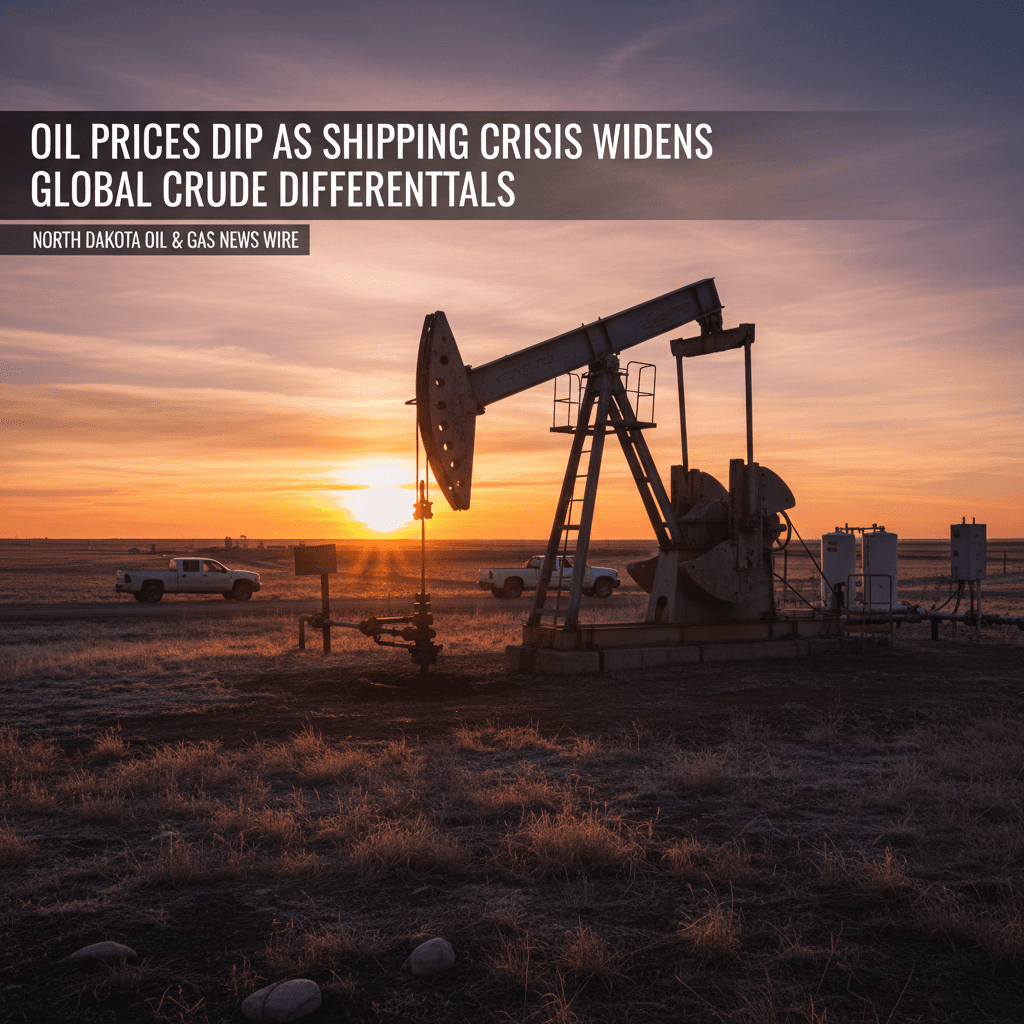
Oil Prices Dip as Shipping Crisis Widens Global Crude Differentials
WTI and Brent fall amid record freight costs, while Bakken differential holds steady at a $3.42 discount.
Global oil benchmarks declined in midday trading Tuesday, pressured by a record-breaking surge in tanker freight costs that is reshaping crude flows and regional pricing. West Texas Intermediate (WTI) crude for November delivery was trading at $97.62 per barrel, down 93 cents or 0.93%. International benchmark Brent crude was at $108.42, a drop of $1.13 or 1.03%, according to live price data.
The price moves are set against a severe shipping crisis triggered by the Iran war, which has rerouted trade and tied up supertankers. According to a report from OilPrice.com, record-high freight costs are forcing Asian crude buyers to use smaller tankers and seek supplies on delivered terms, effectively shutting down the arbitrage for moving U.S. Gulf Coast crude to Asia.
The crisis is creating stark regional price disparities. While demand for nearby European and Middle Eastern crude has pushed some grades to record premiums, crudes that require long-haul voyages are being discounted. "African and U.S. crudes, on the other hand, have seen discounts widening due to the high freight costs to ship these volumes on long voyages to Asia," the OilPrice.com report stated, citing traders. West African grades have reportedly slumped to discounts as deep as $20 per barrel below Brent to offset shipping costs.
For Bakken operators, the key local benchmark is the Bakken differential, which was quoted at a $3.42 per barrel discount to WTI on Tuesday. This pricing reflects the cost to transport North Dakota crude to major refining hubs. The global freight chaos has not, at this moment, caused an extreme widening of the Bakken discount, but it reinforces the importance of infrastructure and logistics in determining netbacks for producers.
The broader downturn in benchmarks WTI and Brent suggests the market is weighing the significant logistical constraints against underlying supply and demand. The shipping bottlenecks are limiting the ability of U.S. producers to access premium markets in Asia, potentially capping upside for domestic benchmarks like WTI relative to seaborne grades.
Natural gas prices also saw pressure, trading at $2.98 per MMBtu, down 8 cents on the day.
Source
Live Price Data, OilPrice.com report published October 20, 2026.