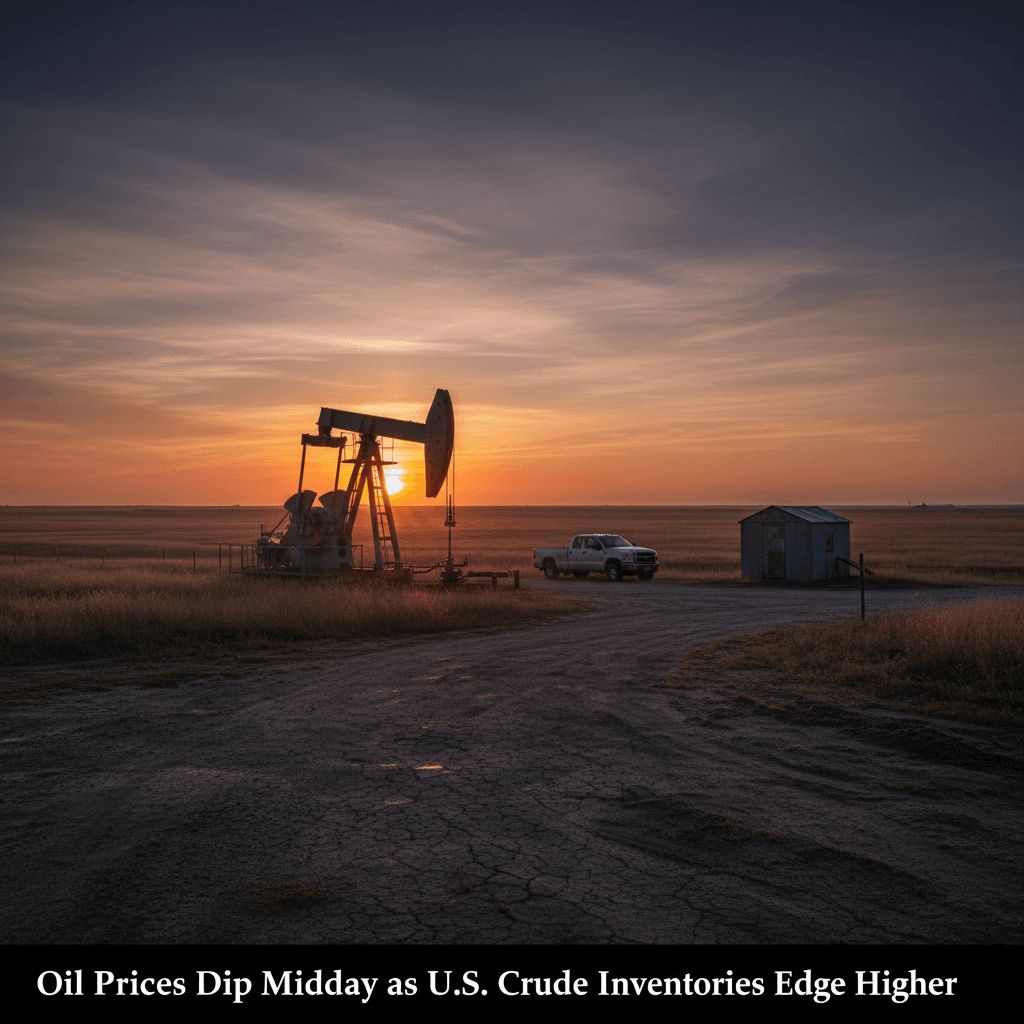
Oil Prices Dip Midday as U.S. Crude Inventories Edge Higher
WTI trades near $83 as EIA reports a slight stock build, while the Bakken discount holds steady above $3 per barrel.
West Texas Intermediate crude oil futures traded lower midday Friday, August 28, pressured by a reported increase in U.S. commercial inventories. WTI was down 0.6% to $83.03 per barrel, while the global benchmark Brent crude fell to $87.99.
The price decline follows data from the U.S. Energy Information Administration showing a small build in domestic stockpiles. According to Rigzone, citing the EIA's latest weekly petroleum status report, crude oil stocks, excluding the Strategic Petroleum Reserve, stood at 428.9 million barrels as of August 21.
The slight inventory increase provided a bearish counterpoint to recent market strength, which has been supported by steady demand and ongoing supply management from major producing nations. The midday dip puts WTI on track for a modest weekly decline after reaching multi-week highs earlier in the period.
For Bakken producers, the local price benchmark is directly tied to WTI, minus a regional differential. That differential—the discount for Bakken crude delivered at Clearbrook, Minnesota—was holding at $3.42 below WTI midday Friday. This means the effective price for Bakken crude was approximately $79.61 per barrel.
A discount in this range is considered normal for the region, reflecting transportation costs and quality differences compared to the benchmark. At current price levels, Bakken operations remain economically viable, supporting continued production and drilling activity across the Williston Basin.
The natural gas market also saw selling pressure Friday, with the front-month contract down to $2.87 per MMBtu. Lower natural gas prices can impact the economics of associated gas production in the Bakken, though oil remains the primary driver for most operators in the formation.
Market participants are now looking ahead to the next set of inventory data and broader macroeconomic signals for direction. For North Dakota's oil industry, stability in the differential and WTI prices above $80 per barrel provide a supportive environment for capital budgets and production forecasts through the remainder of the third quarter.
Source
Live price data and Rigzone report on EIA inventory data, published August 28, 2026.