WTI Crude--
Brent Crude--
Natural Gas--
ND Rig Count--
WTI Crude--
Brent Crude--
Natural Gas--
ND Rig Count--
Oil Prices Drop Sharply as Chinese Demand Weakens - Bakken Wire
Oil Prices

Oil Prices Drop Sharply as Chinese Demand Weakens

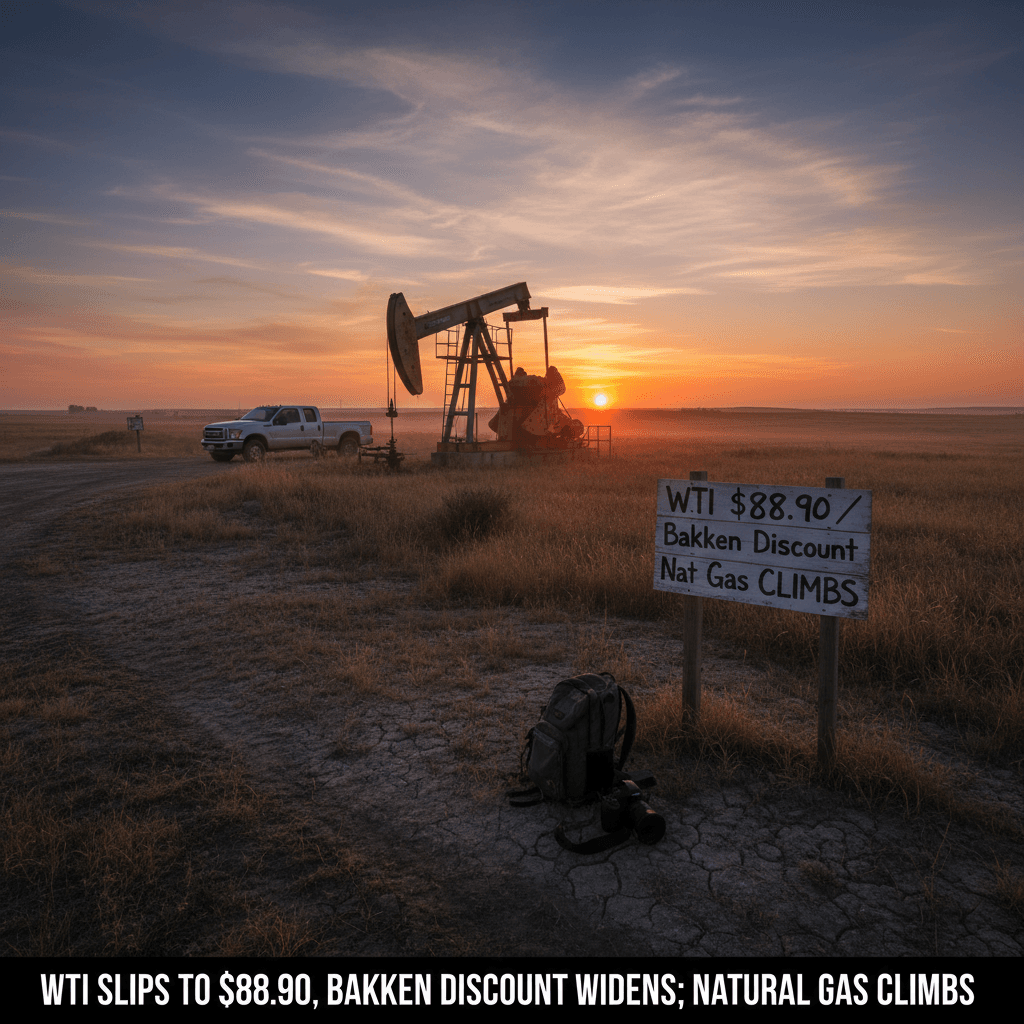
WTI crude falls over 3% to $93, while Bakken differential holds at -$3.42 as global market pressure mounts.

Bakken Wire Staff·☀️Morning Wire·

Front-month West Texas Intermediate crude oil futures fell sharply on Thursday, trading down $3.02, or 3.15 percent, to $93 per barrel, according to live market data. Brent crude, the international benchmark, followed suit, declining $3.09 to $94.72 per barrel.

The sharp decline was driven by significant weakening in demand from China, the world's top crude importer, according to a report from OilPrice.com. The premium for Iranian Light crude has slipped into a discount for the first time in two months, trading between $0.50 and $1 per barrel below ICE Brent for June delivery into Shandong province. Just a month ago, the same cargoes commanded premiums of $1–2 per barrel.

The price for Russia's popular ESPO crude grade has also softened, with its premium over Brent falling to $3–4 per barrel for June, down from $4–5 per barrel in May, OilPrice.com reported. This shift is attributed to waning demand from China's independent refiners, known as "teapots," who are major buyers of both Iranian and Russian crude.

Despite ongoing supply disruptions from the Middle East, Chinese teapots are reducing their intake as high crude prices push them into losses, according to the report. In response, China's National Development and Reform Commission has reportedly authorized some struggling refiners to reduce fuel output to no lower than 80% of last year's monthly average, easing a previous policy mandating sufficient domestic supply.

The Bakken crude differential, a key metric for North Dakota producers, was holding at a discount of $3.42 per barrel below WTI on Thursday. This price move, if sustained, directly reduces the wellhead revenue for operators across the Williston Basin. The sudden drop underscores the global nature of the oil market, where demand shifts in Asia can swiftly impact local producer economics.

In related energy markets, natural gas prices showed modest strength, rising $0.04 to $3.25 per MMBtu.

Analysts are warning that any relief at the pump for U.S. consumers may be fleeting. A separate report from Rigzone highlighted that while U.S. gasoline prices are currently "plunging," the "relief may be short lived." This suggests underlying market tightness could reassert itself, potentially reversing today's crude price losses.

For Bakken operators, today's price action highlights the continued volatility and sensitivity to international demand signals, particularly from China. The ability of the region's producers to maintain drilling and completion activity is closely tied to the realized price for Bakken crude, which is now under $90 per barrel.

Source

Live Price Data, OilPrice.com, Rigzone
wtibrentoil pricesbakken differentialchinademandteapotsnatural gas

Share this article

Related Articles

Oil Prices Steady as Bakken Discount Widens - Bakken Wire
Oil Prices

Oil Prices Steady as Bakken Discount Widens

Oil prices showed little movement in Sunday trading, with West Texas Intermediate (WTI) crude holding steady at $87.06 per barrel, according to live market data. The global benchmark, Brent crude, was also unchanged at $94.39. Natural gas prices were flat at $2.81 per MMBtu. For Bakken producers, the more critical figure is the regional price differential. Bakken crude at the Clearbrook, Minnesota, hub was trading at a discount of $3.42 per barrel below the WTI benchmark price. This spread is a direct determinant of the netback price received by North Dakota operators and directly impacts cash flow and drilling economics. The static price action follows a volatile week driven by mixed signals from global inventories and ongoing geopolitical tensions. Market analysts note that prices found a footing above $86 for WTI after U.S. government data showed a larger-than-expected drawdown in crude stockpiles last week, indicating robust demand. However, this was...

🌅Afternoon Wire·Aug 23
Oil Prices Edge Higher Midday as Bakken Discount Holds at $3.42 - Bakken Wire
Oil Prices

Oil Prices Edge Higher Midday as Bakken Discount Holds at $3.42

Oil prices posted modest gains in midday trading Sunday, with benchmark crudes holding near multi-week highs. West Texas Intermediate (WTI) crude was trading at $87.06 per barrel, a gain of $0.23 or 0.26%. The international benchmark Brent crude rose to $94.39, up $0.61 or 0.65%, according to live price data. Bakken crude priced at the Clearbrook, Minnesota, hub maintained a differential of negative $3.42 per barrel versus WTI. This places the effective price for Bakken barrels at approximately $83.64, factoring in the regional discount. Natural gas futures also saw upward movement, rising $0.05 to trade at $2.81 per million British thermal units. The midday price strength continues a trend of firming crude markets. Prices are being supported by a combination of sustained demand signals and ongoing supply discipline from major producing nations within the OPEC+ alliance. Geopolitical tensions in key oil-producing regions also continue to underpin a risk premium in...

🔆Midday Wire·Aug 23
WTI Holds Above $87 Amid Global Supply Concerns; Bakken Differential Widens - Bakken Wire
Oil Prices

WTI Holds Above $87 Amid Global Supply Concerns; Bakken Differential Widens

Oil prices edged higher on Sunday, with West Texas Intermediate (WTI) crude trading at $87.06 per barrel, a gain of 0.26% or $0.23, according to live market data. The global benchmark Brent crude rose 0.65% to $94.39, while natural gas prices increased by $0.05 to $2.81 per MMBtu. The Bakken crude differential, which measures the price of Bakken barrels delivered to Clearbrook, Minnesota, against WTI, was assessed at a discount of $3.42. This price spread is a key indicator of the competitiveness and market access for North Dakota's light sweet crude. Market support stems from tightening global crude supplies. According to a report from Rigzone, U.S. refiners are facing a looming supply drop from their biggest foreign crude supplier at a time of peak seasonal demand. While the source material did not specify the supplier, such a reduction in available imported crude typically increases competition for domestic barrels, including those...

☀️Morning Wire·Aug 23