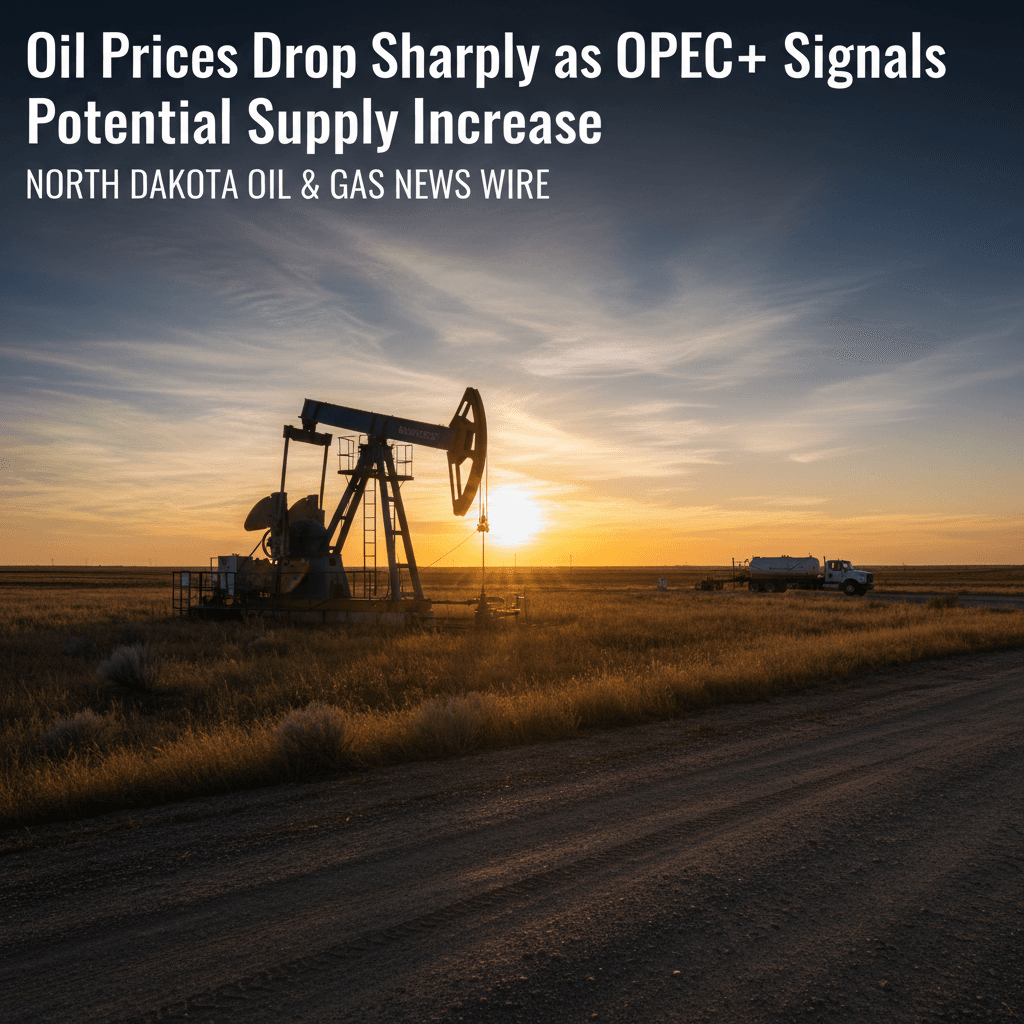
Oil Prices Drop Sharply as OPEC+ Signals Potential Supply Increase
WTI falls nearly 2% to $95.39, pressuring Bakken crude realizations as the market reacts to possible OPEC+ policy shift.
Front-month WTI crude oil futures fell sharply on Friday, September 18, trading down $1.84 (-1.89%) to settle at $95.39 per barrel. The global benchmark Brent crude dropped $1.26 (-1.26%) to $98.67. The Bakken crude differential to WTI was quoted at -$3.42.
The day's sell-off was primarily driven by signals from the OPEC+ alliance that it may consider increasing production quotas sooner than expected, according to market reports. This potential shift, aimed at alleviating high prices that threaten global economic growth, introduced significant bearish sentiment into a market that had been trading near multi-year highs.
For Bakken operators, the price drop directly impacts the realized price for their crude. With WTI at $95.39 and the regional differential at -$3.42, the wellhead price for Bakken crude would be approximately $91.97 per barrel before further local adjustments. While still a robust price historically, the sudden decline underscores the volatility and external policy risks facing producers in North Dakota.
Natural gas prices held steady at $2.90 per MMBtu, offering no counterbalance to the crude weakness. The flat natural gas market continues to provide minimal revenue uplift for operators, keeping the focus squarely on crude oil economics.
The price action reflects a market recalibrating after a sustained rally. Analysts noted that speculative long positions had reached elevated levels, making the market vulnerable to any shift in fundamental outlook. The mere suggestion of additional OPEC+ barrels was enough to trigger profit-taking and a reassessment of the near-term supply-demand balance.
For the Williston Basin, price stability around current levels supports continued drilling and completion activity. However, sharp single-day declines serve as a reminder of the external factors largely outside operators' control. The health of the Bakken industry remains tightly coupled to decisions made in Vienna and the broader geopolitical landscape influencing global oil flows.
Operators will monitor the upcoming OPEC+ meeting closely for confirmation of any policy change. In the near term, inventory data and macroeconomic indicators will also play a key role in determining whether Friday's drop is a brief correction or the start of a broader trend.
Source
LIVE PRICE DATA, General Market Reports