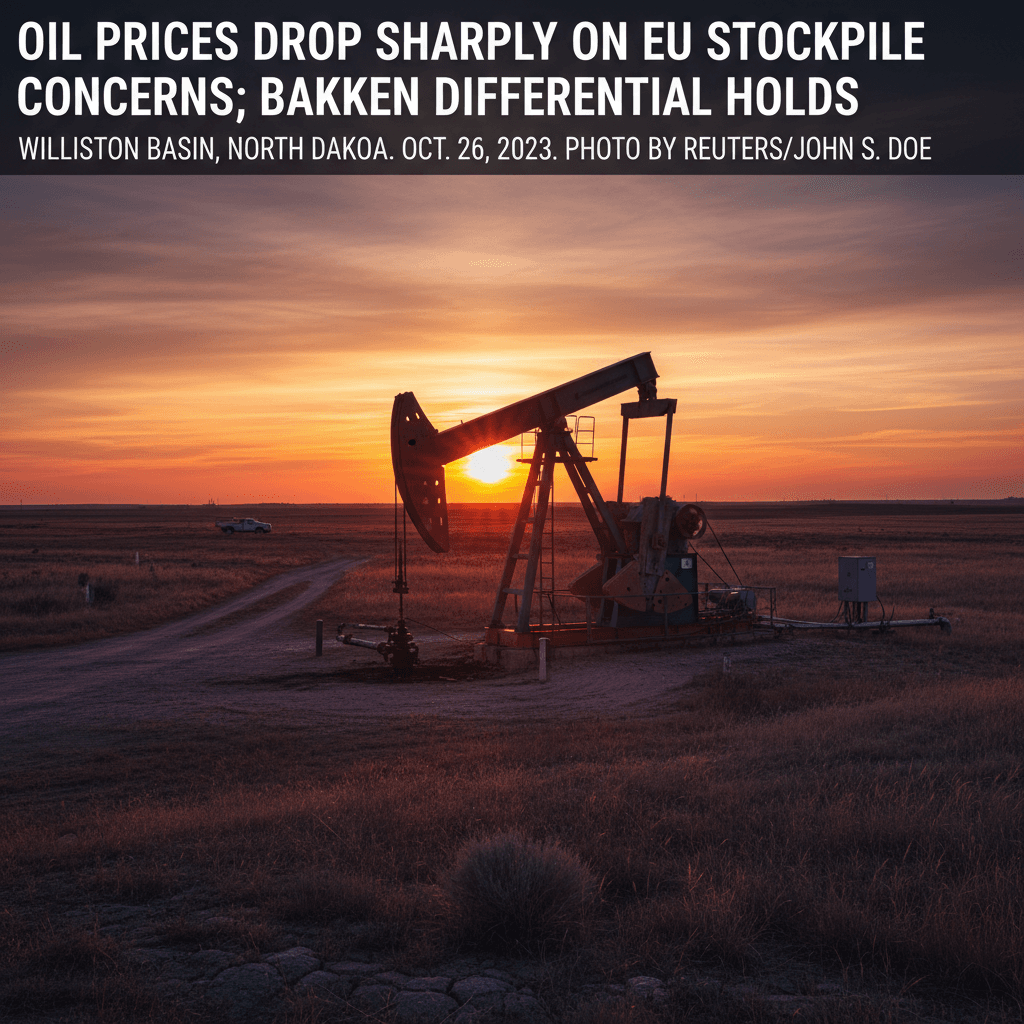
Oil Prices Drop Sharply on EU Stockpile Concerns; Bakken Differential Holds
WTI crude fell nearly 4% to $89.52 as Europe discusses another emergency release, pressuring Bakken wellhead values.
Oil prices fell sharply on Friday, with West Texas Intermediate (WTI) crude dropping 3.61% to settle at $89.52 per barrel. The global benchmark Brent crude declined 2.38% to $99.87, according to live price data. The sell-off pressures the wellhead price for Bakken crude, which traded at a discount of $3.42 per barrel below WTI.
The decline was driven by reports that European governments are discussing another coordinated release of emergency oil stocks. According to OilPrice.com, the move comes amid pressure from the U.S. administration to ease the global fuel crunch, particularly for diesel. European Energy Commissioner Dan Jørgensen confirmed the discussions, stating, "We've used it before, and we'll likely use it again."
Specifically, the U.S. has urged Germany and France to release diesel from their strategic reserves or potentially face a U.S. diesel export ban, sources told Reuters. Combined, these two nations hold about 35% of the EU's strategic diesel reserves, estimated at 39 million tons. The pressure follows concerns that several European countries have not fully met earlier commitments to release stocks pledged during the early weeks of the Iran war.
Analysts at BMI, a unit of Fitch Solutions, noted that oil prices have "come under pressure" heading into the fourth quarter, Rigzone reported. The potential addition of supply from government stockpiles adds a bearish sentiment to the market, offsetting other geopolitical supply concerns.
For Bakken operators, the nearly $3.35 drop in WTI directly translates to lower revenue per barrel. With the Bakken differential holding steady at -$3.42, the implied wellhead price is approximately $86.10. This price environment may prompt a reassessment of near-term drilling and completion budgets, though it remains above levels that would trigger widespread shut-ins.
Meanwhile, natural gas prices saw a minor decline, with the benchmark settling at $2.94, down $0.03. In a separate report, JERA CEO Yukio Kani warned that LNG prices have further to climb. He stated that Qatar LNG is not expected to return to the market soon due to extended force majeure, and historically low European gas storage—71% full compared to a five-year average of 86%—points to continued tightness. This disconnect between weak domestic U.S. natural gas prices and strong global LNG markets remains a key dynamic for Bakken producers, many of whom produce associated gas.
Source
Live price data, OilPrice.com, Rigzone